Gold Holds $4,000 After Strong US GDP Data
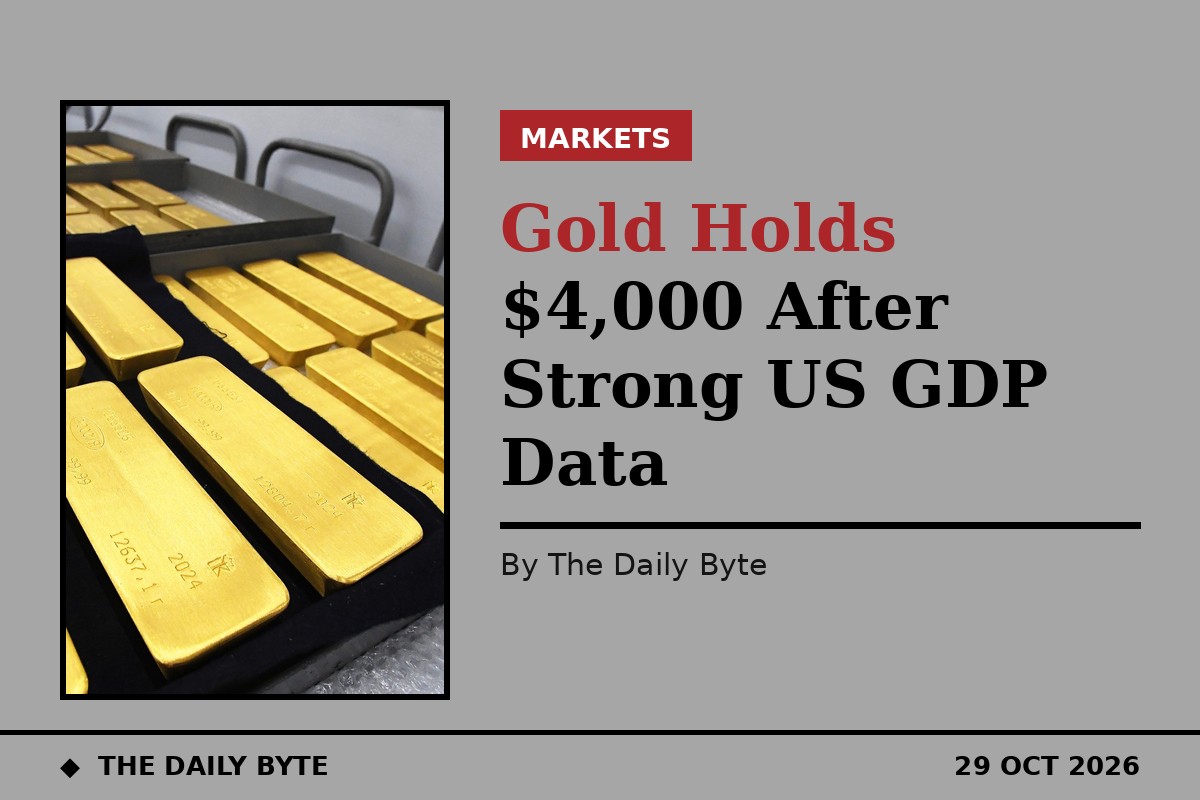
Gold held above the psychologically important $4,000 level on 29 October after stronger-than-expected United States growth data gave the Federal Reserve little reason to rush towards lower interest rates.
Spot gold traded in the $4,020–$4,030 range per ounce, down roughly 1%, after third-quarter gross domestic product expanded at a 3.4% annualised pace, beating expectations. Kitco reported the growth print alongside weaker personal income and spending, suggesting the American consumer is beginning to lose speed beneath the headline.
Why strong growth squeezes gold
The sell-off reflects a difficult cross-current for bullion. With core personal consumption expenditure prices holding at 0.3% month on month and weekly jobless claims at 194,000, the Fed has little reason to rush towards easing, Kitco argued. That keeps real yields elevated and leaves gold caught between a still-solid labour market and a consumer that is quietly cooling.
The GDP price index cooling to 2.3% is a figure gold supporters will point to, but it has not changed the market's central argument, according to the same analysis: traders still see a resilient economy, sticky core inflation and a central bank with room to wait.
ECB hold adds a second layer
The European Central Bank also held rates on 29 October, as expected, while warning that rising energy prices raise inflation risks, Morningstar reported.
Morningstar also reported that US GDP expanded at a 3.4% annualised pace in the third quarter, accelerating from 2.2% and beating the Wall Street Journal consensus of 3.1% growth, while the 12-month personal consumption expenditures price index accelerated to 3.6% in September from 3.4% in August, against a 3.7% consensus.
The $4,000 area remains the dividing line: hold it, and the market can rebuild a base; lose it, and the sell-off risks becoming a broader deleveraging trade.
Sources: Kitco News; Morningstar / Dow Jones