Gold Price Today: $4,056 an Ounce on 11 November
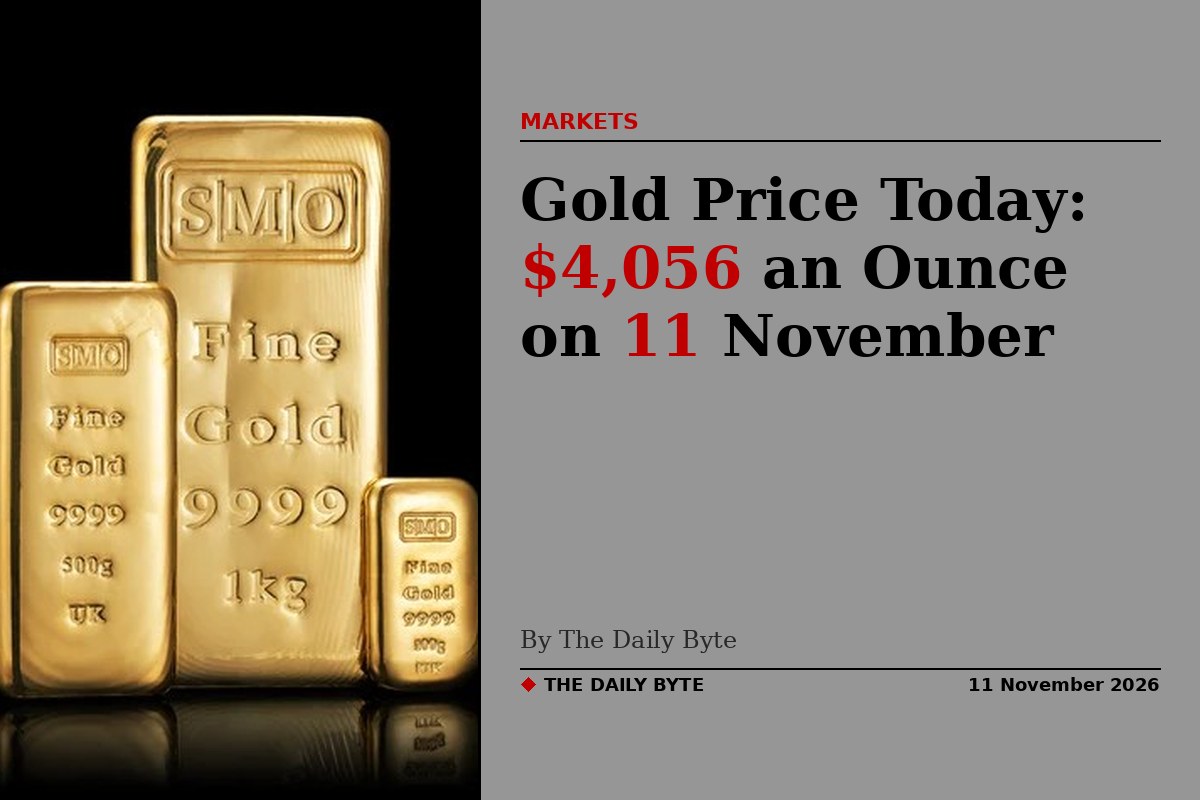
Gold traded at $4,055.47 per troy ounce on Wednesday 11 November, steadying after a sharp fall the previous day on hotter-than-expected US inflation data. The spot price was up 0.11% from the last LBMA PM fix as of 1:27am ET, according to GoldPrice.com, and stood at $130.39 per gram and $130,386 per kilogram.
In the UK, gold cost £3,034.35 per troy ounce, or £97.56 per gram for 24-carat metal, at 2:30am UTC on 11 November. A second live quote put spot gold at $4,048.38 an ounce as of 03:11 UTC, up $16.01 or 0.40% from the previous close, with a day range of $4,027.26 to $4,052.31, according to GoldPrice.corgano.com.
Gold steadies after the inflation shock
Gold fell sharply in early trading on Tuesday 10 November after US inflation came in stronger than expected, reinforcing expectations that the Federal Reserve could raise interest rates once more in December. World gold prices were quoted at $4,033.80 per ounce on the morning of 11 November, down $107.60 per ounce compared with the previous morning, and silver was quoted at $53.11 per ounce.
The US Bureau of Labor Statistics reported that the consumer price index rose 0.4% month on month in October, above the 0.3% economists had expected, while core inflation rose 0.3%. Research director Kathleen Brooks of XTB said there was now an 86% chance of a 25 basis point rate rise from the Federal Reserve in December and a 13% chance of a 50 basis point move. Higher interest rates tend to weigh on gold because the metal pays no yield, making it less attractive compared with interest-bearing assets.
What the UK gold price looks like
The UK price is set by the London Bullion Market Association, the global authority for precious metals pricing based in the City of London. The LBMA gold price is the global benchmark, set twice daily in London at 10:30am and 3:00pm GMT, and is quoted in US dollars per troy ounce before being converted into pounds at the prevailing exchange rate.
That conversion explains why the UK price moves even when the dollar price is flat. At $4,055.47 an ounce, the sterling price of £3,034.35 reflects the dollar-sterling rate as well as the metal itself. Retail prices in shops add a premium for minting, shipping and margin, while scrap buyers typically pay 85% to 95% of the melt value.
Still 25% below the record high
Gold remains 25.0% below its all-time high of $5,405.00, reached in January 2026, according to GoldPrice.com. The metal has given back a large part of its earlier gains as US rate-rise expectations have hardened and as some of the safe-haven demand that built up during the year has eased.
Support has come from official buyers. Gold purchases by central banks and official institutions accelerated in the third quarter of 2026, according to the World Gold Council, and that buying has helped put a floor under the price even as investment demand has cooled. Real interest rates and the strength of the US dollar remain the biggest drivers of the price, ahead of central-bank buying, inflation expectations and flows into gold-backed exchange-traded funds.
Oil slide adds to the picture
Gold's steadier tone came as oil prices fell sharply. Brent crude dropped below $90 a barrel on Tuesday for the first time since 31 August, trading at $89.65 at 13:34 GMT, down 3.15%, while US West Texas Intermediate fell 2.68% to $84.52, according to Reuters. Brent had already settled 5.85% lower on Monday at $92.57 a barrel, its lowest in three months, after falling about 16% the previous week in its steepest weekly drop since the start of the Covid-19 pandemic.
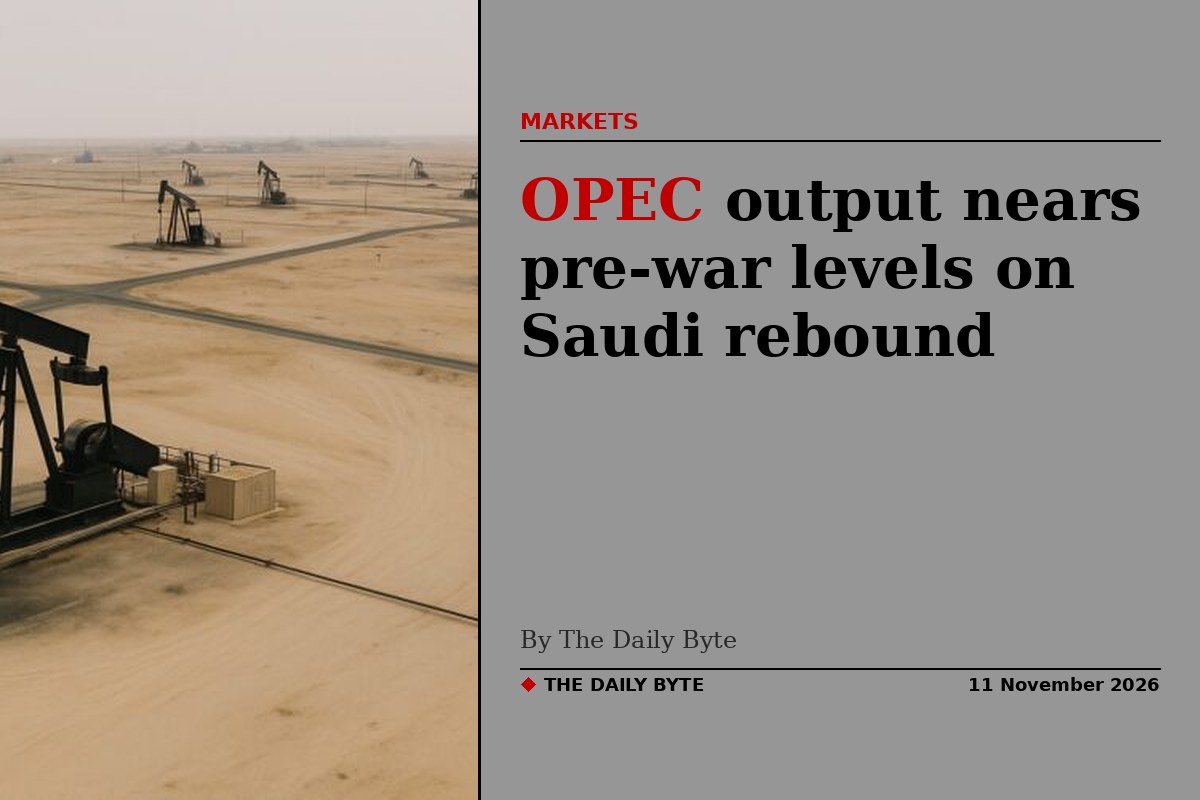
The oil sell-off followed Donald Trump saying he would hold off on fresh strikes against Iran, easing fears of sustained disruption to Middle East supply. A Reuters survey also found OPEC crude production rose by 1.38 million barrels a day in October to 22.87 million barrels a day. Cheaper oil has eased worries about energy-driven inflation, but the hotter US price data has kept the pressure on gold for now. Nothing in this article is investment advice; prices are indicative market data and move throughout the day.