Gold Rebounds Above $3,600 as Oil Prices Slip
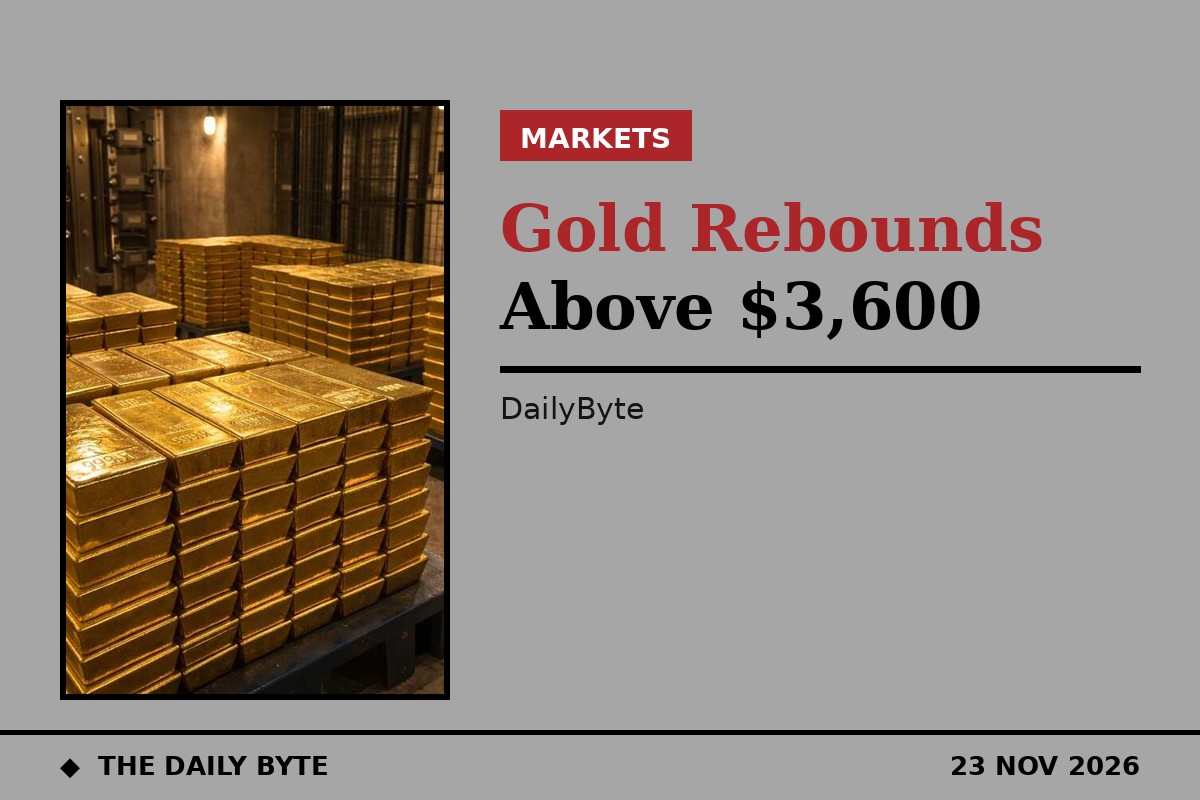
Gold prices rebounded sharply on Monday, 23 November 2026, climbing back above $3,600 an ounce after touching a 14-month low last week, while oil prices slipped and European natural gas surged on colder weather forecasts.
Gold rose 2.31 percent to $3,613, according to InvestingLive's European market wrap on 23 November. Spot gold traded in a range of $3,558.63 to $3,637.07 during the session, moving back above $3,600 after Friday's 14-month low, market analysis from Newsquawk reported.
The rebound followed gold's largest weekly decline since March, Dow Jones reported, with investors awaiting fresh United States inflation data for more cues on the outlook for monetary policy. The metal's recovery came as part of a broad wave of short covering across markets after last week's brutal sell-off, InvestingLive noted, although it cautioned that the move may prove short-lived without a more dovish Federal Reserve or a breakthrough in the United States-Iran situation.
Gold finds its footing
Gold's bounce was helped by a slightly softer dollar, Newsquawk reported, but the metal remains well below its 21-day moving average of $3,918 an ounce, a sign that the recent heavy losses have not yet been fully repaired.
Silver joined the recovery. Spot silver traded between $41.54 and $42.91 an ounce, after a range of $40.78 to $43.23 on Friday, Newsquawk reported. Copper also firmed, trading in a range of $11,958.93 to $12,344.15 a tonne and recovering from a brief dip below $12,000 overnight, while Dow Jones put copper at around $12,100 a tonne after it sank to its lowest level since March last week.
Oil under pressure
Oil prices moved in the opposite direction. West Texas Intermediate crude fell 1.23 percent to $82.39, InvestingLive reported, while the January 2027 WTI contract traded between $82.50 and $83.95 a barrel. Brent crude for January 2027 moved between $91.46 and $93.12 a barrel, Newsquawk reported.
Oil prices fell after giving up earlier gains, Dow Jones reported, as traders weighed expectations of a global supply surplus against renewed attacks on shipping in the Middle East and concerns over disruption to regional oil infrastructure. Crude benchmarks faded to session lows without a clear fresh catalyst, according to Newsquawk.
Gas jumps as cold weather bites
European natural gas was the standout mover in energy markets. Dutch TTF gas prices climbed back above 90 euros a megawatt-hour, Dow Jones reported, as signs of colder weather boosted heating demand. The front-month contract hit a 10-day high, trading between 92.05 and 96.08 euros a megawatt-hour, Newsquawk reported.
Forecasts showed colder, less windy weather potentially lasting into early December, raising expected heating and power demand. European gas storage stands at 69.2 percent, 3.1 percentage points below the previous historic low for the time of year, according to Newsquawk, although Norwegian exports have recovered following the end of production cuts at the Troll and Aasgard fields.
What traders watch next
The split between rising gold and falling oil captures the mood of a market caught between two forces: hopes that last week's sell-off was overdone, and worries that the global economy is slowing. Flash purchasing managers' surveys on Monday pointed in both directions, with the eurozone composite index unchanged at 51.7 in November, its fifth consecutive month of expansion, while the United Kingdom's composite index slipped to 52.3 from 52.9, InvestingLive reported.
For gold, the next test is the United States inflation data due this week, which investors hope will clarify the path for interest rates. For oil and gas, the weather forecast and developments in the Middle East will set the tone, with cold air and high pressure threatening to crimp wind output across parts of northwest and central Europe this week, according to ANZ Research cited by Dow Jones.