Android app lock will not reach older phones
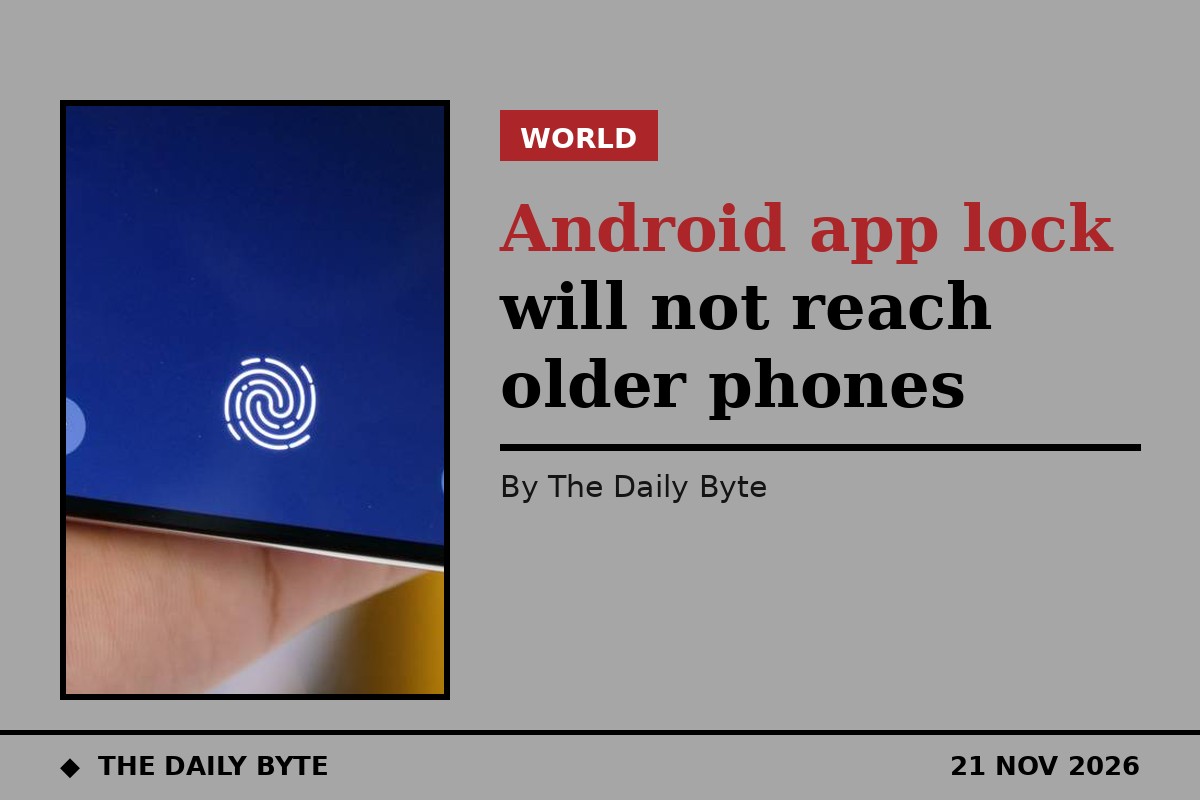
Google's built-in Android app lock will not come to older phones, the company has confirmed. Owners of handsets that never receive the next big Android update will have to rely on their phone maker's own lock or a third-party app instead.
The confirmation came from Mishaal Rahman, Google's community engagement lead for Android, who answered a question on Reddit about bringing app lock to older Android versions. He explained the reason in one sentence: "Because app lock utilizes new APIs in the core Android platform, the current implementation can't be backported to previous Android versions via Google Play system updates."
Why a Play update cannot add it
Google Play system updates let Google refresh parts of Android without waiting for phone makers to ship a full software update. But they only reach certain layers of the system. App lock depends on new programming interfaces built into the core of the operating system, so only a full Android update can deliver it.
In the same thread, Rahman said the product team plans to release app lock with Android 17 QPR3, the quarterly feature drop expected in the first quarter of 2027. Pixel owners can already try it in the QPR3 beta, by enrolling in the Android Beta Program.
A feature with a bumpy history
App lock first appeared for Pixel phones in pre-release Android builds in August 2026, after earlier traces of the feature had turned up in test builds. Google then pulled it back for more work. It returned in Android 17 QPR3 Beta 3 on 29 October 2026, for Pixel 6a and newer devices, and Google reaffirmed on 18 November that it is part of Android 17.
To lock an app, users long-press its icon and choose the app lock option. Opening it then requires the device's existing credentials, such as a fingerprint, face unlock, PIN, pattern or password. Google does not offer a separate PIN or fingerprint just for app lock.
What locked apps hide
The feature does more than ask for a fingerprint. Locked apps are also kept out of sight elsewhere in the system, including notifications, home screen widgets and shortcuts, multitasking previews and the sharing panel, so their contents do not leak through other parts of the phone.
Because the feature is still in beta, details could change before the stable launch. Older phones are not completely without options in the meantime. Many manufacturers have offered their own app locks for years, including Xiaomi, and Samsung is adding a native app lock in One UI 9.5, now in beta for the Galaxy S26 series. Third-party lockers on the Play Store are another route, but most rely on accessibility services to watch which app is in the foreground, which can stop working in split-screen mode and may use extra battery.