GPs to Give 300,000 Patients Extra Winter Checks
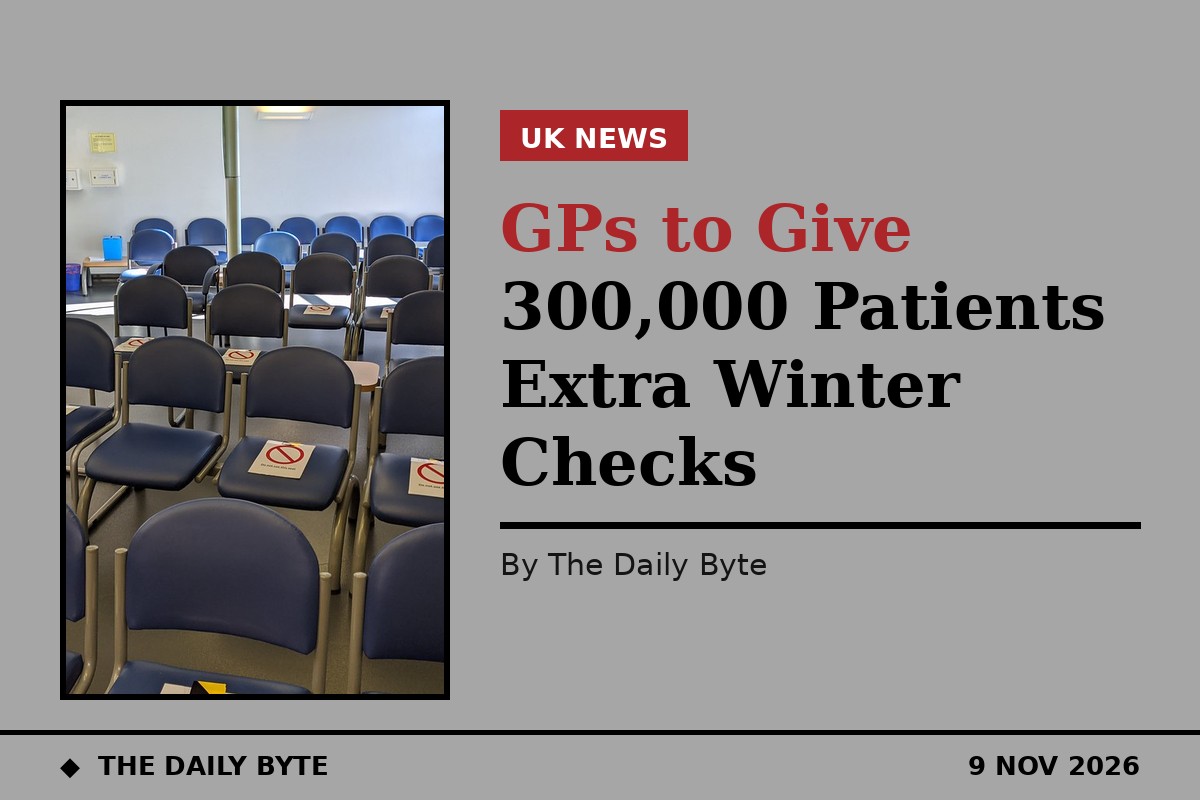
Family doctors in England will offer up to 300,000 frail and chronically ill patients extra health checks, medication reviews and respiratory tests this winter, under a £40 million scheme announced by the government on Sunday. The aim is to prevent avoidable hospital admissions as the NHS prepares for the colder months.
The money is reallocated from existing GP budgets for 2026-27. Groups of GP practices will be able to receive £126 for every eligible patient they support, and surgeries will choose the patients they believe are most at risk of becoming seriously unwell this winter.
Support will be targeted at people with heart disease, frailty and lung conditions such as emphysema and other forms of chronic obstructive pulmonary disease (COPD). Health checks, medication reviews and nurse-led respiratory clinics are among the services on offer, alongside home assessments.
Keeping people well at home
Prime Minister Andy Burnham said the programme would help keep people well at home and avoid unnecessary trips to hospital. "If we want to take the pressure off our hospitals this winter, we've got to keep people well at home," he said. "So we're backing GPs to reach the most vulnerable people early, before a small problem turns into a trip to A&E."
"I'm not going to pretend this winter will be easy," Burnham added. "But with new technology, upgrades for hospitals and more care available closer to home, we'll make sure the NHS is there for everyone when they need it."
Health Secretary Yvette Cooper said the scheme was designed to give greater support to the frailest patients in the community. "After such a heavy summer for our NHS as a result of the heat, everyone is working together to prepare for more challenging winter pressures," she said. She pointed to the roll-out of flu vaccinations, extra urgent care capacity and stronger partnerships with social care, adding that there were thousands more GPs in post and millions more GP appointments this year.
Part of a wider winter plan
The £40 million programme sits alongside other winter funding. The Budget gave the NHS £190 million to manage winter pressures, and the government has set out almost £140 million for 14 new urgent care schemes across England, including urgent treatment centres, same-day emergency care services, new ambulance fleets and emergency department upgrades.
The announcement comes amid continuing concern about overcrowding in hospitals and patients being treated in corridors. Last month the Royal College of Physicians warned the government still had much to do to ensure "corridor care becomes a thing of the past".
The scheme applies in England only. There is no public sign-up: practices will identify the patients they consider most in need, and the 300,000 figure is a ceiling on the number of people who can be supported, not a guarantee that every eligible patient will be contacted.
Reaction: welcome, but calls for long-term funding
Professor Victoria Tzortziou Brown, president of the Royal College of GPs, welcomed the focus on prevention. She said GPs' knowledge of their patients and continuity of care were central to finding those most in need, but warned that short-term initiatives alone could not deliver "sustained improvements in care" for patients with complex needs. A longer-term approach to prevention was needed, she said, backed by "sustainable investment in general practice".
A spokesperson for the Royal College of Nursing welcomed the scheme but said it needs to be the beginning of "long-term investment in the general practice nursing workforce". "As winter fast approaches, measures to keep patients out of hospital can't come a moment too soon," the spokesperson said, adding that it was vital nursing was at the heart of planning and decision-making in all elements of primary care.
Ed Kennedy, director of the Institute of General Practice Management, also welcomed the move. He said practice teams were well placed to provide "proactive and personalised care" that reduces avoidable pressure on hospitals.