Greenland Ice Sheet Once Retreated 60 Miles in a Warmer World
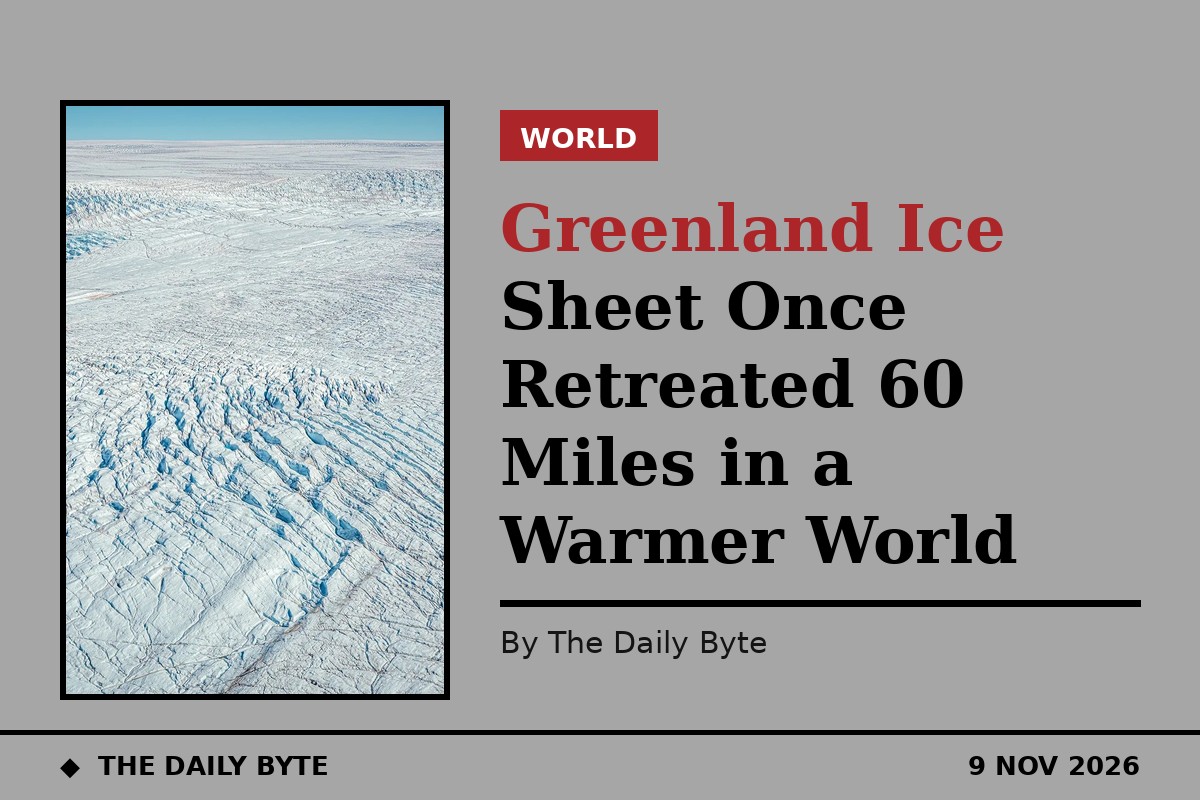
The Greenland Ice Sheet once retreated more than 60 miles from its present edge in north-west Greenland, new research has found, during a warm period about 416,000 years ago when summers ran 4.7 degrees Celsius warmer than today.
The study, led by the University at Buffalo and published in the journal Climate of the Past, analysed ancient sediment recovered from beneath Camp Century, the site of a former US military base built into the ice in 1959 as part of the Cold War Project Iceworm. The sediment was drilled from nearly a mile beneath the ice in the 1960s and later rediscovered in a freezer.
By studying fatty molecules left by bacteria in the sediment, the researchers produced the first quantitative estimate of land-based summer temperatures in Greenland during the warm interval geologists call Marine Isotope Stage 11. For Camp Century to have been ice-free at all, the ice sheet's margin must have retreated more than 60 miles, or 97 kilometres, from where it stands today.
The findings carry a warning as well as a history lesson. Similarly warm summers 5,000 to 10,000 years ago did not leave Camp Century ice-free, suggesting that how long warmth lasts may matter as much as how hot it gets. The researchers caution that the results should not be read as reassuring: today's human-caused warming already exceeds that ancient warm period and could persist for centuries. Greenland is currently losing about 270 billion tonnes of ice a year, according to NASA satellite data.


