GSK's Twice-Yearly EGPA Drug Meets Trial Goal
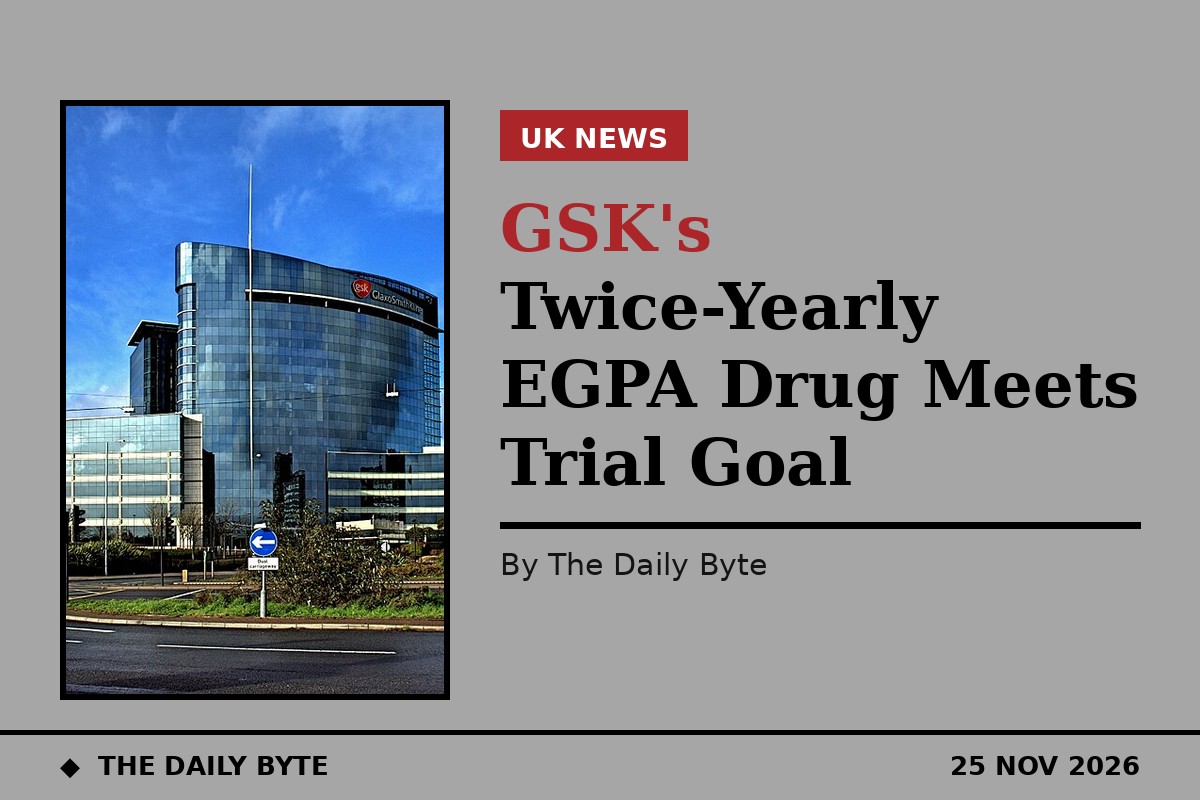
GSK has reported positive results from a phase III trial of its twice-yearly medicine Exdensur in a rare and serious blood-vessel disease, opening the way to regulatory filings in the first half of 2027. The British pharmaceutical group said on Tuesday 25 November that the OCEAN trial met its primary endpoint, showing that depemokimab, sold as Exdensur, was non-inferior to monthly mepolizumab in helping patients with eosinophilic granulomatosis with polyangiitis, known as EGPA, achieve remission.
EGPA is a chronic inflammatory disease in which small and medium blood vessels become inflamed, and it can damage organs including the lungs, heart, kidneys and nerves. Patients whose disease has returned or proved difficult to control currently face frequent treatment and long courses of steroids. GSK said the results support depemokimab's potential as the first ultra-long-acting option for the condition, with two injections a year instead of one every four weeks.
How the OCEAN trial was run
OCEAN was a phase III, randomised, double-blind, double-dummy, multi-centre study in 162 adults with relapsing or refractory EGPA across 19 countries, registered as NCT05263934. Participants received either depemokimab 200 mg every 26 weeks or mepolizumab 300 mg every four weeks, both alongside standard care of oral corticosteroids with or without immunosuppressants, over a 52-week treatment period. The double-dummy design meant participants and staff stayed unaware of which treatment each person had been assigned despite the different injection schedules.
Remission was defined strictly: a Birmingham Vasculitis Activity Score of zero, meaning no detectable disease activity, combined with an oral corticosteroid dose of no more than 4 mg a day, at both week 36 and week 52. GSK said depemokimab met the trial's criterion for non-inferiority on that measure. The company has not yet published the remission percentage for either group, the non-inferiority margin or a confidence interval around the difference; full results are to be presented at a scientific congress and published in a peer-reviewed journal.
What it could mean for patients
For people living with EGPA, the appeal of a twice-yearly treatment is practical as well as clinical. Fewer injections mean fewer clinic visits and less disruption to daily life, and GSK argues that longer-acting dosing could help patients stay on treatment and reduce their reliance on steroids, which carry significant side effects when used at high doses over long periods. Dr Kaivan Khavandi, GSK's senior vice president and global head of respiratory, immunology and inflammation research and development, said the data reinforced depemokimab's ultra-long-acting profile and showed it could help patients achieve remission with twice-yearly dosing, reducing the need for corticosteroids and other immunosuppressive therapies.
Mepolizumab, sold as Nucala, was the first approved biologic for EGPA, but GSK says there remains a need for additional options that provide sustained protection against relapses. Depemokimab is not approved for EGPA anywhere in the world, and the OCEAN results are headline findings rather than a licence. The medicine is already approved for severe asthma in several markets, including the United States, and in the UK, the European Union, Japan and China for severe asthma and chronic rhinosinusitis with nasal polyps. It is also being explored in chronic obstructive pulmonary disease.
What happens next
GSK said it plans to use the full OCEAN results to support regulatory submissions to health authorities worldwide in the first half of 2027. Regulators will want to see the detailed data, including safety results and the exact remission rates, before deciding whether the twice-yearly regimen can be licensed for EGPA. If approved, it would give doctors and patients a second biologic option for a disease that affects only a small number of people but can be life-threatening when it flares. The announcement adds to a run of respiratory and immunology news from GSK, which has been building its case for depemokimab beyond its first indication in severe asthma, where the medicine received its first approval about a year ago.
Frequently asked questions
What is EGPA? Eosinophilic granulomatosis with polyangiitis is a rare, chronic inflammatory disease in which small and medium blood vessels become inflamed. It can affect the lungs, heart, kidneys, nerves and other organs, and patients may suffer relapses despite treatment.
What did the OCEAN trial show? Twice-yearly depemokimab was non-inferior to monthly mepolizumab in achieving remission, defined as a vasculitis activity score of zero and a low steroid dose at both week 36 and week 52, in 162 adults with relapsing or refractory EGPA.
When could the treatment be available for EGPA? GSK plans regulatory filings in the first half of 2027. It is not approved for EGPA anywhere yet, and availability would depend on regulators approving it after reviewing the full results.