Guinea Gold Crackdown: 1,263 Held as Thousands Flee
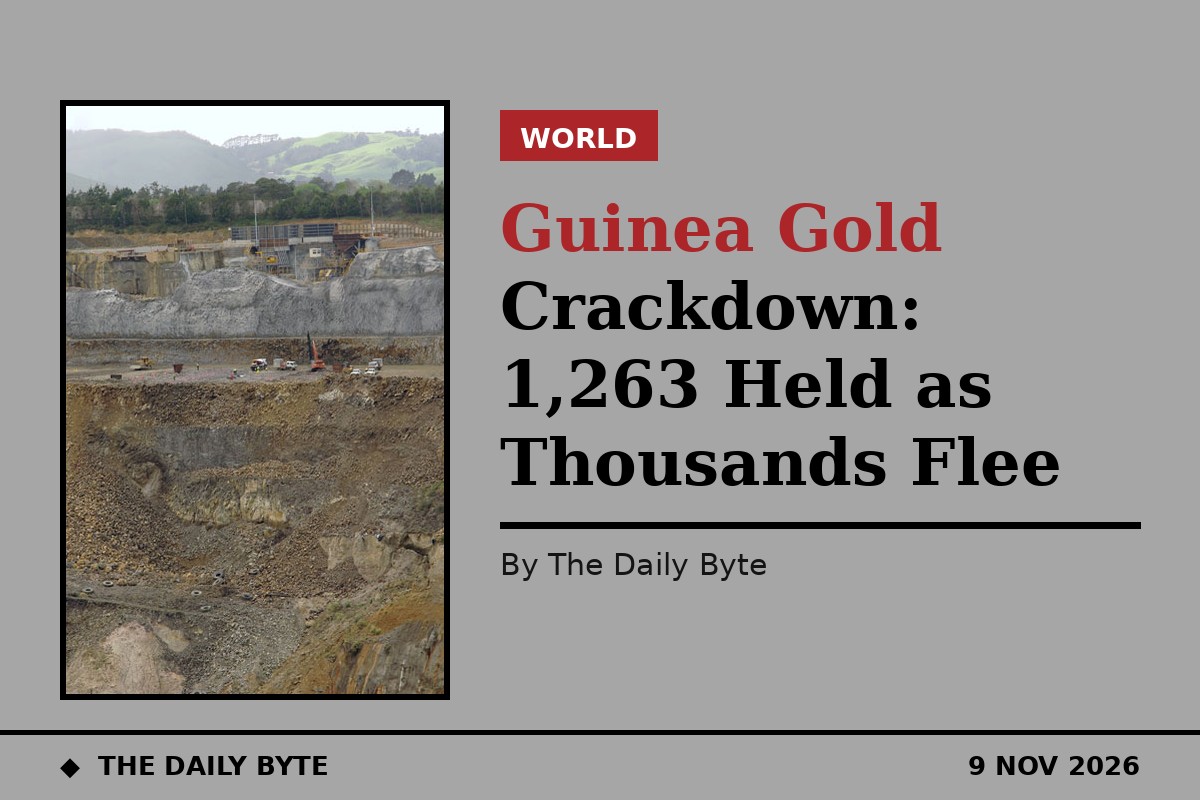
Guinea has arrested 1,263 people suspected of illegal gold mining in a sweeping enforcement operation in the north-eastern Siguiri region, triggering a cross-border displacement crisis that has pushed thousands of foreign miners into neighbouring Mali.
The arrests were reported in a joint statement by Guinea's defence and security ministries. Those detained include nationals of Burkina Faso, Mali, Togo, Niger, Ivory Coast and Ghana, according to the statement.
The crackdown follows a ban on unauthorised artisanal and small-scale gold mining that took effect on 2 November. President Mamadi Doumbouya's administration says the operation is aimed at environmental destruction, land degradation and the pollution of waterways caused by unregulated gold extraction.
Thousands displaced into Mali
The enforcement operation has forced large numbers of foreign miners to abandon their sites. Mali says it has received approximately 160,000 people displaced by the measures as of 7 November, including large numbers of Burkinabe nationals alongside people from Ivory Coast, Senegal, Togo and Benin.
Mali has described the situation as a humanitarian emergency, reporting six deaths in the border town of Kourémalé and indicating that some displaced people have sustained injuries. A separate, unnamed Burkinabe government source told the AFP news agency that four people had died, without explaining the circumstances.
Burkina Faso has begun repatriating its citizens, announcing the deployment of 199 buses in five convoys along the Ouagadougou-Bamako route to bring thousands of nationals home. More than 8,000 Burkinabe gold miners were reportedly expelled from Guinea, according to an approximate local count cited by AFP. That figure has not been independently verified.
Row over how the operation was handled
Burkina Faso's Security Minister, Mahamadou Sana, has criticised the way Guinea carried out the operation, alleging that some of his compatriots suffered injuries and deaths and questioning why Guinea did not coordinate the exercise with Ouagadougou in advance.
Sana, who visited Bamako on 4 November to coordinate assistance and transport with the Malian authorities, alleged that returnees included injured people, some with gunshot wounds. Those allegations have not been independently verified, and Guinea has not issued a specific public response to them.
The Guinean government says inspections over recent months revealed serious environmental damage from unauthorised and disorderly gold extraction around Siguiri, near the Malian border. Authorities cited damage from heavy machinery, the washing of minerals in waterways, and the use of harmful substances including mercury and cyanide.
A regional problem
The crackdown exposes how difficult it is to tackle illegal gold mining through enforcement in one country alone. As one country tightens restrictions, displaced miners may seek alternative mining locations across borders, moving environmental and security problems to neighbouring states.
Ivory Coast is also tightening its own response. In September, its National Security Council announced further measures, including the deployment of 21 river security platoons, stronger anti-illegal-mining brigades, tougher sanctions and a six-month moratorium on issuing permits for semi-industrial and artisanal mining.
For now, the immediate movement has been largely towards Mali, with organised repatriation efforts under way for Burkinabe nationals. There is currently no confirmed evidence that large numbers of displaced miners are heading specifically to Ghana or Ivory Coast, although both countries have sizeable artisanal mining sectors of their own.