Gulf crude flows recover but freight costs stay high
By The Daily Byte
·11 Nov 2026
·2 min read
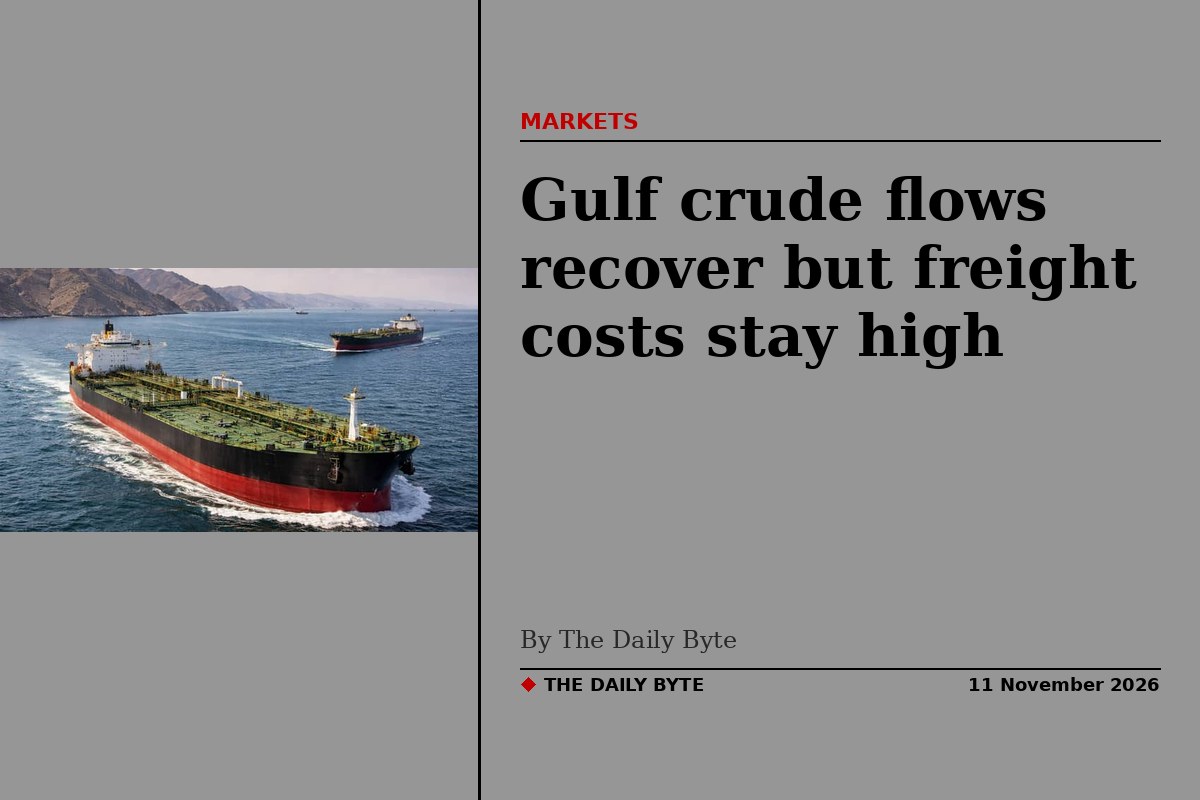
Crude exports from the Middle East have recovered to close to pre-war levels, but moving each barrel still costs far above normal, keeping delivered prices high for refiners even as headline prices fall. Moving a barrel out of the Gulf now costs roughly $5 to $30, against about $5 before the war, according to OilPrice's assessment cited by [GazeWire](https://gazewire.com/energy-climate/oil-gas-petrochemicals/gulf-crude-flows-near-pre-war-levels-but-freight-keeps-costs-elevated).
## Saudi Arabia cuts prices to stay competitive
Saudi Aramco cut its December-loading Arab Light price for Asian buyers by $2 a barrel, to a $6.50 discount against the Oman/Dubai average, the widest since May 2020. Physical Dubai and Murban grades also weakened through late October. Last week the November Dubai contract traded in contango, signalling prompt supply outrunning demand, for the first time since early July.
## Freight rates favour US refiners
Reuters reported on 6 November that freight costs for shipping crude from the US Gulf Coast to Asia had jumped to $30 to $35 a barrel, from about $5 a year earlier, according to Valero Energy, via [SRN News](https://srnnews.com/soaring-freight-rates-give-us-refiners-edge-as-crude-discounts-widen/). The surge forced sellers to deepen discounts on heavy crude and handed US Gulf Coast refiners a cost advantage, with their refining margins more than doubling in the third quarter.
## Product flows still far below normal
Refined product flows have not recovered with crude: Saxo Bank's Ole Hansen said Middle East refined product flows remain at just 37% of normal. ADNOC chief Sultan Al Jaber told the ADIPEC 2026 conference that close to 1 billion barrels had been drawn from global inventories, with diesel stocks in some markets at a 35-year seasonal low. Brent fell about 17% over five trading sessions to just above $91 early on Tuesday, but Aramco chief Amin Nasser has said rebuilding inventories while meeting demand could take up to two years.