Gwadar Free Zone Pushes Chinese Industry Drive
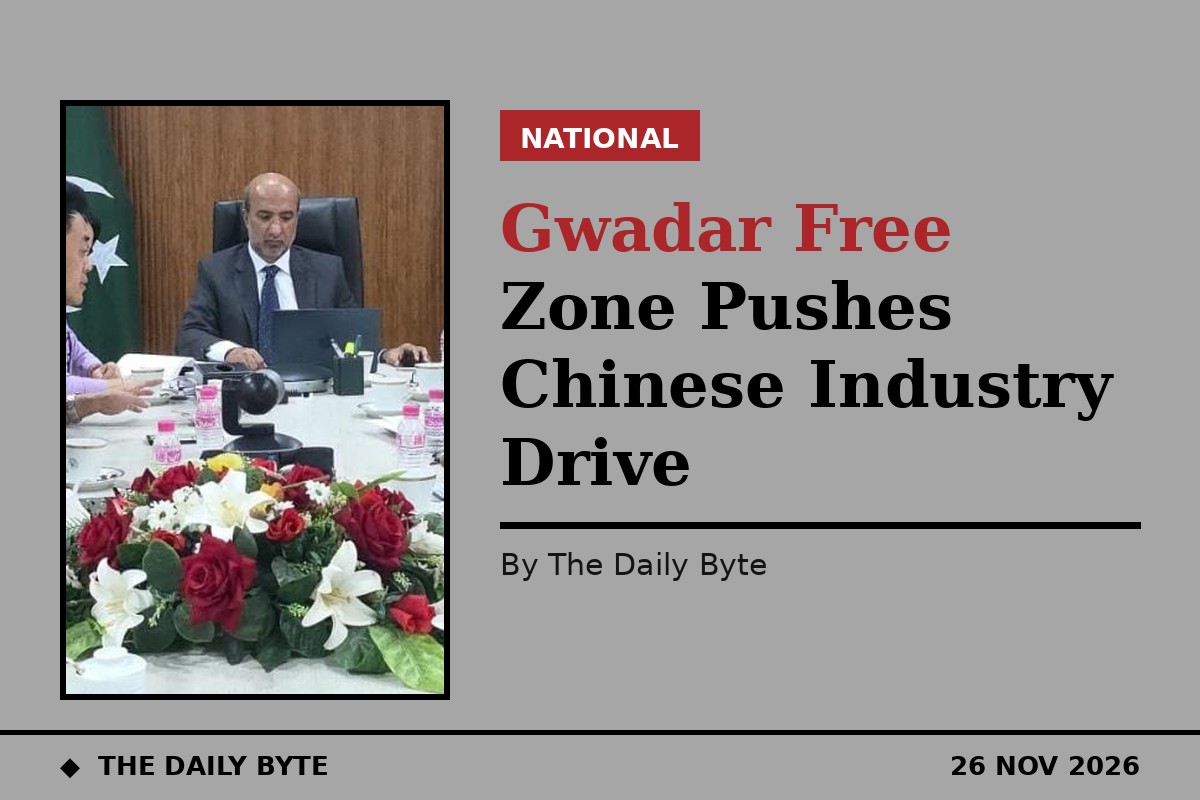
The Gwadar Port Authority (GPA) has stepped up efforts to attract Chinese investment and build new industries in the Gwadar Free Zone, with local hiring put first.
GPA Chairman Noorul Haq Baloch chaired a high-level meeting attended by China Overseas Ports Holding Company (COPHC) Chairman Professor Hu Bo, the Guangdong Metal Processing Industry Association and a Qingdao-based company. The meeting reviewed prospects for establishing new factories and industrial units, promoting investment, improving the business environment and facilitating investors.
Local youth first for jobs
Baloch said creating employment for local communities and providing business, legal and administrative facilities to investors were key priorities. A proposal was put forward to prioritise youth from Gwadar in recruitment, followed by young people from Makran and then the rest of Balochistan.
Participants agreed to provide technical and vocational training to local youth in line with Chinese industry standards. The GPA chairman highlighted the role of the Pak-China Technical and Vocational Institute in developing a skilled workforce to meet industrial requirements.
What investors are being offered
Baloch said investors in the Gwadar Free Zone enjoyed various incentives, including import duty exemptions, while proximity to the port made it easier to import raw materials and export finished products, giving the free zone an advantage over other industrial centres.
The meeting also reviewed land allocation, leasing, licensing and construction permits within the free zone. Baloch assured investors of all possible assistance in obtaining legal and administrative approvals.
Wider trade ambitions
Participants also discussed prospects for trade access to Central Asian countries through Iran, transit trade opportunities and proposed legislation to further facilitate foreign investors.
The meeting reaffirmed the commitment to transforming the Gwadar Free Zone into a hub of Chinese investment, industrial production and international trade, while generating employment and economic opportunities for local communities. No investment figures or project timelines were announced at the meeting.
Why the Free Zone matters
The Gwadar Free Zone sits beside one of Pakistan's most strategically placed deep-sea ports, at the mouth of the Gulf and close to shipping lanes carrying energy and goods between the Gulf, Africa and Asia. Its first phase opened years ago with a modest roster of tenants, and officials have since talked up plans to expand it into a fuller industrial park.
For Beijing, the zone is part of the wider China-Pakistan Economic Corridor, linking western China to the Arabian Sea. For Islamabad, the test is whether the port can move beyond construction and shipping milestones and generate steady factory jobs and exports. That is why the meeting's emphasis fell on practical steps, land, licences, training and investor facilitation, rather than on new announcements.
What to watch
The next signals to look for are concrete: named factories breaking ground, signed investment figures, and local hiring numbers from the training pipeline. Until those appear, the Free Zone push remains a statement of intent, backed by a meeting, a training agreement and a hiring pledge.