Health Secretary Says AI Could Cut NHS Staffing in Some Areas
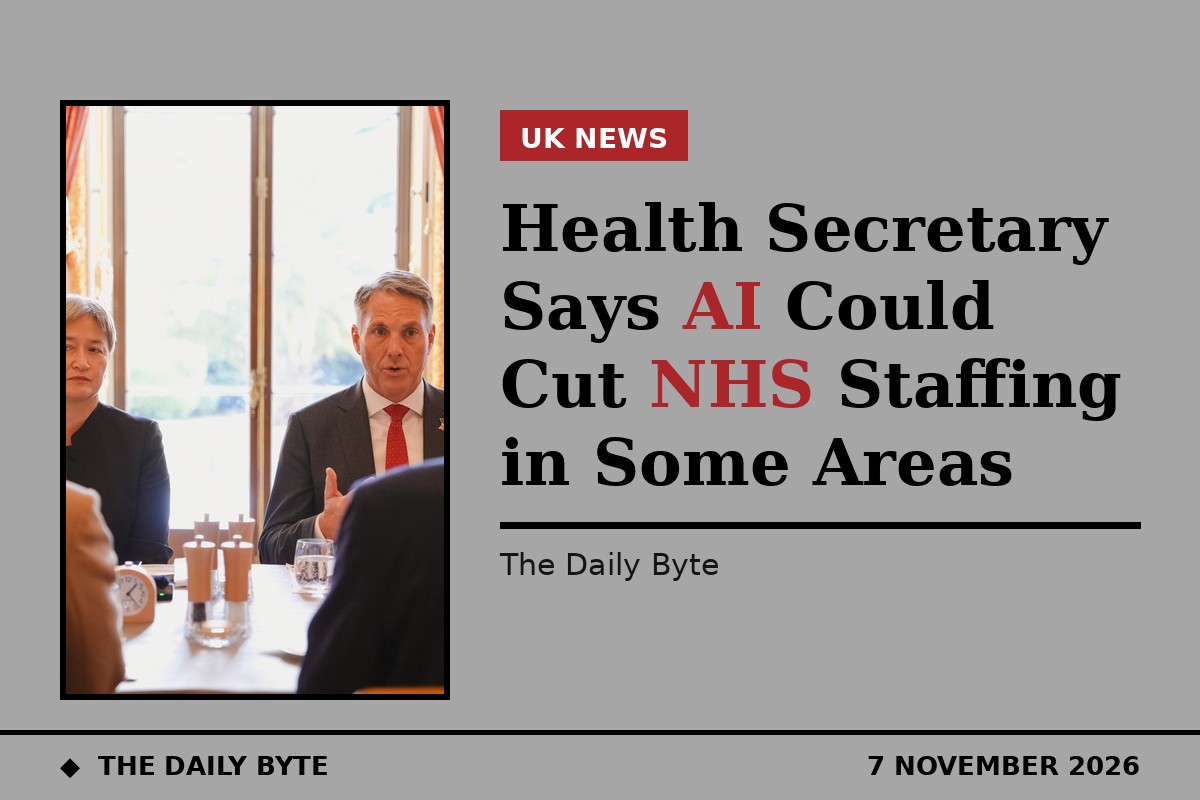
Artificial intelligence could reduce the number of staff needed in some parts of the NHS, the Health Secretary has said, as the government delays its 10-year workforce plan to the new year.
Yvette Cooper told MPs on the Health and Social Care Committee on 4 November that the plan, previously expected this year, would now be published in the new year, with no date given. She said advances in AI were making future staffing needs harder to predict.
"It will lead to us wanting to increase certain areas but also to potentially reduce certain areas as well," Cooper said. Technology was "changing things substantially", she said, making long-term workforce planning more uncertain.
More staff still needed in some areas
Cooper named no roles that could see reduced demand, and announced no job cuts. She pointed instead to areas needing more staff — speech and language therapy, general practice and community services — as the government shifts care away from hospitals.
"Part of what we need to do is have some humility around the idea that a 10-year plan, the idea that we can predict what we're going to need in 10 years, is actually just so much harder now than it was even just two or three years ago as a result of technology changing," she told the committee.
NHS England is already rolling out AI tools to cut admin work. In June 2026 it began giving Microsoft 365 Copilot to 505,000 NHS staff, after a trial found it saved staff an average of 43 minutes a day.
The delay follows a Department of Health and Social Care call for evidence on the workforce plan, launched in September 2025. Cooper said the government could instead give training providers clearer indications of where staffing needs to grow, alongside further modelling.