Tanker hit near Hormuz pushes Brent above $117 as oil heads for fourth monthly gain
Tanker attacked in the Strait
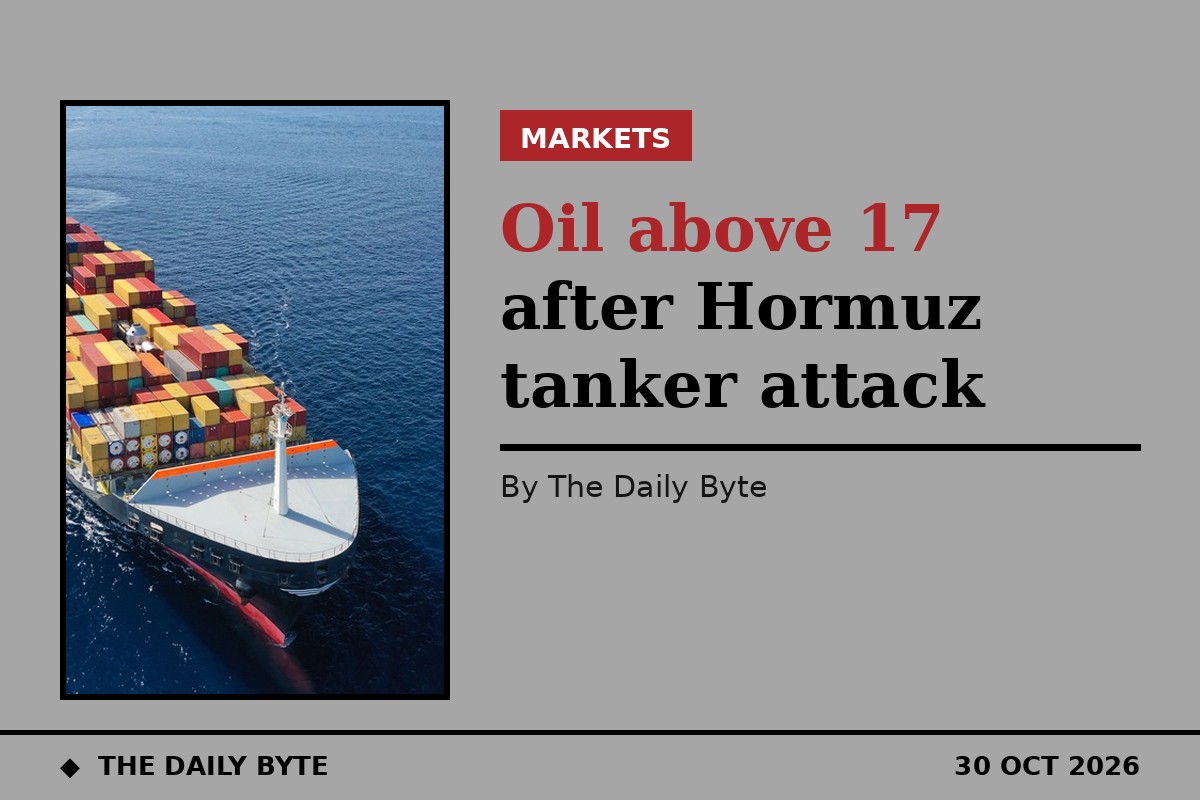
A tanker passing through the Strait of Hormuz was struck after a small boat fixed explosive devices to its hull, according to the United Kingdom Maritime Trade Operations agency. The agency placed the incident about 25 nautical miles north-east of Khasab, Oman, at 2212 UTC on 29 October. Reports of the attack said the blasts caused a fire in the vessel's engine room.
The strait is the main sea outlet for crude and fuel shipped from the Gulf, so any incident there tends to move prices quickly even when production itself is untouched. Traders treated this attack as a fresh reminder of that shipping risk rather than as a confirmed loss of output. The incident came alongside continued Houthi attacks on Saudi sites, which had already kept supply fears elevated through the week.
Prices climb through Friday morning
Brent crude futures for December, which expired on Friday, rose $1.20, or 1.04%, to $116.08 a barrel as of 0323 GMT, while the more actively traded January contract gained $1.39 to $112.19. United States West Texas Intermediate crude rose $1.37, or 1.34%, to $103.37 at the same time. Later morning trading readings were higher still, with Brent reported at $117.15, up 1.98%, and WTI at $103.79, up 1.75%.
For the month, Brent was on course for a gain of nearly 11% on the early Reuters reading, with WTI heading for a 14% rise, marking a fourth consecutive monthly increase for both benchmarks. Other Friday reports put the monthly Brent gain at about 13% and the WTI gain at about 15%, reflecting different times of day. Since the end of June, Brent had gained more than $40 a barrel and WTI about $34, according to the OilPrice report.
What traders are watching next
Market analysts flagged the next two weeks as a period of extra volatility, citing Israel's parliamentary election and the United States midterm congressional vote on 3 November. Saxo Bank's head of commodity strategy, Ole Hansen, said at a Singapore media briefing on Thursday that the uncertainty made forecasting difficult. He added that he expected crude to trade in a higher range of $70 to $90 a barrel, compared with a pre-war level of $60 to $70, even after the conflict ends, because of the risk of renewed hostilities and the need to rebuild inventories.
Separately, the United States Energy Department said it awarded contracts on 28 October for nearly 16.8 million barrels, a factor traders also weighed against the disruption premium. The next scheduled market markers include the OPEC+ meeting on 1 November. For now, the market's direction remains tied less to weekly inventory figures than to whether shipping through Hormuz stays open and whether the Houthi campaign against Saudi infrastructure widens.
Sources: Reuters