Houthis Threaten Saudi Red Sea Ports Over Hodeidah
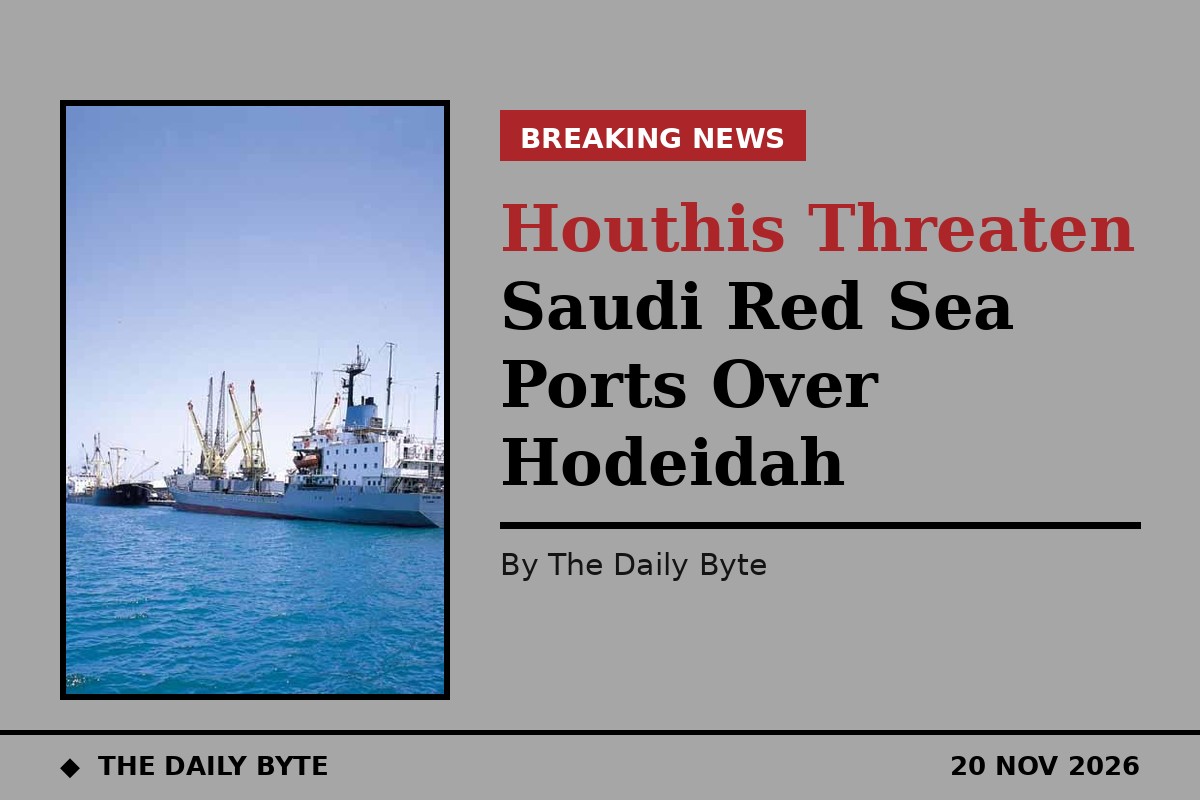
Yemen's Houthis have threatened to strike Saudi Arabia's Red Sea ports, including Jeddah, if the Saudi-led coalition carries out a threatened attack on the Houthi-held port of Hodeidah.
Houthi military spokesman Yahya Saree said in a statement on Friday that Jeddah port and every other Saudi port on the Red Sea coast would become targets for his forces if the coalition bombed Hodeidah. He warned port workers and shipping companies to move away from the Saudi terminals at once.
"We warn all employees, workers, and those in the vicinity of these ports to evacuate them immediately and stay away. We also urge all shipping companies to immediately evacuate their ships from these ports," Saree said, according to Reuters.
The warning was the Houthis' answer to a coalition announcement on the same day. The Saudi-led coalition asked civilians on Friday to evacuate areas in and around the strategic port of Hodeidah, on Yemen's Red Sea coast, for their own safety, and published a map showing the area covered by the evacuation call.
A threat aimed at shipping, not just soldiers
Hodeidah is the main port serving the parts of Yemen under Houthi control, including the capital, Sanaa. It handles food, fuel and commercial cargo for millions of people, and it has been a flashpoint throughout Yemen's war. A strike on the port would hit the Houthis' most important supply line — and the Houthis' reply threatens the equivalent prize on the Saudi side.
Jeddah Islamic Port is Saudi Arabia's largest port on the Red Sea and one of the busiest in the Arab world. It sits in the middle of the shipping route between east and west through the Suez Canal, and its container terminals handle cargo for the whole of western Saudi Arabia. Any attack on it would be an attack on commercial shipping, not only on a military target, and the Houthis' call for shipping companies to remove their vessels underlines that the threat is aimed at trade as much as at the coalition.
The Houthis also warned airlines to avoid Saudi airspace, extending a threat that has already disrupted Gulf aviation. Airlines have suspended or cut flights to Saudi cities in recent weeks as missile and drone attacks on the kingdom have intensified.
A week of escalation on both sides
The exchange follows the sharpest escalation of the Saudi-Houthi front in years. On Thursday, a Houthi strike hit Riyadh's tallest skyscraper, the PIF Tower in the King Abdullah Financial District, headquarters of Saudi Arabia's sovereign wealth fund. Saudi civil defence said the attack caused material damage to several floors of the tower and nearby buildings, but no injuries were reported.
On Friday, the Saudi-led coalition said its air defences had intercepted and destroyed four ballistic missiles launched by the Houthis towards the kingdom's southern region. Saudi civil defence said drones had also been intercepted in the south and issued early-warning alerts for Jazan, Abha and Khamis Mushait before announcing that the danger had passed. Jazan is home to a 400,000-barrel-per-day Aramco refinery on the Red Sea coast.
Cross-border fighting between the Saudi-led coalition, which backs Yemen's internationally recognised government, and the Houthis, who control Sanaa, has intensified since the war between the United States, Israel and Iran widened in February. The Houthis, who are aligned with Tehran, have stepped up missile and drone attacks on Saudi airports, energy infrastructure and military bases, while the coalition has carried out airstrikes on Sanaa and other Houthi-held areas.
What happens next
Neither side has said what it will do next. The coalition has not confirmed whether it intends to strike Hodeidah, and the Houthis have not attacked a Saudi port — the threat is conditional on a coalition strike on Hodeidah that has not yet happened.
But the pattern of the past week suggests neither warning should be treated as empty. The Houthis have already shown they can reach Riyadh, and the coalition has shown it is willing to strike deep into Houthi-held Yemen. With shipping through the Red Sea already under strain from the wider regional war, a new front around the ports would put commercial vessels, crews and cargoes directly in the line of fire.
Sources: Reuters; Devdiscourse.