How to Get Free NHS Prescriptions in the UK
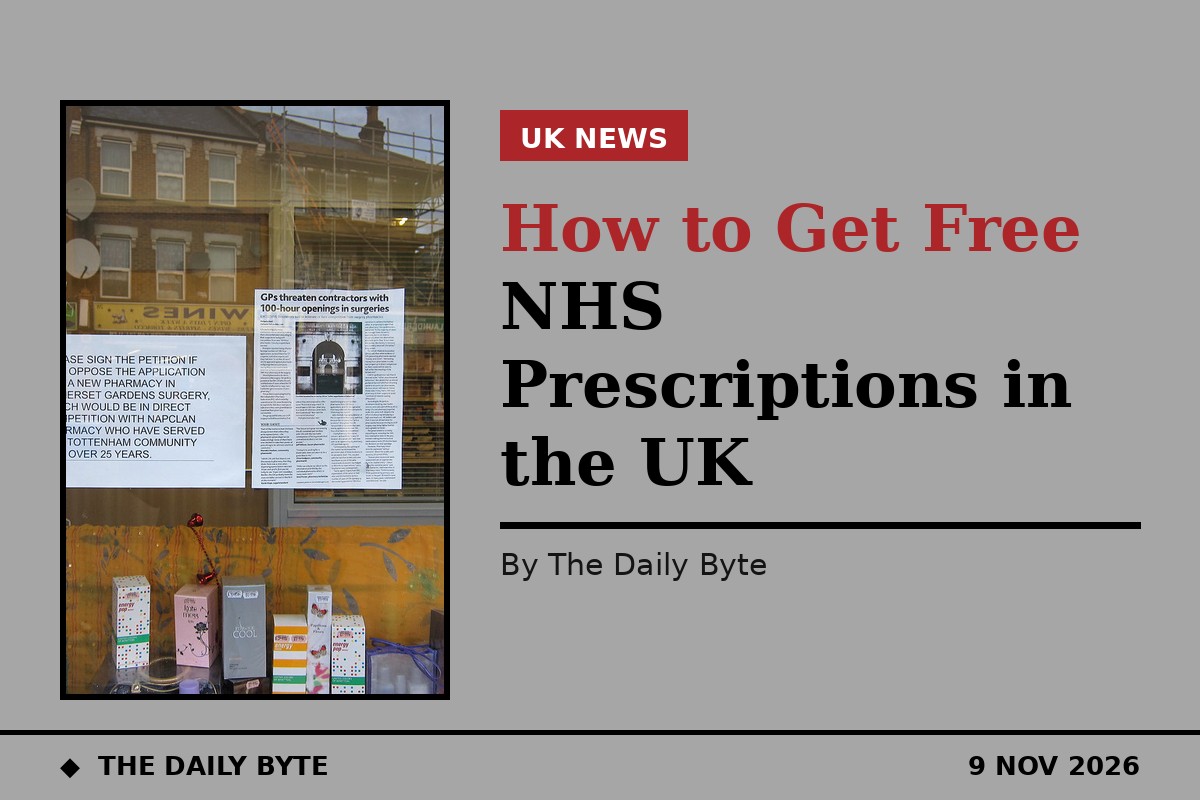
Most adults in England have to pay for their NHS prescriptions, and at £9.90 per item the cost can add up quickly if you take several medicines every month. Yet millions of people qualify for free prescriptions and never claim them, either because they do not know the rules or because they assume the help is only for pensioners and children. The truth is wider than that. Age, pregnancy, certain medical conditions, some benefits and low income can all entitle you to pay nothing at the pharmacy counter, and if none of those apply, a prepayment certificate can still cap what you spend. Prescriptions are free for everyone in Scotland, Wales and Northern Ireland, so this guide applies to prescriptions dispensed in England.
How much do NHS prescriptions cost?
The NHS prescription charge in England is £9.90 per item, and the charge has been frozen for 2026/27. That means every medicine on a prescription form normally costs £9.90, so a form listing three different medicines costs £29.70. Some items are always free, including contraceptives prescribed for contraceptive use and medicines prescribed for sexually transmitted infections, and from 1 December 2025 the same free supply was extended to treatments for tuberculosis and latent tuberculosis infections. Hospital inpatients also get their medicines free while they are in hospital. Everything else is charged unless you qualify for an exemption or hold a prepayment certificate.
Who gets free prescriptions because of their age?
Age is the simplest route to free prescriptions. You do not pay if you are under 16, or if you are 16, 17 or 18 and in full-time education at a school, college, university or similar establishment, including home tutoring. Apprenticeships do not count as full-time education for this purpose, so a 17-year-old apprentice is not automatically exempt on age grounds, although they may qualify another way, for example through the NHS Low Income Scheme. At the other end of life, everyone aged 60 or over gets free prescriptions. If your date of birth is printed on the prescription form, you do not even need to sign a declaration; if it is not printed, the pharmacy may ask for proof of age such as a driving licence, passport or birth certificate.
Pregnancy and maternity exemption
If you are pregnant, or you have had a baby in the last 12 months, you can get free NHS prescriptions with a valid maternity exemption certificate, known as a MATEX. The certificate also gives you free NHS dental treatment. Your doctor, midwife or health visitor can apply for it, using form FW8, which must be signed by both you and your healthcare provider. It is important to know that being pregnant alone is not enough: without a valid certificate in place, you are not entitled to free prescriptions, so ask for the application early in your pregnancy. A MATEX remains valid even if the pregnancy ends in miscarriage, stillbirth or termination, until the certificate itself expires.
Medical exemption certificates
Some long-term medical conditions entitle you to free prescriptions for all of your medicines, not just the ones that treat the condition itself. The qualifying conditions include diabetes that needs medication, hypothyroidism, epilepsy that needs continuous anticonvulsant therapy, a permanent fistula, a stoma that needs a continuous surgical dressing or appliance, cancer while you are being treated for the cancer, its effects or the effects of treatment, and a continuing physical disability that means you cannot go out without another person helping you. Having one of these conditions is not enough on its own: you need a valid medical exemption certificate, and your GP completes and submits the application form, known as FP92A, on your behalf. If you are unsure whether your condition qualifies, speak to your doctor, who can check the full list in the NHS Drug Tariff. People with rheumatoid arthritis should note that the condition itself is not on the qualifying list, although they may qualify through another route, such as the disability category or their age or benefits.
War pensioners
If you hold a valid war pension exemption certificate, prescriptions for your accepted disablement are free. Medicines for other conditions still have to be paid for, so the pharmacist should put the items for your accepted disablement on a separate prescription form from anything else. The certificate is issued by Veterans UK, and the helpline can be reached on 0808 1914 218.
Free prescriptions through benefits
Several benefits also bring free prescriptions, but the details changed in 2025 and 2026, so older advice may now be out of date. You are entitled to free prescriptions if you or your partner receive income-related Employment and Support Allowance, or Pension Credit Guarantee Credit. Tax credit exemption certificates stopped being valid in April 2025, and Income Support and income-based Jobseeker's Allowance stopped being valid exemption categories from 15 April 2026, when both benefits were abolished as part of the move to Universal Credit. A short two-week run-on covered prescriptions dispensed up to 14 April 2026, but after that date those two reasons no longer work. People who were on those benefits and have moved to Universal Credit need to check the Universal Credit rules instead. Receiving Personal Independence Payment, Disability Living Allowance or Incapacity Benefit on its own does not entitle you to free prescriptions, and neither does Pension Credit Savings Credit on its own. Contribution-based Jobseeker's Allowance and contribution-based Employment and Support Allowance paid on their own do not qualify either.
Universal Credit: the earnings limit matters
Universal Credit is the most commonly misunderstood route. Being on Universal Credit does not automatically mean your prescriptions are free. You qualify only if, in your most recent assessment period, your earnings were £435 or less, or £935 or less if your Universal Credit includes an element for a child, or if you have limited capability for work and work-related activity. For couples, the limit applies to your joint earnings. An assessment period runs for a calendar month from the date of your Universal Credit claim, so your entitlement can change from month to month as your earnings change. If your earnings are above the limit in the latest assessment period, you must pay for that prescription, even if you qualified the month before. Your Universal Credit award notice or statement is the proof the pharmacy needs, and you can check your own position on the NHS exemption checker before you tick the box.
The NHS Low Income Scheme and HC2 certificates
If you are on a low income but not on a qualifying benefit, the NHS Low Income Scheme may still help. You apply using form HC1, available from GP surgeries, pharmacies, Jobcentres and Citizens Advice, or online through the NHS Business Services Authority. If your application succeeds, you receive an HC2 certificate, which gives you free prescriptions, as well as help with dental treatment, eye tests, healthcare travel costs and wigs and fabric supports. Your partner and any dependent children under 19 named on the claim are covered too. The scheme looks at your income and your savings: for most people the capital limit is £16,000, and it is £23,250 if you live in a care home. An HC3 certificate, by contrast, gives only partial help with health costs and does not cover prescriptions at all. Asylum seekers who hold an HC2 certificate are also entitled to free prescriptions, and those receiving section 95 support are sent one automatically.
Prepayment certificates: capping the cost
If you are not exempt but you need regular medicines, a Prescription Prepayment Certificate, or PPC, can save you a lot of money. A three-month PPC costs £32.05 and a 12-month PPC costs £114.50, and each covers all of your NHS prescriptions for its duration, no matter how many items you need. The 12-month certificate pays for itself if you need more than 11 items in a year, and the three-month version pays for itself after more than three items in three months. There is also a separate Hormone Replacement Therapy PPC, which costs £19.80 for 12 months and covers an unlimited number of listed HRT medicines for the menopause. It pays for itself after just two HRT items. You can buy a PPC online through the NHS Business Services Authority, by calling 0300 330 1341, or from a pharmacy registered to sell them. The HRT PPC has its own helpline on 0300 330 2089. People registered with the England Infected Blood Support Scheme can apply for a free PPC.
Care leavers: a change that is coming, not yet here
In December 2025 the government announced that young people leaving care will be entitled to free NHS prescriptions up to the age of 25. That change still needs legislation before it can operate, so until the law is amended, care leavers should keep paying for prescriptions unless they qualify under another rule. It is a good example of why you should check the current position rather than relying on headlines: an announcement is not the same as a live entitlement.
What happens if you claim wrongly?
The NHS routinely checks exemption claims, and pharmacies are required to warn you that checks take place. If you claim free prescriptions when you are not entitled, you can be sent a penalty charge on top of the prescription cost, and in some cases you could face prosecution. This applies even if you have a qualifying medical condition but did not hold a valid certificate on the day you collected the medicine. If you are unsure whether you qualify, the safest step is to pay for the prescription and ask the pharmacy for an FP57 refund form, which lets you claim the money back later if it turns out you were entitled. You can also use the NHS eligibility checker online, a five-minute survey that tells you whether you can get help with prescriptions, dental treatment and eye tests. Always check before you tick the exemption box, because the declaration is your responsibility, and getting it wrong is expensive.