Huawei Trial in New York Puts Telecom Giant on Stand
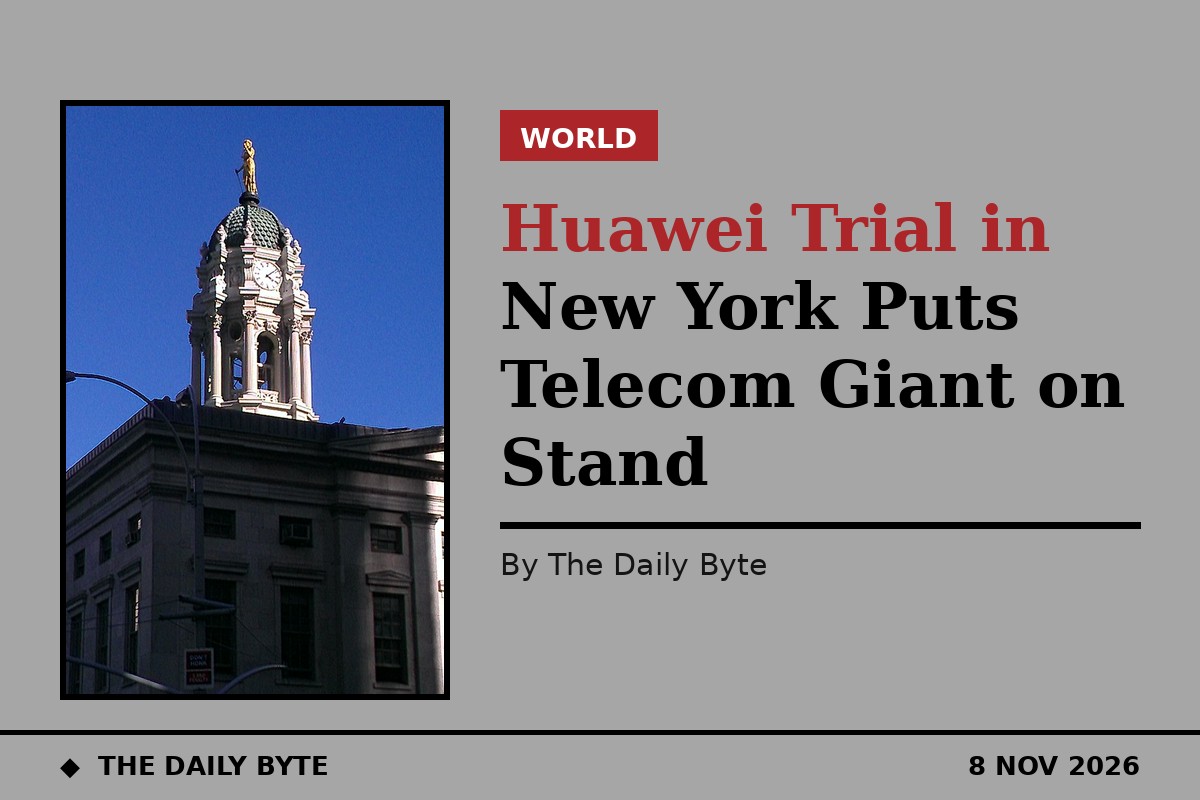
The world's biggest telecommunications company is on trial in New York, accused of stealing American technology and evading US sanctions on Iran. The case against Huawei, which opened in a Brooklyn federal court in early September, is one of the most closely watched corporate trials in years, and its outcome could shape the global technology rivalry between the United States and China.
US prosecutors have told jurors that Huawei ran what they call a criminal enterprise. "Theft, lies, cover-up," Department of Justice trial attorney Taylor Stout said in the government's opening statement. "For 20 years, that's how Huawei, a massive Chinese telecommunications company, victimised American companies and abused the American financial system, all in an effort to dominate the telecommunications industry around the world."
Prosecutors say Huawei enacted "a far-reaching criminal scheme extending over twenty years" and that "crime was an important business strategy." The company faces 12 felony charges, including racketeering, bank and wire fraud, money laundering and trade-secret theft. No individual executives are standing trial.
The government alleges that Huawei conspired to steal trade secrets from five American companies. Prosecutors told the jury the company sought operating system source code for internet routers from Cisco Systems and a robotic arm used by T-Mobile to test mobile phones. They also say Huawei paid bounties to employees who recruited workers away from rivals and brought their trade secrets with them.
Another strand of the case concerns Iran. Prosecutors say Huawei lied to its Western banking partners about doing business in Iran in violation of US sanctions, using a firm called Skycom to move money through the American financial system. The case is based in part on reporting by Reuters in 2012 and 2013 about close ties between Huawei and Skycom, which operated in Iran.
The trial's roots go back to 2018, when US prosecutors first charged Huawei and its chief financial officer, Meng Wanzhou, with bank fraud and sanctions violations. Meng was detained in Vancouver in December 2018 on a US warrant. The charges against her were later dismissed under a deferred prosecution agreement, but admissions she made are expected to be introduced as evidence at the trial.
Huawei's lawyers have rejected the prosecution's account. "It's about competition, not conspiracy. Innovation, not theft. Ordinary business dealings, not criminal conduct," defence lawyer Brian Heberlig told jurors in his opening statement. "Huawei earned its success. There was no blueprint for crime." He accused prosecutors of cherry-picking isolated incidents and said the Cisco and T-Mobile episodes involved actions by individual employees.
The defence has also argued that Huawei supplied a lawful interception programme of the kind used in many countries, and that there is no evidence the company knew its dollar-clearing arrangements would break US sanctions law. A Chinese foreign ministry spokesperson said Beijing "firmly opposes the US side's suppression and containment of Chinese enterprises."
The judge, Ann Donnelly, has told jurors that China and the Chinese Communist Party "are not on trial," a reminder to separate the criminal charges from the geopolitical tensions around the company. Even so, the backdrop is hard to ignore: Huawei, founded in 1987 and employing about 210,000 people in more than 170 countries, sits at the centre of Beijing's push for a home-grown AI chip industry, while Washington has restricted its networking equipment in the US and banned suppliers from exporting American goods to the company without approval.
The trial is expected to last about three months. Judge Donnelly has said she hopes proceedings will conclude by Christmas, though the case may run into next year. If Huawei is found guilty, it is not yet clear what punishment the government would seek, given that the company is already under extensive US sanctions. As one legal expert put it, the case is remarkable simply for reaching a jury at all, since the vast bulk of corporate criminal cases are resolved through negotiated settlements.


