ICO gagging clauses lifted ahead of culture review
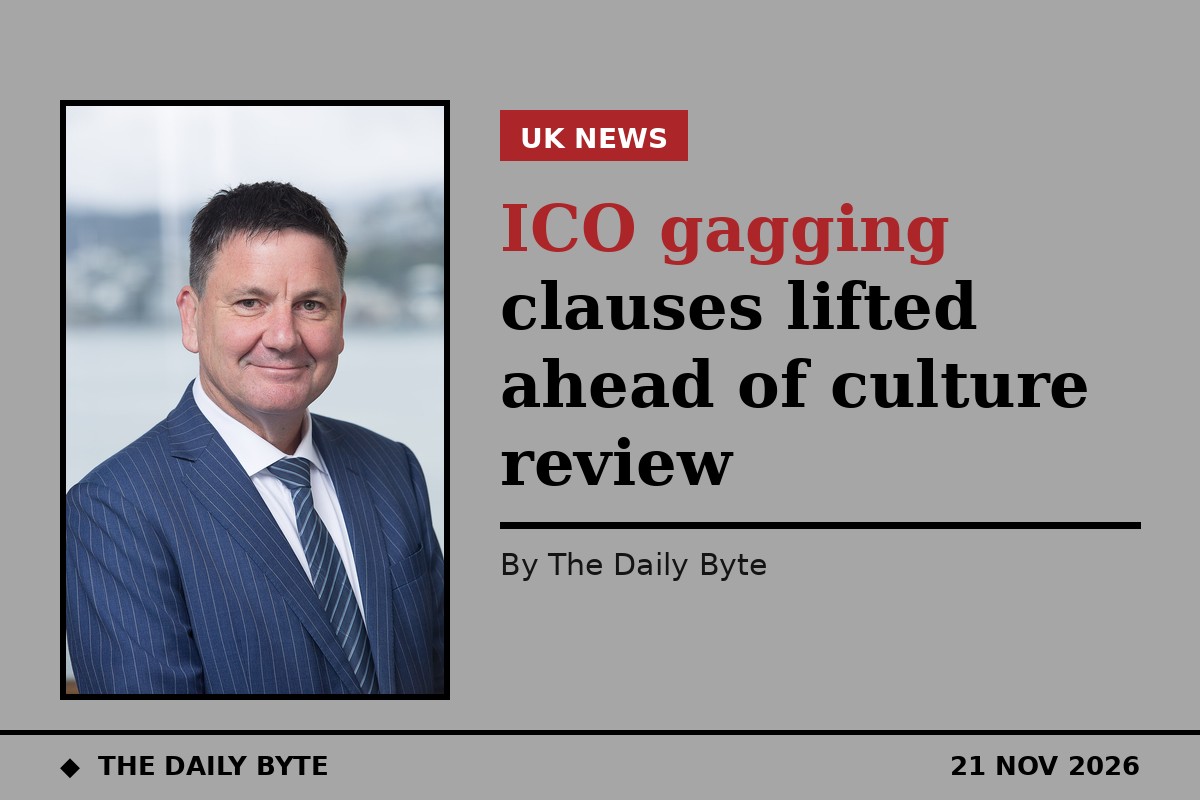
Non-disclosure agreements signed by staff at the United Kingdom's data watchdog will not be enforced, so that employees can speak freely to an independent review of the organisation's culture, the government has confirmed.
Ministers are expected to publish details of how the review of the working environment at the Information Commission will be carried out next week. The assurance covers taking part in the review: it does not amount to a blanket lifting of every confidentiality term for all other purposes.
Why the review was ordered
The review follows the resignation in June of the watchdog's former boss, John Edwards, after an independent investigation found there was a case to answer over reports of alleged inappropriate behaviour towards staff, including claims of sexual harassment. The Information Commission said the investigation found that Edwards' behaviour fell short of the conduct expected from a public official.
In a resignation statement posted on LinkedIn, Edwards said he disagreed with how the investigation had been carried out, but accepted that his position had become untenable. He said he accepted there had been occasions when he exercised poor judgement and made attempts at humour that were inappropriate and caused offence.
After his departure, the government announced a review of the Commission's culture and governance. Liz Kendall, then the Secretary of State for Science, Innovation and Technology, told MPs she was absolutely appalled at what the independent investigator had found, describing it as sexual harassment and bullying. Five months later, the review has still not begun.
Sixteen agreements worth more than 354,000 pounds
Freedom of Information requests have found that 16 current and former employees signed non-disclosure or confidentiality clauses since the start of Edwards' tenure in 2022, at a cost of more than 354,000 pounds. Nine of those agreements included a non-derogatory clause, which legally prevents employees from making negative comments in public.
That is a small proportion of the more than 1,000 people employed by the Commissioner. Government advice says public bodies should only use confidentiality clauses when necessary, and should not seek to stifle staff from raising concerns. Since 2025, new laws also mean the clauses cannot be used to silence employees who have been subjected to harassment or abuse.
Staff survey pointed to wider problems
An internal staff survey, published in August and released under freedom of information law, pointed to wider issues at the Commission, with 14 per cent of all employees reporting that they had either personally experienced or witnessed bullying, harassment and discrimination. Multiple current and former employees have also told the BBC they experienced or witnessed incidents of bullying or harassment.
In recent weeks the PCS and FDA, the two main civil service unions, have pressed for an external examination of the events leading up to Edwards' resignation, and have asked for staff who signed non-disclosure agreements to be released from them so they can contribute to the review. The PCS said other concerns had previously been raised with it about Edwards, including a bullying complaint that was investigated at the time.
Unions and MPs demand a genuinely independent review
PCS general secretary Fran Heathcote said the union's members at the Commission have been failed for too long by a toxic leadership culture that has allowed bullying and harassment to persist, leaving many staff fearful of speaking out. She welcomed the positive engagement the union had received from the Commission and officials at the Department for Culture, Media and Sport, but added that for the review to command the confidence of staff, it must be genuinely independent, robust in its approach, and prepared to identify where accountability lies.
Conservative MP Caroline Dinenage, who chairs the culture, media and sport select committee, said the Commission needed a firm new direction after the departure of its former boss, saying a leadership vacuum had compounded what went before at a rudderless organisation. She said it was vital the government brought in someone who can set a new tone and is dedicated to changing attitudes and protecting staff.
A spokesperson for the Information Commission said its commitment to an independent review reflected its ongoing commitment to listening and learning from the events of the past year and those leading up to it. Its new board, appointed this summer, has been working on fresh leadership, a new governance structure and a new strategy, the spokesperson added.
Why the watchdog matters
The Information Commission is one of the UK's most high-profile regulators, covering artificial intelligence, data protection and freedom of information. It recently won a court battle with TikTok after fining the social media platform 12.7 million pounds for misusing children's data, and it has penalised bodies including the Ministry of Defence, after an email blunder exposed the details of interpreters fleeing Afghanistan.