IMF sees Jamaica growth at 1.3% after Melissa
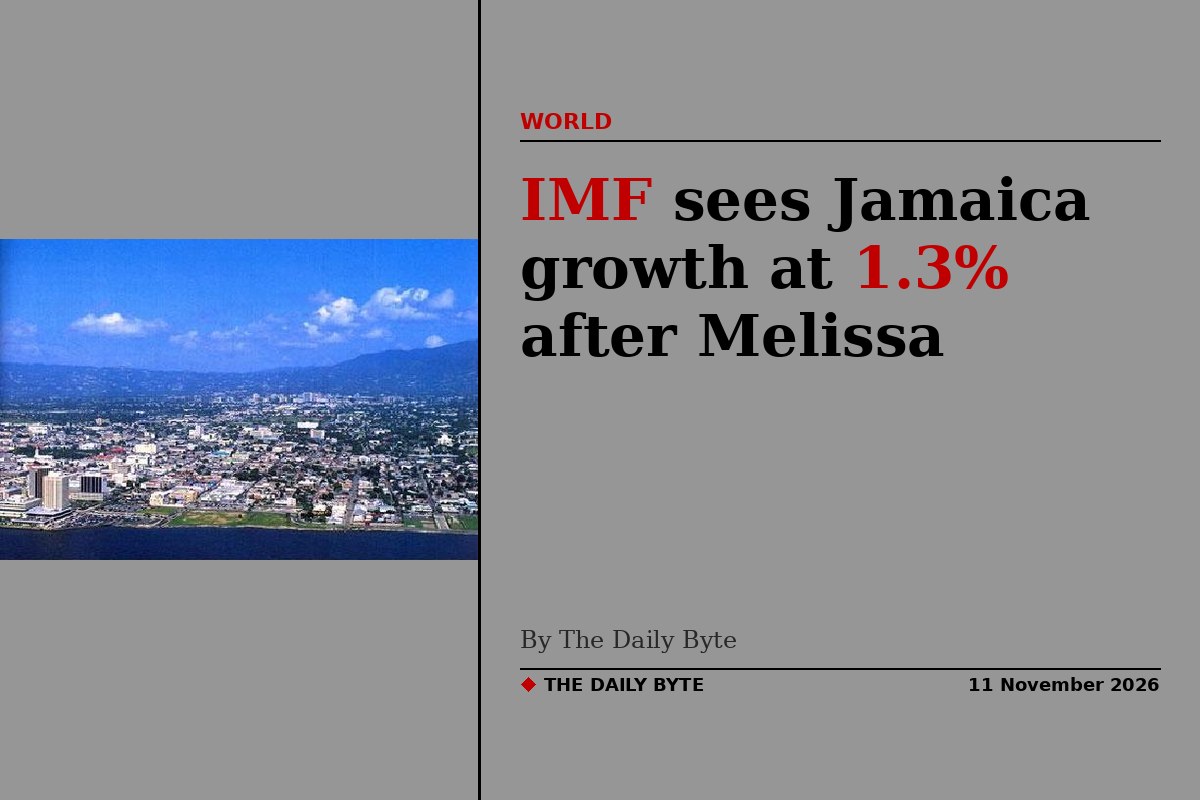
Jamaica's economy is recovering gradually from Hurricane Melissa and is expected to grow by 1.3 per cent in the 2026-27 financial year, the International Monetary Fund (IMF) has said. The forecast, published on 11 November 2026 at the end of an IMF mission to Kingston, follows a contraction of 1.2 per cent in 2025-26. The Fund expects output to return to its level before the hurricane by the middle of 2027, supported by reconstruction work and a recovery in tourism.
A gradual recovery
The IMF team, led by W. Raphael Lam, met Jamaican officials, business leaders, civil society groups and development partners in Kingston between 27 October and 4 November. It described Hurricane Melissa, which struck Jamaica on 28 October 2025, as the strongest storm in the country's recorded history, with damage estimated at about US$9.9 billion. The Fund said Jamaica's strong policy frameworks and sustained reforms had underpinned its resilience, and that an effective disaster-risk financing framework had helped cushion the shock while preserving the country's access to financial markets on favourable terms.
Tourism, one of the island's most important industries, is central to the recovery. Hotels and attractions damaged by the storm are being rebuilt, and visitor numbers are expected to climb as capacity returns. Reconstruction spending itself is also lifting activity, as damaged homes, roads, power lines and other infrastructure are repaired or replaced.
Inflation still above target
Inflation remains a concern. Headline inflation, driven largely by higher energy and food prices, has risen above the Bank of Jamaica's target range of 4 to 6 per cent. The IMF expects it to return within that range by mid-2027 as supply pressures ease. It backed the central bank's decision to raise its policy rate in September, calling it appropriate given above-target inflation and persistent price pressures, and said monetary policy should stay focused on anchoring inflation expectations. The Fund also suggested that greater exchange-rate flexibility would help Jamaica absorb external shocks over time.
Debt and the rebuild
The government eased its fiscal stance in response to the hurricane and activated the escape clause in its fiscal rule to support vulnerable households and reconstruction. Emergency financing, including through the IMF's Rapid Financing Instrument, provided rapid liquidity in the aftermath. Public debt reached about 66 per cent of gross domestic product in 2025-26, and the authorities expect it to fall to about 60 per cent by 2031-32. The IMF said rebuilding budget buffers should become the priority as reconstruction advances, through broader tax collection, stronger tax administration and restraint on non-priority spending.
A new National Reconstruction and Resilience Authority, known as NaRRA, is intended to lead the rebuilding effort. The IMF welcomed its creation but said work must continue on procurement, contract management, public investment and coordination between agencies to tackle bottlenecks. It also urged Jamaica to close long-standing infrastructure gaps and build back better, so the island is more resilient to future storms.
Risks ahead
The Fund warned that risks to growth are tilted to the downside, while risks to inflation remain on the upside. Higher energy and food prices linked to conflict in the Middle East, drought linked to El Nino and tighter global financial conditions could all weigh on growth and add to price pressures. At home, delays in reconstruction or in restoring tourism capacity would weaken the recovery. Looking further ahead, the IMF pointed to energy security and electricity infrastructure, including a faster shift to renewable energy, as a way to reduce Jamaica's exposure to imported fuel prices. It also called for continued progress on reducing crime, easing the regulatory burden on business, improving education and workforce skills, and tackling infrastructure bottlenecks.