IMF sees Pakistan growth reaching 3.5% in FY27
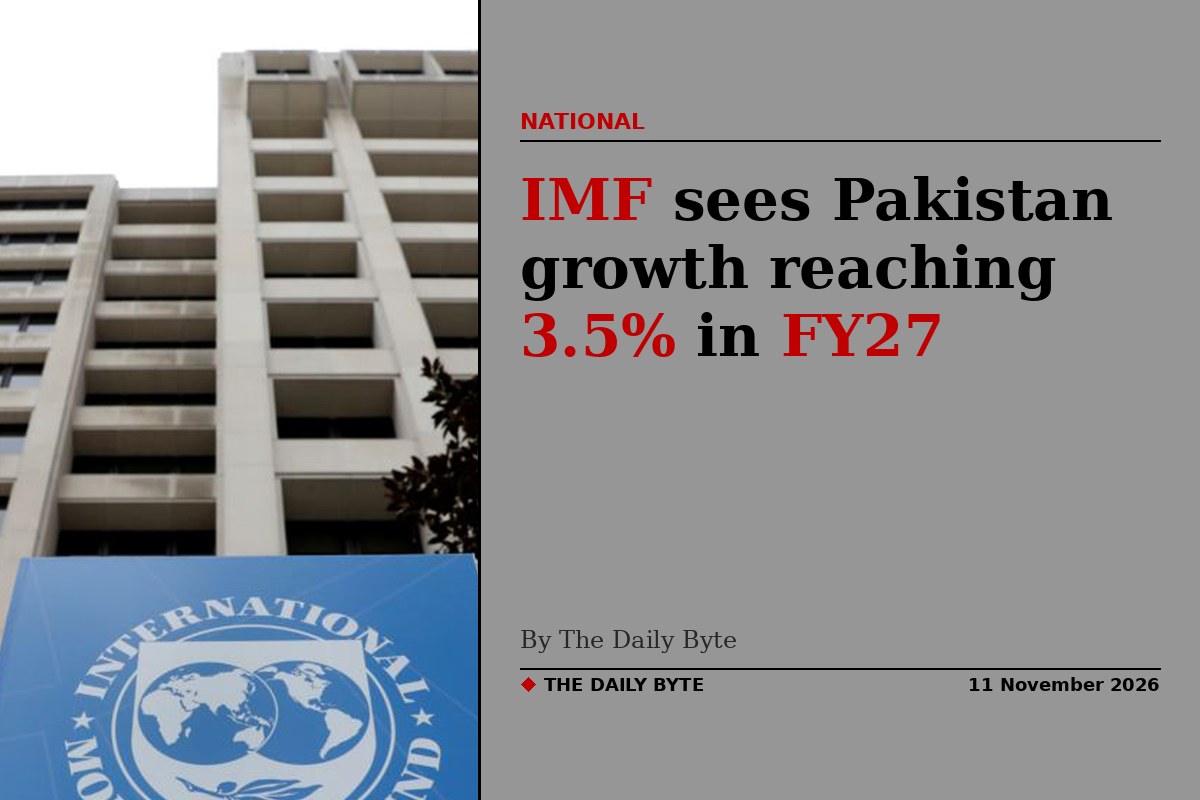
The International Monetary Fund expects Pakistan's economy to grow by 3.5 per cent in the current fiscal year, but it has raised its inflation forecast for the same period to 9.9 per cent, well above the government's target.
IMF Resident Representative Mahir Binici told a conference in Islamabad that Pakistan's growth rate was rising from 2 per cent to 3.5 per cent, describing the country's economic progress as a significant development.
Addressing a conference organised by the Sustainable Development Policy Institute (SDPI), Binici said Pakistan had reached a historic turning point in economic terms and had moved from economic crisis towards stability, with reforms being implemented.
Growth held at 3.5 per cent
The 3.5 per cent figure matches the Fund's October World Economic Outlook, which kept Pakistan's growth projection for fiscal year 2026-27 unchanged while raising the inflation forecast from 8.4 per cent to 9.9 per cent. The government's own inflation target is 8.2 per cent.
Binici said Pakistan needed to sustain its growth momentum, welcoming the country's continued progress despite the crisis in the Middle East. He stressed that increasing exports was essential to creating more employment opportunities.
Exports and tax at the centre
He also called for continued efforts to increase tax collection and improve the tax-to-GDP ratio, saying the government needed to keep raising taxes to strengthen revenue generation. Funding for infrastructure development and public projects needed to be maintained, he added.
Binici said Pakistan's National Tariff Policy had contributed to improving the economy, and that the IMF would continue working with the country over the long term to achieve economic stability. He said meetings had also been held with Pakistani authorities to increase tax revenues, while serious efforts had been under way for several months to improve the economy.
Asian Development Bank Country Director for Pakistan Dr Emma Xiaoqing Fan, also addressing the conference, stressed the need to provide greater growth opportunities to the private sector, saying a stronger private sector would help Pakistan increase its exports.
Fan said reducing industrial costs was necessary to boost exports, while women should be given greater opportunities in skills training. She pointed out that more than half of Pakistan's female population was unable to contribute to economic development, and called for increased access to loans for the private sector, particularly women entrepreneurs.
Inflation forecast raised
The Fund's latest outlook, published in its World Economic Outlook report, raised the inflation forecast from 8.4 per cent, a level it had projected in April and maintained in July, to 9.9 per cent for 2026-27. The report cited the conflict in the Middle East and its effects on energy supplies and prices as contributing factors for the wider region.
The revised outlook could intensify concerns over monetary policy, including the possibility of further interest rate increases to contain inflation. During recent review discussions, the federal government and the State Bank of Pakistan had expressed confidence that the annual inflation target could be achieved despite price pressures.
During recent negotiations, Pakistani officials sought to convince the IMF that the country could achieve its 4 per cent annual growth target. Finance Minister Muhammad Aurangzeb has also expressed confidence that Pakistan's economic growth rate will exceed 4 per cent.
The IMF also revised its estimate for Pakistan's current account deficit to 1 per cent of gross domestic product, equivalent to approximately $4.4 billion.
Pakistan has been implementing successive IMF programmes for several years in an effort to stabilise its economy. The Fund's message from Islamabad was that the stabilisation has held, but that growth remains modest and inflation is set to run hotter than the government had planned.