Immigration Bill Passes Commons by 290 Votes to 94
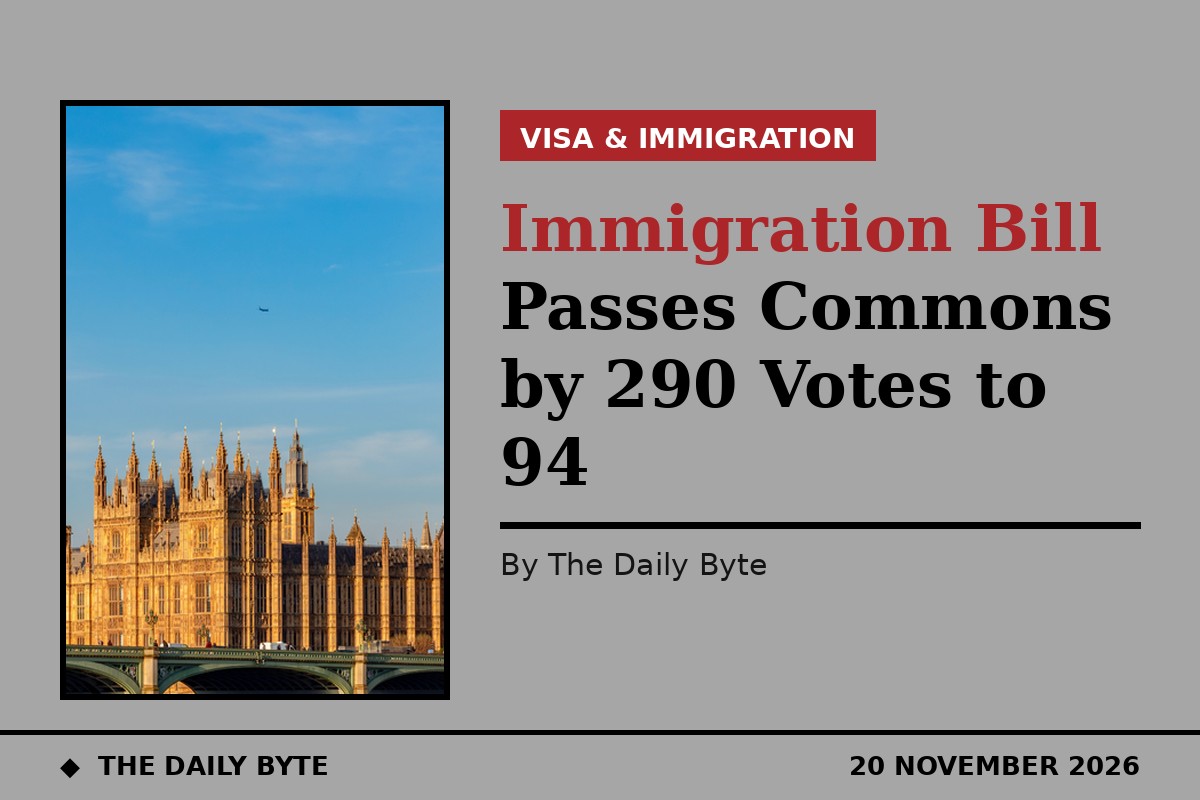
The Immigration and Asylum Bill has passed its third reading in the House of Commons by 290 votes to 94, a majority of 196, and now moves to the House of Lords. Peers will examine it before it can become law.
The vote took place on Tuesday 17 November, and the Bill was introduced in the Lords the next day for its first reading. Home Secretary Shabana Mahmood said it would speed up asylum decisions and remove people with no right to be in the country.
What the Bill would change
The Bill would create a new Independent Immigration Appeals Authority to take over most asylum and human rights appeals, and introduce a single definition of a protection claim. It would also define how Article 8 of the European Convention on Human Rights applies in immigration cases.
Immigration officers would get six months to remove people whose appeals have failed, without further notice. At present, enforced returns need at least five working days' notice. Asylum seekers in taxpayer-funded accommodation could also be asked to contribute when they can afford to.
The Bill also defines a ‘bad faith’ modern slavery claim in law — one made dishonestly, or raised only after removal notice — and disqualifies those making such claims from protections. Nearly 80 per cent of National Referral Mechanism referrals last year involved people subject to immigration controls.
What happens next
The Bill is not yet law: it must pass the Lords and receive Royal Assent, and peers may amend it. Recruitment for the new authority’s chair begins shortly, with the appointment expected by spring 2027. Check the official GOV.UK and Parliament pages for the latest stage, as details can change. This is general information, not personal immigration advice.
Sources: GOV.UK; Glasgow Times; Hextons Law.