India and Bangladesh Ban Paraquat Herbicide
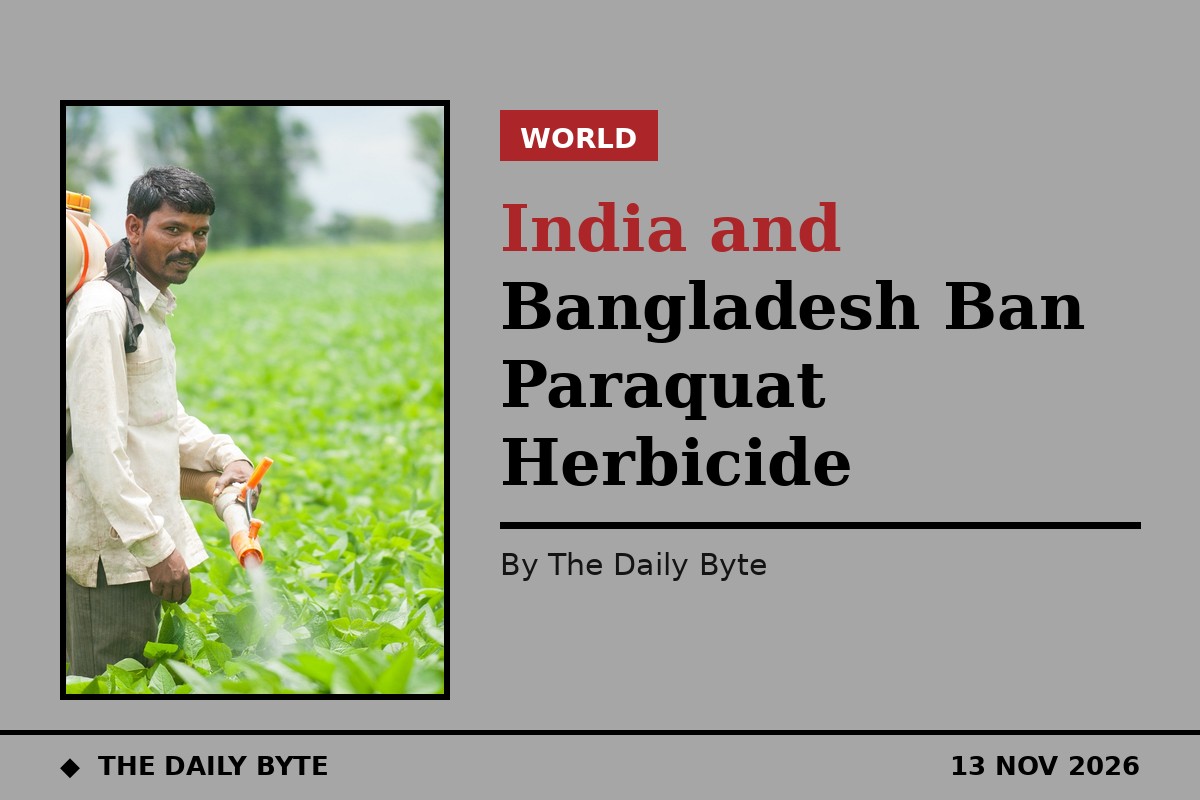
India and Bangladesh have banned paraquat, one of the world's most acutely toxic herbicides, in a public health decision the World Health Organization has welcomed as a major step towards preventing suicides and protecting brain health.
The two South Asian neighbours announced nationwide bans on the chemical in September, and the WHO said this week that the move brings them into line with more than 70 countries that have already prohibited paraquat, including the European Union, which banned it in 2007.
Paraquat is a fast-acting, non-selective weedkiller widely used on tea, cotton and other plantation and field crops. It is also one of the most frequently implicated chemicals in pesticide poisoning deaths, because even a small amount swallowed can be fatal and there is no specific antidote. Survivors can suffer progressive and often irreversible lung damage, along with kidney and liver failure, and long-term exposure has been linked to Parkinson's disease.
India's nationwide ban
In India, the Ministry of Agriculture and Farmers Welfare notified a nationwide prohibition on paraquat dichloride on 30 September under Section 27 of the Insecticides Act, 1968. The order bans the manufacture, import, sale, transport, distribution and use of the herbicide and cancels existing registration certificates.
The decision followed a draft notification issued in July and a review by an expert committee, which weighed the chemical's long record of poisoning deaths against the absence of any reliable clinical antidote. Several Indian states had already moved first: Telangana restricted paraquat sales earlier this year, and Andhra Pradesh imposed a temporary prohibition after police flagged a rise in suicides linked to the chemical.
The scale of the harm is illustrated by a 2024-2026 study at a medical college in Hubballi, Karnataka, which tracked 122 confirmed paraquat poisoning cases and recorded a death rate of just over 50 per cent. Patients who developed acute respiratory distress died in almost 94 per cent of cases, according to the research reported in Indian media.
Bangladesh orders six-month phase-out
Bangladesh announced its own phase-out on the same day, ordering that new imports, registrations and licence renewals for paraquat be stopped, with existing stocks to be used up within six months. The government acted after research led by the Centre for Pesticide Suicide Prevention found a significant increase in self-poisoning cases and deaths from the chemical, with 40 per cent of poisoning cases proving fatal. The centre says paraquat has been linked to hundreds of deaths in Bangladesh every year.
Professor Michael Eddleston, the centre's director, described the decision as a major public health achievement, while Dr Fazle Rabbi Chowdhury of the Toxicology Society of Bangladesh said it would save hundreds of lives in the years ahead and protect farmers, their families and the wider community.
Why the WHO welcomed the bans
The WHO regards restricting access to highly hazardous pesticides as one of the most cost-effective suicide prevention measures available, because it interrupts the brief window in which an impulsive act of self-harm can become irreversible. About one in five suicides worldwide involves the ingestion of acutely toxic pesticides, and the WHO has said the bans in India and Bangladesh are expected to save thousands of lives and protect brain health.
Evidence from other countries supports that expectation. South Korea, Malaysia and Sri Lanka have all recorded substantial falls in pesticide-related suicides after banning paraquat and other acutely toxic pesticides, without harming agricultural productivity, according to the WHO. In Taiwan, pesticide suicides fell by 37 per cent after a paraquat ban, and in South Korea the pesticide suicide rate roughly halved within two years, according to research cited in Indian media reports.
The bans also feed into a wider global push. The first International Conference of the Global Framework on Chemicals is due to take place this month, with the phasing out of highly hazardous pesticides from agriculture among its key targets. The WHO and the Food and Agriculture Organization have backed governments with regulatory guidance for pesticide registrars and policymakers.
For farming families in India and Bangladesh, the test of the bans will now be enforcement: removing remaining stocks safely, stopping illegal sales, and ensuring farmers have access to safer weed-control alternatives. If that happens, health experts say, two of the world's largest farming populations will have taken one of the simplest and most effective steps available to prevent avoidable deaths.
Sources: World Health Organization; Medicine World Foundation; Centre for Pesticide Suicide Prevention.


