India standardises barrier-free tolling on highways
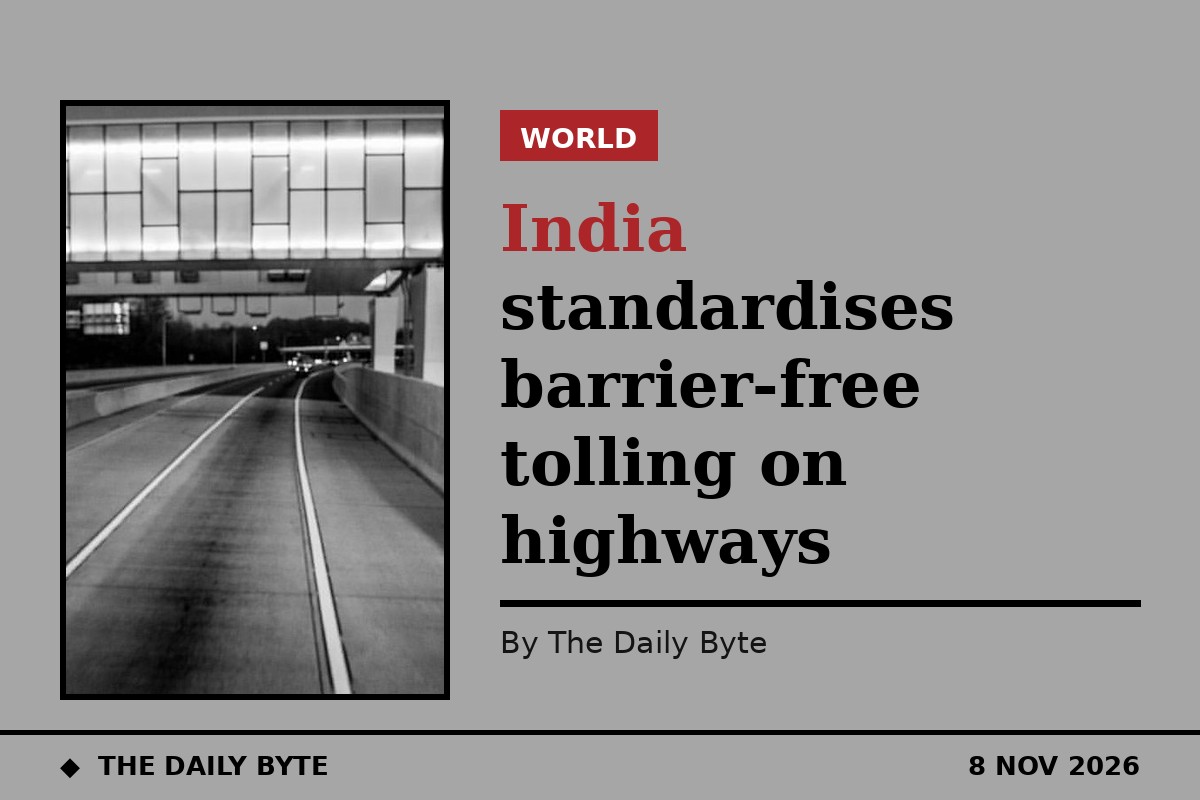
India's National Highways Authority of India (NHAI) has issued guidelines standardising the design and infrastructure of toll plazas on four-lane and wider National Highways for barrier-less Multi-Lane Free Flow (MLFF) tolling, the Ministry of Road Transport and Highways said on 6 November 2026. The move is intended to pave the way for toll collection without vehicles having to stop at booths on upcoming and ongoing highway projects across the country.
Under MLFF, overhead gantries fitted with RFID readers and Automatic Number Plate Recognition (ANPR) cameras identify each vehicle as it passes and deduct the toll through FASTag, with no boom barrier or booth stop. A second gantry placed after the main pay point acts as a backup read point. For a vehicle without a valid, working FASTag, the system generates an e-Notice for the user fee under Rule 14 of the National Highways Fee (Determination of Rates and Collection) Rules, 2008.
The policy circular sets uniform requirements for each highway configuration. It covers plaza layout, the number of tolling lanes, the provision and placement of gantries, road infrastructure, lighting, signage and supporting facilities. Because vehicles no longer queue at barriers, the number of lanes at a toll plaza has been rationalised compared with conventional plazas: a four-lane highway gets eight plaza lanes, a six-lane highway gets 10 and an eight-lane highway gets 12, including spare lanes for emergencies. The ministry says this frees up land and simplifies traffic movement through the tolling zone.
The guidelines apply to all future and under-construction projects. Projects at the Detailed Project Report stage will build the new design into their planning documents, while projects already awarded or under construction will adopt the changes through applicable contractual provisions. NHAI field offices have been directed to include the prescribed requirements in upcoming projects and to help ongoing ones switch over. The announcement does not mean every existing operational toll plaza will change immediately; the circular sets the design standard for upcoming and ongoing work.
The ministry says the initiative aims to eliminate traffic queues and waiting time at toll plazas, reduce fuel consumption and make National Highway journeys safer and more seamless. The circular places particular emphasis on adequate lighting, advance signage and Electronic Variable Message Signs, which give drivers information and guidance before they reach the tolling zone. Good illumination matters because ANPR cameras need it to read number plates reliably. Each plaza will also have an administrative building-cum-operations and maintenance centre to manage toll operations.
NHAI has already been testing the model on the ground. India's first barrier-less tolling system was launched in Gujarat in May 2026, followed by the Gharaunda toll plaza on the Panipat-Jalandhar section of National Highway 44 in June, with further MLFF sites on the Delhi-Jaipur section of NH-48 and at Paranur in Tamil Nadu during 2026. The new circular turns that pilot experience into a single national design template. It follows earlier NHAI guidelines for planning and designing high-speed, access-controlled National Highways other than expressways, and the ministry describes the standardised MLFF framework as an important step towards uniform barrier-less tolling across the country.


