Indonesia Fire Emissions Third Highest on Record
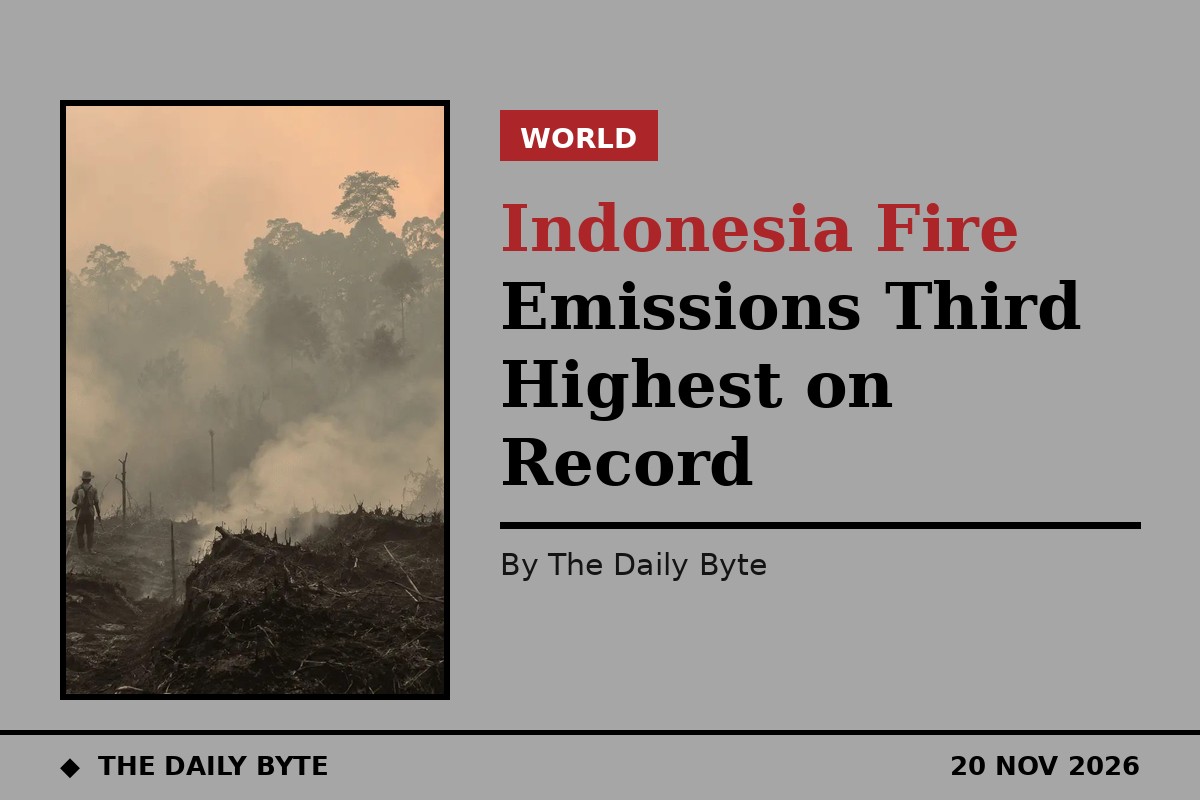
Fires in Indonesia have produced nearly 200 million metric tons of carbon emissions so far this year, the European Union's climate monitoring service said on Thursday, the third-highest annual volume on record.
The tally, which runs to 15 November, falls short of the record of nearly 400 million tons set in 2015 and was also slightly lower than in 2006, another strong El Niño year, according to the EU's Copernicus Atmosphere Monitoring Service (CAMS), which has tracked fire emissions since 2003.
This year's fire emissions were the equivalent of more than a fifth of Indonesia's total carbon footprint in 2025, with the country's energy consumption and industry responsible for an estimated 960 million tons of carbon dioxide last year, according to the Statistical Review of World Energy.
Nearly nine million hectares affected
CAMS data showed that nearly 8.9 million hectares of land could have been damaged by fire in Indonesia this year, or 4.7 per cent of the country's total area. That is significantly higher than the average of 1.9 per cent recorded between 2012 and 2025.
The archipelago has suffered its worst wildfire season in years, driven by excessively dry super El Niño weather conditions and warmer temperatures, as well as extensive land clearing. Fires have been concentrated in parts of Sumatra and Kalimantan, where drained peatlands and degraded forest are most at risk.
Researchers have pointed to deforestation and peatland drainage for agriculture, mining and logging as major contributors to the disaster. Drained peatlands and degraded forest can remain combustible for long periods once they dry out, turning a dry season into a fire season that burns for months.
A season still being counted
The emissions figure counts only the carbon released by the fires themselves. It does not capture the wider damage: the smoke that has drifted across the region, the health toll on communities breathing toxic haze, or the economic cost to forestry, farming and tourism in the affected provinces.
Because the tally stops at 15 November, the final annual total could still rise if burning continues into the end of the year. Even as it stands, 2026 now ranks behind only 2015 and 2006 in more than two decades of satellite records, a measure of how destructive this year's dry season has been, and of how quickly a bad fire year can add to the atmosphere's carbon burden.
The ranking also underlines how much of the damage is driven by conditions on the ground. A strong El Niño can set the stage, but it is the state of the landscape, dried peat, cleared forest and degraded land, that decides how far the fires spread and how much carbon they release.
Sources
BusinessWorld (Reuters): Indonesian fire emissions third highest on record this year, EU's Copernicus says
EuropeSays (Reuters): Indonesian fire emissions third highest on record this year, EU's Copernicus says