Indonesia Enters Second Year Without Rice Imports
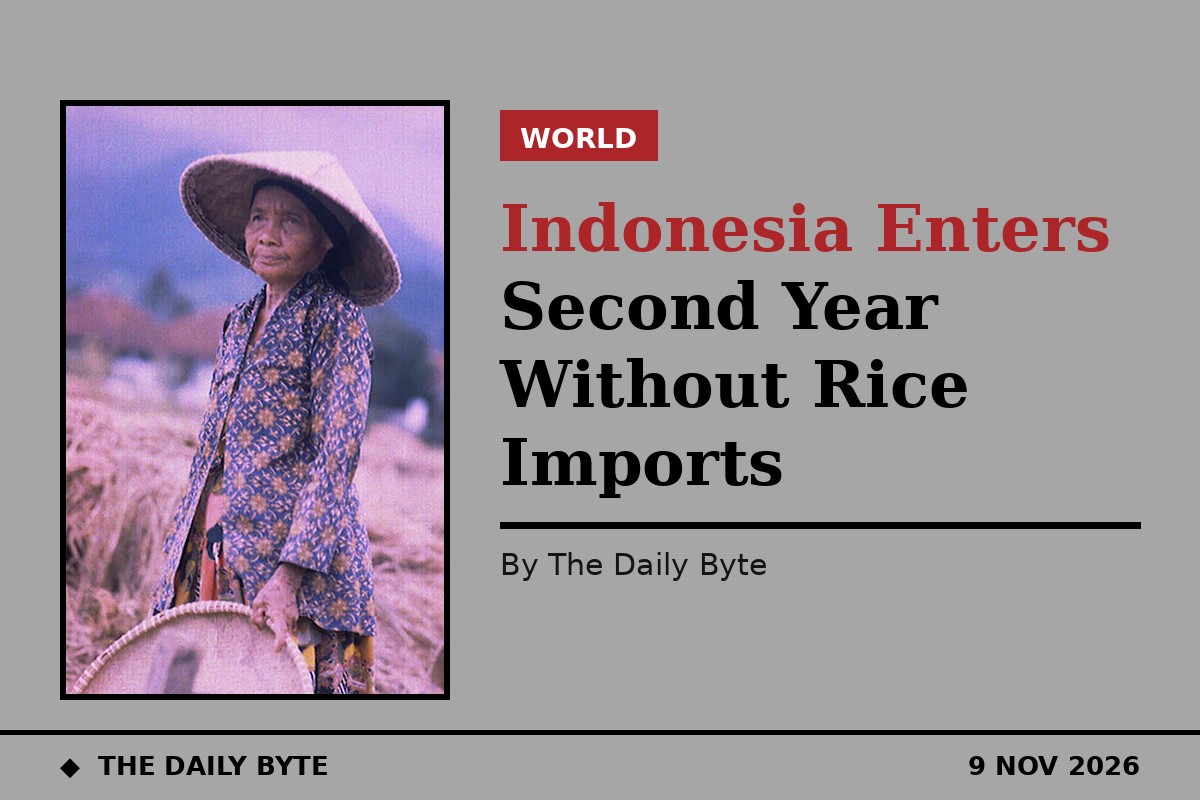
Indonesia has entered a second year without importing rice, Agriculture Minister Andi Amran Sulaiman said on Sunday, presenting the milestone as evidence that the world's fourth most populous country can feed itself while food supplies tighten elsewhere.
Speaking at a press conference in Jakarta on 8 November, Amran said at least 33 countries were now tightening food supplies or advising their citizens to stock up on essentials as geopolitical tensions disrupt trade. Indonesia, he said, was in a different position.
"I repeat, this is our second year without importing rice under the administration of President Prabowo Subianto. We should be grateful that we have adequate rice stocks," Amran said, according to state news agency ANTARA.
The minister put Indonesia's total rice availability at about 25 million tonnes. Government reserves held by the state logistics agency Perum Bulog stood at about 4.5 million tonnes as of 26 October, with roughly 10 million tonnes in standing crops ready for harvest and about 10 million tonnes held by hotels, restaurants and catering businesses. Monthly national consumption is around 2.5 million tonnes, meaning the estimated supply covers roughly ten months of demand.
Amran said the Agriculture Ministry was working around the clock to protect food supplies for Indonesia's population of about 286 million people, coordinating across government departments even on public holidays. He said the ministry was strengthening production through land optimisation, water pumps, irrigation improvements and better seed, and taking precautions against climate change and drought.
The minister also pointed to his recent meeting with China's agriculture minister in Beijing, where the two sides discussed cooperation on food security. China still imports around six million tonnes of food, he said, and the two countries would work together as global food and energy pressures grow.
According to ANTARA, rice is one of eight commodities in which Indonesia has achieved self-sufficiency, alongside corn, consumer sugar, bird's eye chilli, large red chilli, eggs, chicken meat and shallots. The government has said the import halt covers medium-grade rice for domestic use, with imports limited to small volumes of speciality varieties not grown in the country, such as basmati.
Amran warned against complacency despite the secure position. "We must not depend on other countries when it comes to food," he said, arguing that a major conflict or trade disruption could leave an import-dependent country exposed. "That is why self-sufficiency is a source of strength and protection for our nation."
The minister said Indonesia's food situation was relatively secure, but added that production must keep rising, reserves must be strengthened and farmers protected. "Behind this achievement are the hard work of our farmers and the presence of the state," he said.


