Indonesia Starts Digital VAT Collection on 9 November
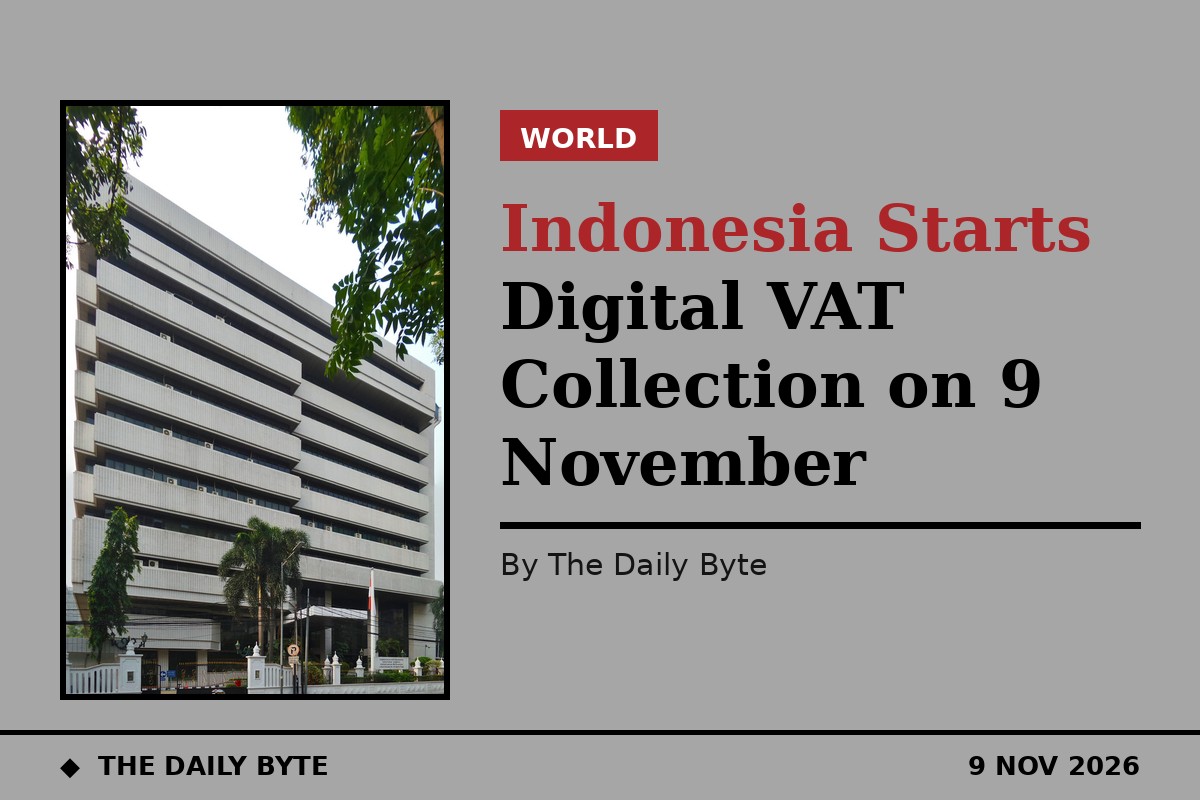
Indonesia's new system for collecting value-added tax (VAT) on overseas digital transactions takes effect on Monday, 9 November, with the country's tax office stressing that it is not a new tax and will not be applied to personal bank transfers or remittances.
The system, known as SPP-TDLN, organises the collection of VAT on digital goods and services bought from abroad and consumed in Indonesia. The Directorate General of Taxes (DJP) at the Finance Ministry says VAT rates are unchanged, and collection will apply only to overseas digital transactions that meet the existing criteria for being subject to VAT.
"Fund transfers and remittances do not automatically become subject to VAT. The system is not intended to impose VAT on personal money transfers or people's remittances," Inge Diana Rismawanti, the DJP's director of counselling, services and public relations, said in a written statement this week.
What the system covers
SPP-TDLN covers the use of digital goods and services from abroad, such as streaming services, applications, online games, software and cloud storage. Ordinary money transfers that are not payments for such goods or services fall outside its scope.
The system is designed to make collection fairer and more systematic, and to give consumers and businesses certainty about who collects the tax. People using taxable overseas digital services will not have to handle VAT payment and reporting themselves, the tax office says.
It is also designed to prevent VAT being collected twice. If VAT on an overseas digital transaction has already been collected by an appointed electronic commerce operator, it will not be collected again through SPP-TDLN.
Six institutions named as first collectors
At the initial stage, the DJP appointed six institutions as VAT collectors, or issuers, under the system on 25 September 2026: Bank Rakyat Indonesia, Bank Mandiri, Bank Negara Indonesia, Bank Tabungan Negara, Bank Syariah Indonesia and LinkAja, the digital wallet run by PT Fintek Karya Nusantara.
The system was tested in a sandbox environment and went through a stabilisation period before its launch, to check systems, business processes, data exchange and integration with the parties involved. Other prospective issuers are still in the stabilisation period, and new appointments will be announced through the DJP's official channels once preparations are complete, Inge said.
The start of the system does not automatically give every bank, fintech firm or e-commerce platform a tax-collection role, the tax office stressed.
Why the clarification was needed
The launch follows days of public confusion. Hashim Djojohadikusumo, chairman of the advisory board of the Indonesian Chamber of Commerce and Industry (Kadin), said at a Kadin leadership meeting on 29 October that a digital tax would start on 9 November and that banks and fintech firms, including Shopee, Lazada and GoTo, would have to collect and remit tax not collected so far. The remarks prompted claims on social media that all interbank transfers and digital wallet transactions would be taxed from 9 November.
Finance Minister Suahasil Nazara rejected that reading in an ANTARA report on 3 November, saying there was no new policy to automatically impose VAT on every interbank transfer or digital wallet transaction. The measure, he said, concerns VAT collection on qualifying digital goods and services purchased from abroad, under Finance Ministerial Regulation (PMK) No. 49 of 2026.
VAT on the fees charged for money-transfer and digital wallet services is already governed separately, under PMK No. 69 of 2022, which taxes service fees rather than the amount of money sent.
"It is important to understand that not all overseas transactions are subject to VAT," Inge said. "This mechanism makes the process more practical and orderly, and provides certainty for all parties."


