ING Sees Bank of England Rate Rise in February
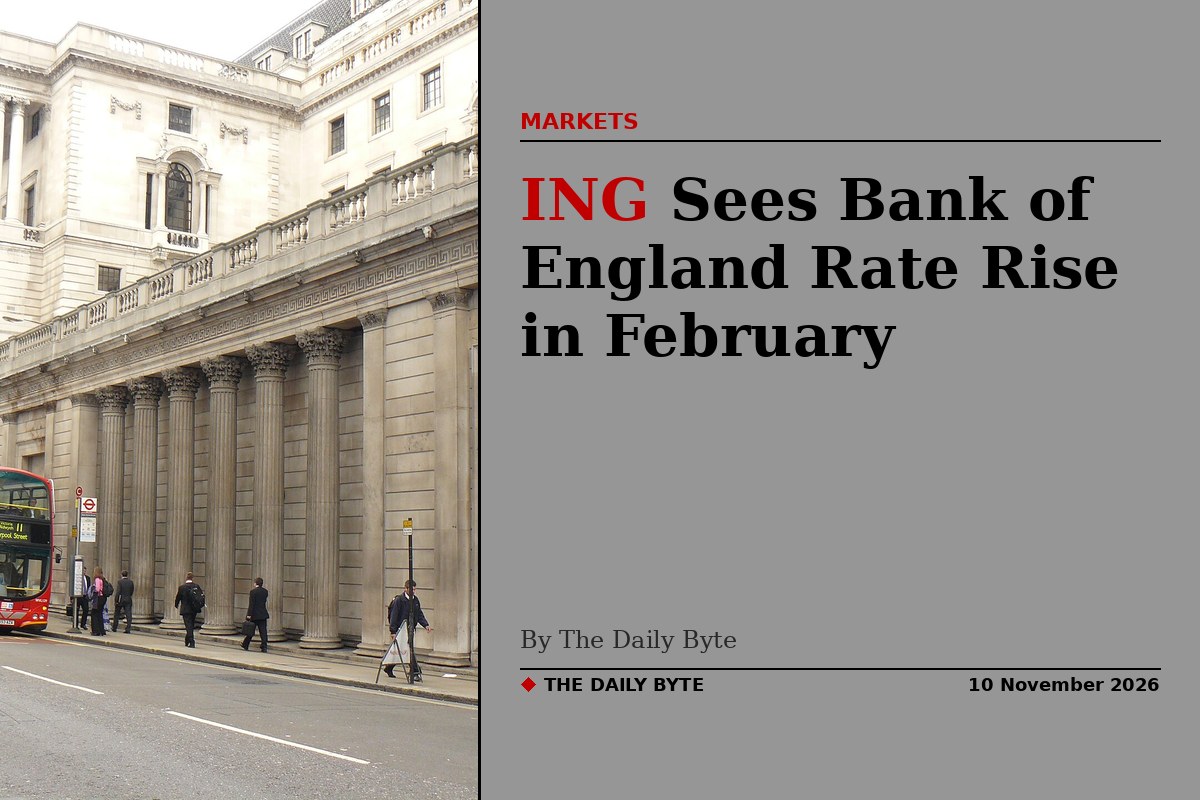
ING expects the Bank of England to raise interest rates once more in February, after the Bank raised Bank Rate for the first time since 2023 in early November. The bank's economists do not rule out a move sooner, in December, if the energy crisis worsens.
The forecast, published by ING Think on 10 November, comes after the Bank's Monetary Policy Committee voted 8-1 at its meeting ending on 4 November to raise Bank Rate by 0.25 percentage points to 4%. One member voted for a larger rise, to 4.25%.
Why ING expects another rise
ING said inflation was headed above 4% and the Bank was worried that the energy-driven price shock had reached sufficient depth and longevity to justify further action. UK CPI inflation increased to 3.5% in September, and the Bank expects it to rise to around 5% by the middle of next year.
At the same time, ING said there was little evidence so far of second-round effects, in which higher energy costs feed into broader prices and wages. Food inflation was described as remarkably benign, the Bank's gauge of energy-intensive inflation was down this year, and the jobs market was sufficiently cool that wage pressures were unlikely to build materially.
ING said the data through winter and early spring would be crucial, particularly the April CPI report released in May, which is heavily affected by annual price resets. If by then there are still minimal signs of second-round effects, ING thinks the Bank will feel comfortable turning more dovish by the summer, which could enable it to cut rates before the end of 2027.
What ING expects from the Fed and the ECB
For the US Federal Reserve, ING expects one more rate rise at the December meeting, followed by a prolonged pause well into 2027. The Fed raised rates in September and signalled that at least one additional increase was likely, but officials skipped the October meeting despite higher-than-expected inflation, and ING said the message from officials was that the Fed was under no immediate pressure to hike.
For the European Central Bank, ING said another rate hike in December looked like a done deal, but the outlook beyond this year was less certain. Much depends on the intensity and duration of the war in the Middle East and on how far higher energy prices feed into broader inflation. In ING's base case, energy prices fall in 2027 and weak final demand limits companies' pricing power, so the ECB can keep its powder dry and might even consider a rate cut towards the end of the year.
ING also expects the Bank of Japan to continue normalising policy, with 25 basis point rises at its December and March meetings, taking its 1.25% policy rate towards a neutral level seen at 1.75% to 2.00%. China's central bank is expected to stay in easing mode, with scope for a 10 basis point cut in mid-2027.
These are forecasts, not decisions: ING stresses that its publication is prepared for information purposes only and does not constitute investment advice or a recommendation. Read the full outlook from ING Think and the Bank's own account of its decision in the Bank of England Monetary Policy Report for November 2026.
Frequently asked questions
What is Bank Rate now? Bank Rate is 4%, after the Monetary Policy Committee voted 8-1 on 4 November 2026 to raise it by 0.25 percentage points from 3.75%.
What does ING expect from the ECB? Another rate hike in December, which ING calls a done deal, followed by a possible rate cut towards the end of 2027 if energy prices fall as it expects.
What does ING expect from the US Federal Reserve? One more rate rise at the December meeting, then a prolonged pause well into 2027.