Leak: Iran bought control of Chinese oil ports
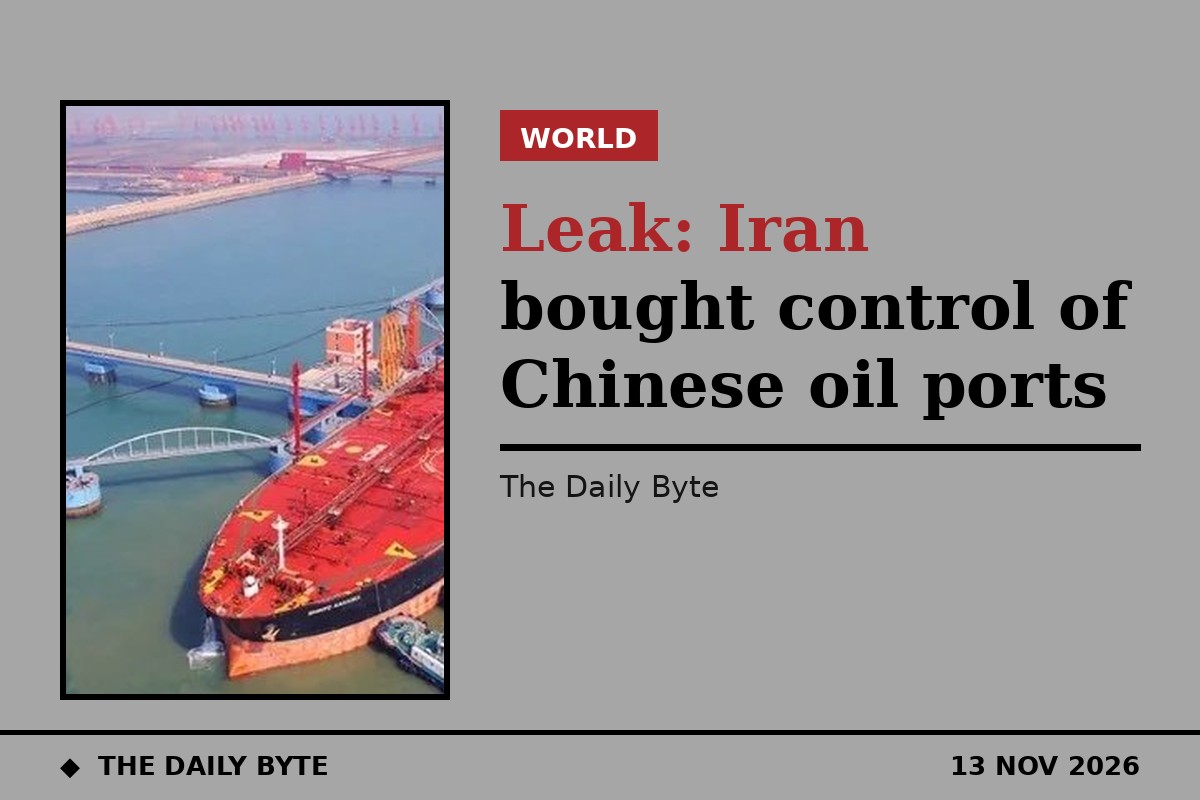
Leaked letters suggest Iran has bought control of port facilities and oil storage terminals in China to keep its sanctioned crude exports flowing, despite the United States blockade of Iranian ports. The confidential correspondence, reported by Iran International on Monday, describes a network of Chinese terminals, storage tanks and shadow-fleet tankers built to move Iranian oil to its biggest buyer, OilPrice reported.
What the leaked letters say
Ali Shamkhani, who was a political adviser to the former supreme leader, Ali Khamenei, discussed the arrangements in letters to Hamid Bovard, the former head of the National Iranian Oil Company who became acting oil minister in early October. According to the letters obtained by Iran International, Iranian authorities instructed intermediaries to keep using shadow-fleet vessels to sustain trade with China. Both Khamenei and Shamkhani were killed in the first US-Israeli strikes on Iran in February.
Bovard wrote in the correspondence that the Iranian Foreign Ministry had negotiated the purchase of port facilities and oil terminals in China to establish a hub for sanctioned Iranian crude. Iran has also moved to secure long-term leases on large oil storage facilities in several Chinese locations, and sanctioned vessels controlled by Shamkhani's son, Hossein Shamkhani, have carried Iranian oil to terminals and storage facilities Iran controls in China.
Three ports and seven storage tanks
Two Iranian Oil Ministry sources told Iran International that Tehran had bought control of port facilities at three locations in China, along with stakes in docks in Shandong province, home to the independent Chinese refiners that buy most of its oil. OilMonster reported that the locations include the Ningbo-Zhoushan free trade zone and smaller docks linked to Qingdao and another Shandong port, and that Iran had acquired or secured control of seven large oil storage tanks in Dalian, Huizhou, Dongying, Weifang and the Zhoushan area.
OilMonster stressed that it could not independently verify the ownership structure, lease terms or Chinese counterparties behind the facilities, and the specific claims about who owns or controls them remain unconfirmed. No response from Beijing, Iran's Oil Ministry or the port authorities involved has been reported.
Why Tehran built the network
China is by far the largest buyer of Iranian crude. US Treasury guidance issued in 2026 said China purchases about 90 per cent of Iran's oil exports, with independent teapot refineries accounting for most of those purchases. Even before the war, China had sought to distance itself from the trade, rejecting Iranian requests to raise import quotas for its refiners, demanding deeper discounts and increasing crude imports from Venezuela, according to Iran International's sources.
Since the war began, the US naval blockade in the Gulf of Oman has choked off Iranian oil exports. Vessel-tracking services have estimated that Iran's exports have plunged since August, and Iranian oil held in floating storage has also been drained. Homayoun Falakshahi, head of crude oil analysis at Kpler, was quoted by the Wall Street Journal last month as saying there was no more oil to discharge to China anymore.
Sanctions pressure on the Shamkhani network
The US Treasury has repeatedly sanctioned companies, individuals and vessels connected to Hossein Shamkhani's shipping network, describing it as a major channel for Iranian petroleum exports. The Treasury said in July that it had sanctioned more than 200 individuals, entities and vessels operating under Shamkhani's patronage through a series of enforcement actions.
China has long played a storage role in Iran's oil trade. Reuters reported in January 2025 that Iran was seeking to recover and sell about 25 million barrels of crude stranded in Chinese storage since 2018, worth about 1.75 billion dollars at the time, while storage operators in Dalian were seeking more than 450 million dollars in accumulated fees.
What happens next
The key question now is whether US authorities identify and sanction additional Chinese terminals, storage operators or companies allegedly connected to the facilities named in the leaked documents. Any official response from Beijing, the Chinese terminal operators, Iran's Oil Ministry or the port authorities would also provide important confirmation, or rebuttal, of the ownership claims. For now, the report remains what it is: a leaked account of a sanctions-evasion network, not independently verified, at a moment when Iran's oil exports are under severe strain.


