Iran Drones Target Bahrain as US Carrier Arrives
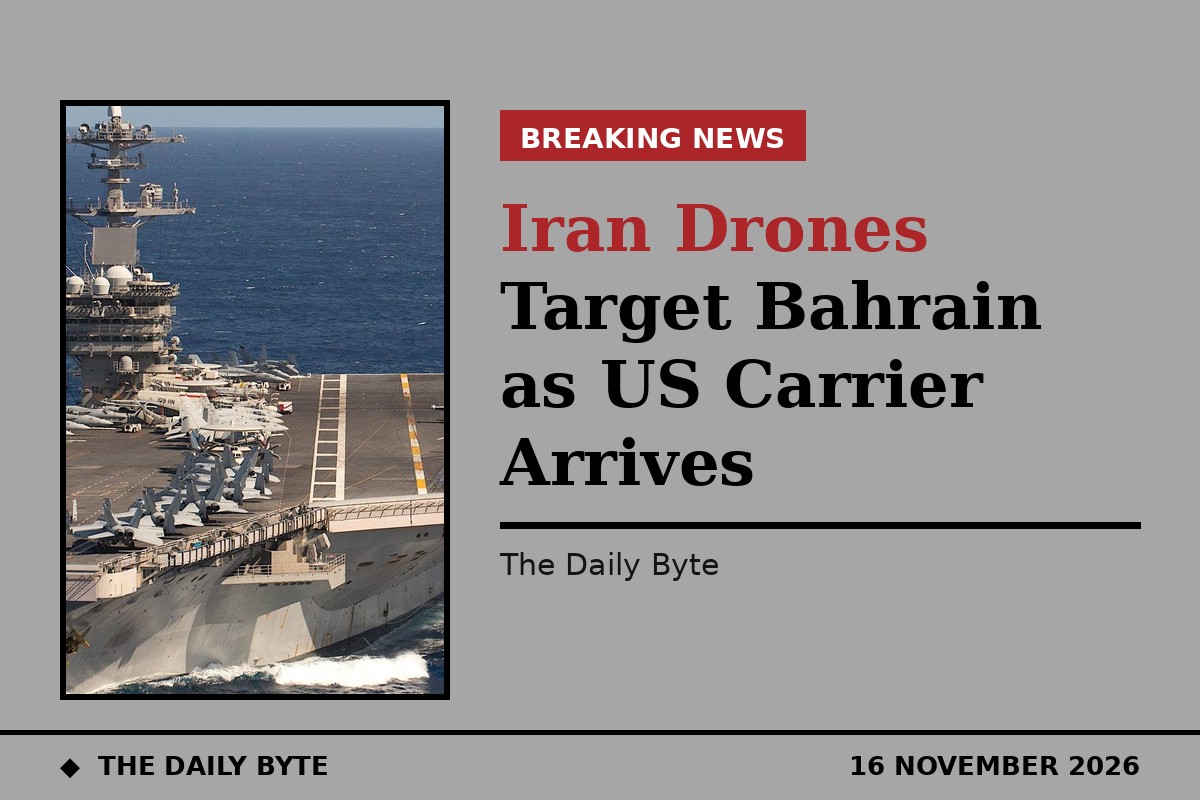
Bahrain says its air defences intercepted and destroyed several Iranian drones on Sunday, the second such attempt in three days, as the aircraft carrier USS Theodore Roosevelt arrived in the Middle East and tensions between Iran and the United States continued to rise.
The Bahrain Defence Force said on Sunday it had intercepted the drones, after a similar interception on Friday. Iran's Islamic Revolutionary Guard Corps (IRGC) had earlier claimed it fired six drones at a US air defence radar at the Al-Rifaa helicopter base in Bahrain.
Conflicting accounts
US Central Command said on Friday it had intercepted two Iranian drones heading towards Bahrain and denied an earlier Iranian claim that its forces had struck a US early-warning radar system there. The IRGC's latest claim has not been confirmed by any outside source.
The US Embassy in Bahrain on Sunday urged Americans to exercise heightened vigilance, citing an increased threat of attacks by Iran-backed Houthis and Iranian efforts to target US government officials and facilities in the region.
Third carrier in the region
The USS Theodore Roosevelt was expected to arrive in the Middle East on 16 November, joining two other US carrier groups already in the region, led by the George H.W. Bush and the George Washington. The New York Times, citing a US military command official, reported that the ship was due to enter US Central Command's area of responsibility within 24 hours.
The Roosevelt is expected to replace the George Washington, which has been in the region since August, according to USNI News. The deployment comes amid continued tensions between Washington and Tehran, nine months into a regional conflict that has already seen repeated strikes on shipping and military bases.
A waiting game
Gulf states have been worried for weeks that Iran may again begin to target them in an effort to force a resolution to the conflict on its terms. Tehran has also stepped up attacks on shipping in the Gulf, with almost daily claims that tankers have struck mines as they have tried to transit the Strait of Hormuz, few of them substantiated.
The International Energy Agency said Gulf oil exports, excluding Oman, reached 18.4 million barrels a day in October, about 26 per cent below pre-war levels, as Iran struggles to prevent more Gulf oil and gas from getting through the strait while its own economy labours under a US blockade and international sanctions.
US President Donald Trump said on 12 November that the United States was holding back from tougher measures against Iran at the request of several Middle Eastern countries, including Saudi Arabia. Secretary of State Marco Rubio said on 13 November that Washington saw no need for military action against Iran. Tehran, for its part, is demanding an end to the US blockade, the progressive removal of international sanctions and the unfreezing of billions of dollars in frozen assets as conditions for resuming negotiations.