Hormuz Navigation Aids Destroyed, Iran Says No Ships Passed
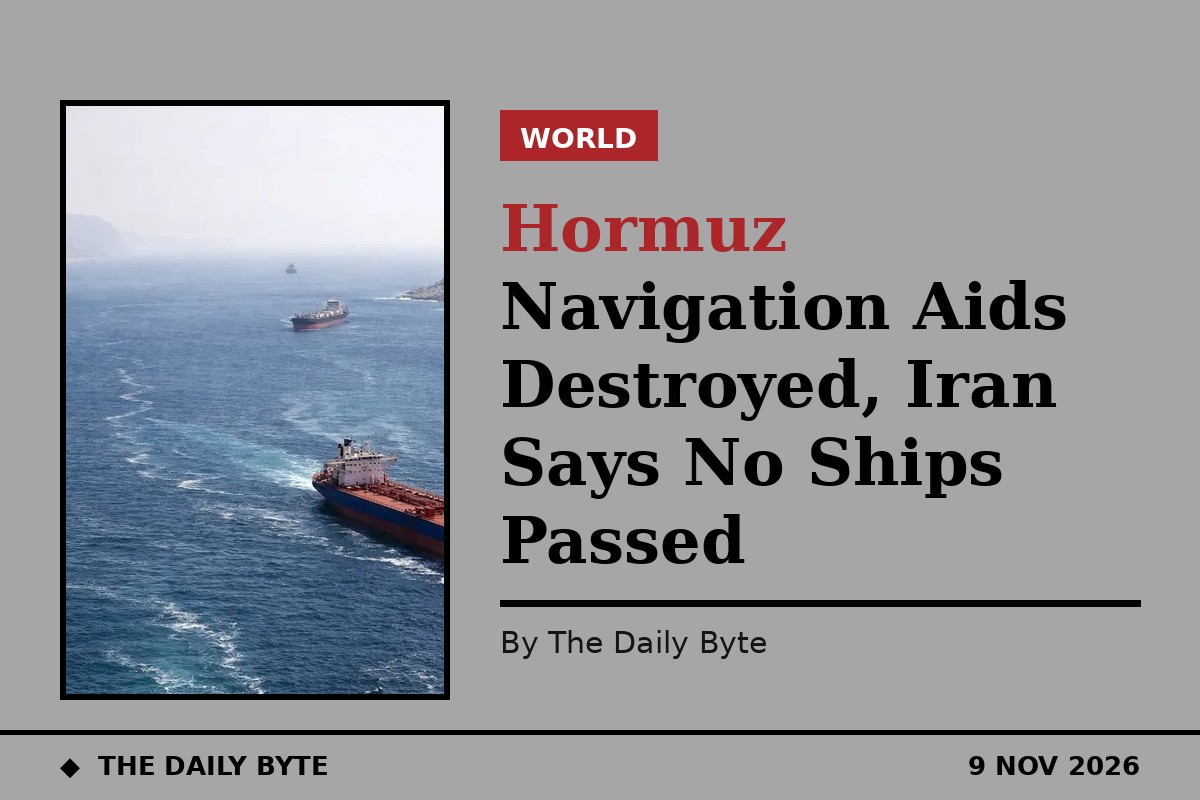
Iran has said that navigational aid systems in the southern Strait of Hormuz were destroyed and that no unauthorised vessels crossed the waterway overnight, according to Iranian state media. The report was carried by Reuters on Monday, 9 November 2026, citing an unnamed Revolutionary Guards Navy official.
The official did not say who destroyed the navigational aids, or how they were destroyed, and the claim could not be independently verified. The report also did not name any vessel, give a precise time for the overnight period, or say whether authorised shipping continued to move through the strait.
The word unauthorised matters here. Iran has said since early in the war that vessels need its permission to transit the strait, and it set up a Persian Gulf Strait Authority to issue transit permits and collect tolls. Ships that cross without that permission have been treated by Tehran as unauthorised, and several have been attacked in recent weeks. The United States, by contrast, has run a coordinated corridor through Omani waters and has said its forces cleared the main transit lanes of mines.
Why the strait matters
The Strait of Hormuz is the narrow waterway between Iran and Oman through which about a fifth of the world's oil passed before the war began in February. Even a short disruption can move oil prices, raise shipping insurance costs and force exporters to look for longer, costlier routes around the region.
Tanker attacks in recent days
The report comes after a series of attacks on shipping in and around the strait. On Sunday, Iran's Revolutionary Guards said three oil tankers had exploded and caught fire while sailing in what Tehran calls an illegal channel through the waterway. The Guards did not name the vessels, their flags or their crews, and the claim could not be independently verified. Britain's maritime agency, UKMTO, separately reported a tanker on fire off Khasab in Oman on Saturday, with its crew evacuated.
Talks continue as strikes pause
Diplomacy is still running alongside the military pressure. Mr Trump is due to meet Qatar's Prime Minister, Sheikh Mohammed bin Abdulrahman Al Thani, at the White House on Monday. Qatar has acted as the main mediator between Washington and Tehran, passing proposals between the two sides on Iran's nuclear programme and the terms for ending the conflict.
US Secretary of State Marco Rubio said on Sunday that the negotiations had made little progress and that he did not see an imminent breakthrough. He described some of Iran's demands as unacceptable, including an end to the US blockade of Iranian ports, the lifting of sanctions, the unfreezing of Iranian assets, compensation for war damage and an end to hostilities across the region, including Israeli operations in Lebanon.
Mr Trump, however, told CNN in a telephone interview on Sunday that new strikes on Iran were highly unlikely as long as the talks made progress and produced what he called a very strong agreement. He has also warned that the United States has identified further targets, including bridges, if military action resumes.
For now, the strait remains the centre of the crisis. Each side claims control of the waterway, shippers are caught between competing orders, and the destruction of navigational aids, if confirmed, would add a new hazard to one of the world's most important shipping lanes.


