Iran Says It Targeted US Radar in Bahrain in Retaliation
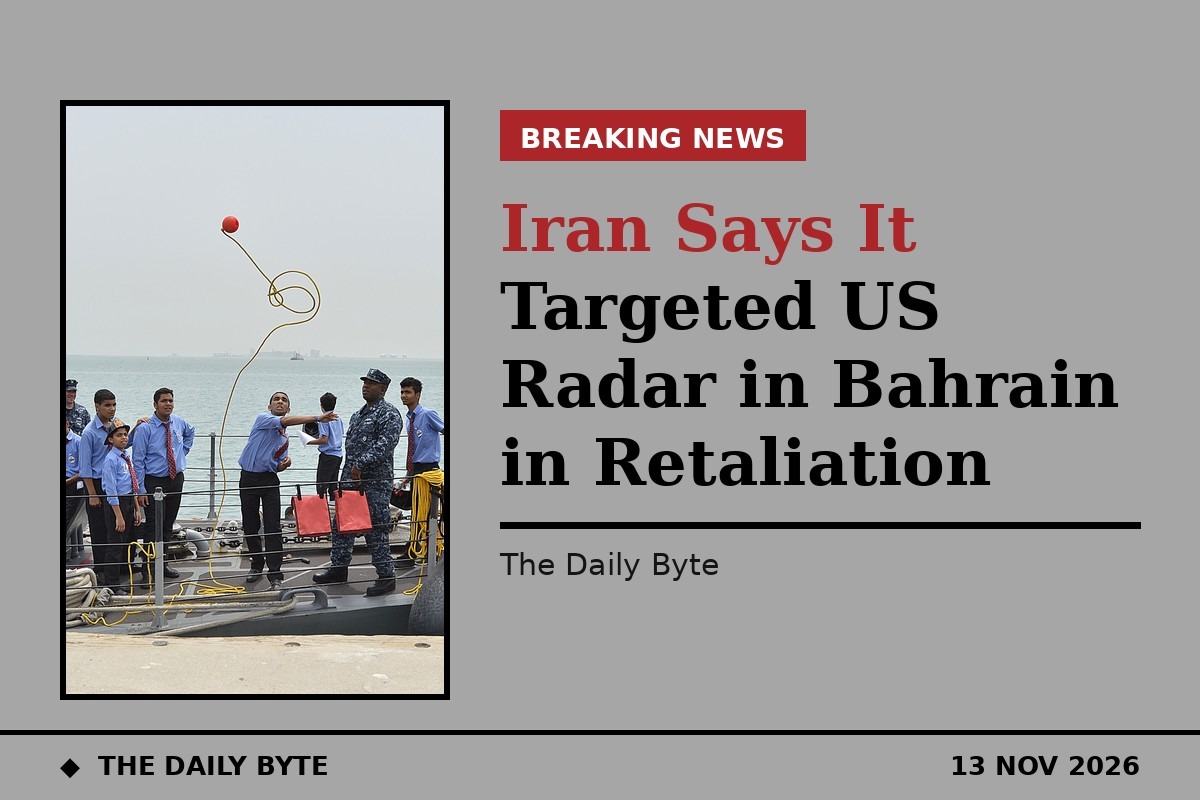
Iran's Revolutionary Guards said on Friday that they had targeted a US early-warning radar in Bahrain, in what they described as retaliation for an air attack on a telecommunications tower in southern Iran.
The claim, carried by Iranian state media, is the first such claim of an attack on American military assets in a Gulf country since early September, according to Reuters. Neither the strike on the radar nor any damage has been independently verified, and there was no immediate comment from the United States or Bahrain.
What Iran claimed
According to the statement, carried by the Guards-affiliated Fars news agency, the Aerospace Force of the Islamic Revolutionary Guard Corps targeted the radar a few hours after the attack in Sirik, a county in Hormozgan province on the Strait of Hormuz.
The Guards said the operation was carried out in direct response to what they called an enemy aerial attack on the telecommunications tower. In the statement, they described the action as a serious warning against further aerial provocations and against oil smuggling in the Strait of Hormuz.
The Guards gave no details of the weapons used or of any damage caused, and no evidence was published alongside the claim. Iran's state news agency IRNA had reported on Thursday, citing official sources, that Sirik had been hit in an enemy attack.
Why Sirik matters
Sirik sits on Iran's southern coast, on the Strait of Hormuz, the narrow waterway through which a large share of the world's seaborne oil passes. The county is home to the Revolutionary Guards' Shahid Rahbari navy base, making it a sensitive military site as well as a coastal town.
Iran has repeatedly sought to restrict shipping through the strait during the conflict, while the United States has imposed a naval blockade on Iranian ports. Control of, and access through, the waterway has become one of the central issues of the war.
A fragile lull under strain
The claim came amid a fragile lull in the conflict between Iran and the United States, which began with US and Israeli strikes on Iran on 28 February and has since spread across the region. Iran has launched missile and drone attacks on US bases in Gulf states, while Washington has maintained its blockade on Iranian oil shipments and trade.
Tensions had already risen this week. On Thursday, Iran's military said four oil tankers were hit by explosions in the Strait of Hormuz after ignoring warnings, an account Reuters said it could not immediately verify. On the same day, Yemen's Iran-aligned Houthis said they had attacked a pumping station on the Saudi East-West oil pipeline, an oil facility in the Saudi Red Sea city of Yanbu and an Aramco building in Riyadh.
Oil markets have swung sharply through the week as hopes of a diplomatic breakthrough have faded and attacks on shipping and energy infrastructure have continued.
Diplomacy stalls
The radar claim also followed a sharp change in Washington's approach to negotiations. On Thursday, US President Donald Trump said on Truth Social that a deal with Iran was not necessary to end the war, and he removed Vice President JD Vance from his role leading the diplomatic effort.
Mr Vance had been leading negotiations with Tehran and had been reported to be considering face-to-face talks with a senior Iranian security official. Mr Trump said the United States would instead stick with the blockade on oil shipments and with trade and economic sanctions.
For now, the key questions are whether the United States or Bahrain confirms that any radar was hit, and whether either side responds in a way that breaks the current lull. Until such confirmation emerges, the episode remains a claim by one side in an active conflict, not an established fact.