Iran seeks COP31 compensation for war damage
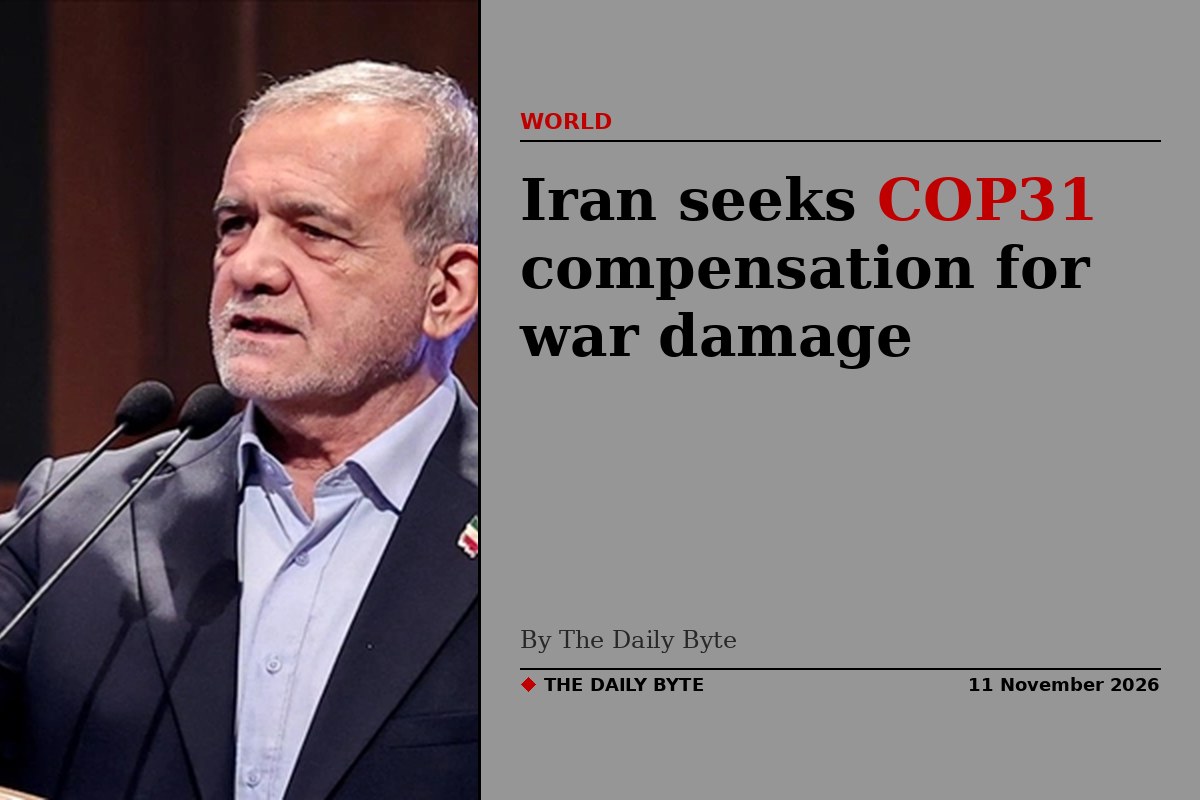
Iran has used the COP31 climate summit in Turkey to demand compensation for environmental damage it says was caused by United States and Israeli strikes during this year's war, arguing that the cost of military attacks should no longer sit outside global climate talks.
President Masoud Pezeshkian made the case on Wednesday in Antalya, where world leaders are gathered for the 31st United Nations climate conference. He said the international community should document the environmental harm caused by military action and create a system to pay for it.
"We expect the global community to establish a genuine and meaningful link between climate commitments in times of peace and responsibility in times of war, to document and assess the environmental damages caused by military aggressions and to develop compensation mechanisms," Pezeshkian said, according to Reuters.
Iran puts a figure on the damage
Pezeshkian told delegates that strikes on fuel facilities had released about 1.5 million tonnes of carbon dioxide into the atmosphere. Reporting by Anadolu News Agency, carried by Devdiscourse, said he put the figure at 500,000 tonnes from attacks on fuel facilities at Asaluyeh and a further one million tonnes from strikes on fuel storage tanks near Tehran.
According to the same reporting, Israeli strikes hit oil storage facilities in Tehran on 7 March, while gas processing facilities at Asaluyeh in southern Iran were hit on 18 March. The United States and Israel launched their military campaign against Iran on 28 February, and the fighting later spread to Lebanon and the Gulf.
Pezeshkian said the attacks had damaged protected areas and environmental ranger stations as well as energy infrastructure, threatening natural resources and future generations. He also condemned Israel's military operations in Gaza, saying the territory faced a humanitarian and environmental catastrophe because of the destruction of infrastructure, water resources and ecosystems.
No war-damage provision in climate deals
The demand faces a difficult obstacle. International climate agreements already include billions of dollars in finance from wealthy countries to help developing nations adapt to climate change and pay for its effects, but Reuters noted that there is no provision covering the environmental impact of military strikes.
That gap is central to Iran's argument. Pezeshkian said there was a contradiction between global efforts to cut greenhouse gas emissions and military operations that destroy infrastructure, start widespread fires and release pollutants into the air. "Peace and environmental protection were inseparable," he said, adding that lasting peace was essential to safeguarding the planet.
Reuters also reported that the war has caused environmental damage beyond Iran's borders. Iran has repeatedly attacked oil tankers in the Strait of Hormuz, and those attacks have caused substantial oil leaks. At the same time, a report from international scientists said on Tuesday that global fossil fuel emissions were on track to fall slightly this year, in part because of high fuel prices and greater use of renewable energy since the conflict began.
Iran points to its clean-energy record
Pezeshkian used his speech to present Iran as a country still investing in clean energy despite the war. He said installed renewable capacity had risen from 1,250 megawatts to more than 6,150 megawatts over the past two years, and that Iran generated more than 4.5 billion kilowatt-hours of clean electricity in 2026, preventing 2.5 million tonnes of carbon dioxide emissions.
The figures were presented by the Iranian president and have not been independently verified. They form part of Tehran's wider effort to use COP31, which runs in Antalya from 9 to 20 November, to press its case on the world stage. Pezeshkian said before leaving Tehran that 196 nations were taking part in the summit, with 71 delegations led by presidents or prime ministers, and that he had bilateral meetings planned with representatives of more than ten countries, including Turkish President Recep Tayyip Erdogan.
Whether other governments accept that war damage belongs in climate negotiations remains an open question. No compensation mechanism for military strikes exists in the current climate framework, and creating one would require agreement from the very countries Iran blames for the damage. For now, Tehran has put its claim on the record at the world's largest climate gathering, linking the war that began in February to the environmental agenda in a way negotiators have not previously had to address.