Iran Readies 14-Tanker Convoy to Test US Blockade
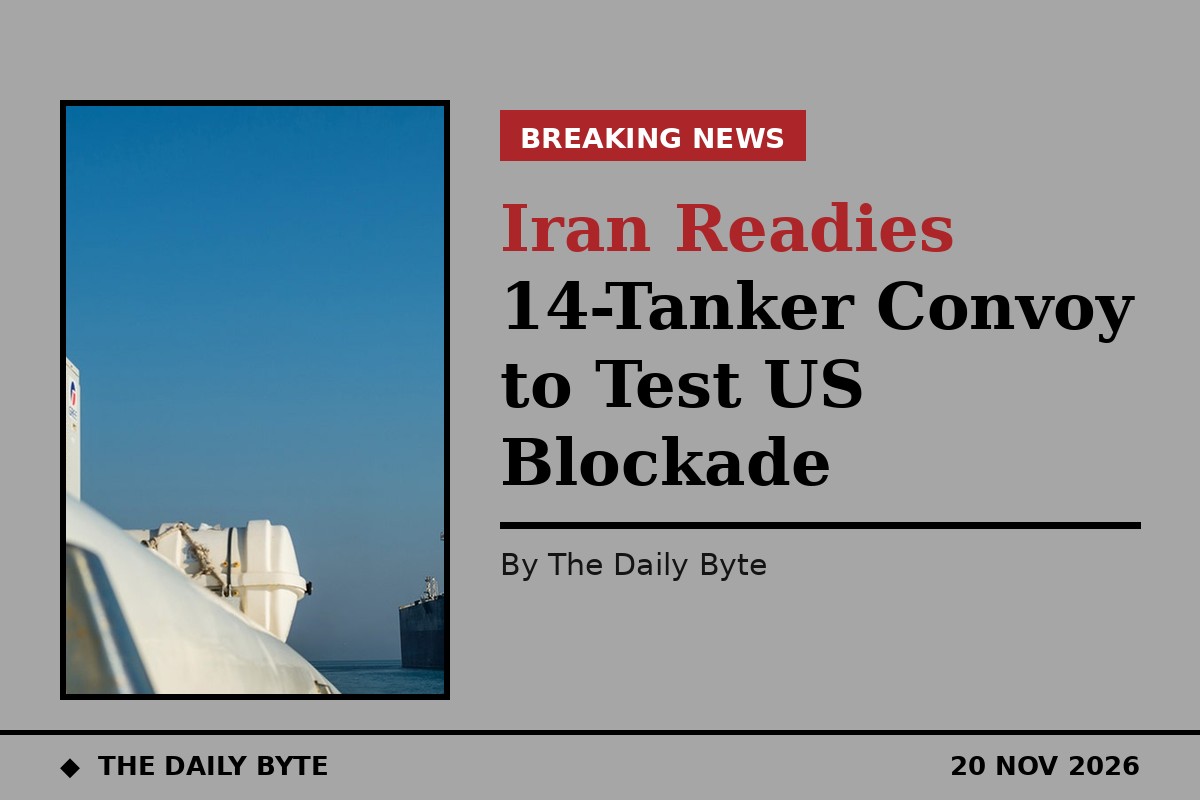
Iran has positioned more than 14 oil tankers at Kharg Island in a convoy poised to try to break the United States naval blockade of its oil exports, according to satellite imagery and ship-tracking data reported on Friday.
Euronews reported that crews have been assigned to the tankers and Iranian flags raised over them, and that the convoy is expected to head for the Sea of Oman in the coming days. Ship-tracking firm TankerTrackers said the available data confirmed that Iran was resuming oil exports, the report said.
Kharg Island, in the northern Persian Gulf, handles around 85 to 90 percent of Iran's crude oil exports, and its terminal can store roughly 30 million barrels. Any attempt to sail a loaded convoy out of the island would be the most direct challenge yet to an American blockade that has brought Iranian crude shipments to a halt.
The build-up follows the first observed ship-to-ship transfer of Iranian crude since the blockade was reimposed in mid-July. A United States-sanctioned Suezmax tanker, the Olym, transferred about 200,000 barrels of crude to the medium-range tanker Hao Fan on Tuesday, south of Kharg Island, according to the nonprofit group United Against Nuclear Iran and data analytics platform Kpler, Bloomberg reported.
Both tankers switched off their transponders during the operation. The Hao Fan is not blacklisted by Washington, and United Against Nuclear Iran said it was spoofing its location near Oman's Shinas. Charlie Brown, an adviser to the group, said the cargo was too small to make an export voyage economic, and that Iran could be trialling the logistics of such transfers, or the Olym may have needed to offload oil.
Washington widens the blockade
The United States military issued a notice on Wednesday widening the scope of its blockade to target ships receiving cargoes at sea. The American operation has brought Iranian oil exports to a halt, forcing production curbs and cutting off a key source of revenue for the Islamic Republic, Bloomberg reported.
The blockade was first imposed on 13 April, temporarily lifted in June and reinstated on 14 July after negotiations collapsed. According to Kpler, Iranian crude and condensate loadings fell from about 2 million barrels per day in March to zero in September. Some small shipments of liquefied petroleum gas have left the Gulf since the blockade was reinstated, but no crude cargo had been observed moving until this week.
Count not yet independently confirmed
The reported size of the convoy has not yet been independently confirmed. GlobalSecurity, reviewing the open-source imagery, noted that the satellite and radar pictures cited by Al-Monitor and Euronews had not been published, and that the latest clear Sentinel-2 frame of Kharg, from 17 November, showed only a handful of vessels in the island's immediate waters. The build-up may have come after that pass, or the tankers may be holding at anchorages outside the frame.
Iran's semi-official Fars News Agency, which is affiliated with the Revolutionary Guards, has proposed sending a convoy through the Gulf of Oman toward international waters and Asian markets, including China. No Iranian government official has confirmed a departure date. An Iranian commentator warned on social media that disrupting an Iranian tanker's route would lead to explosions at oil facilities in six Gulf states, according to the Euronews reporting.
Diplomacy stalled as decision looms
Mediators from Oman, Qatar and Pakistan have reported no breakthrough in ceasefire negotiations, and Iran continues to demand the lifting of the naval blockade and economic sanctions before formal talks can resume.
The United States Senate voted 51-48 on Thursday to reject a war powers resolution that would have restricted further military action, leaving the decision on any response to President Donald Trump. For now, the question facing Washington, and every Gulf capital watching the tanker tracks, is whether the convoy sails, and whether the United States will try to stop it.
Sources: Rigzone / Bloomberg | Euronews