Iraq Ships Oil Via Hormuz Lane After $60bn War Losses
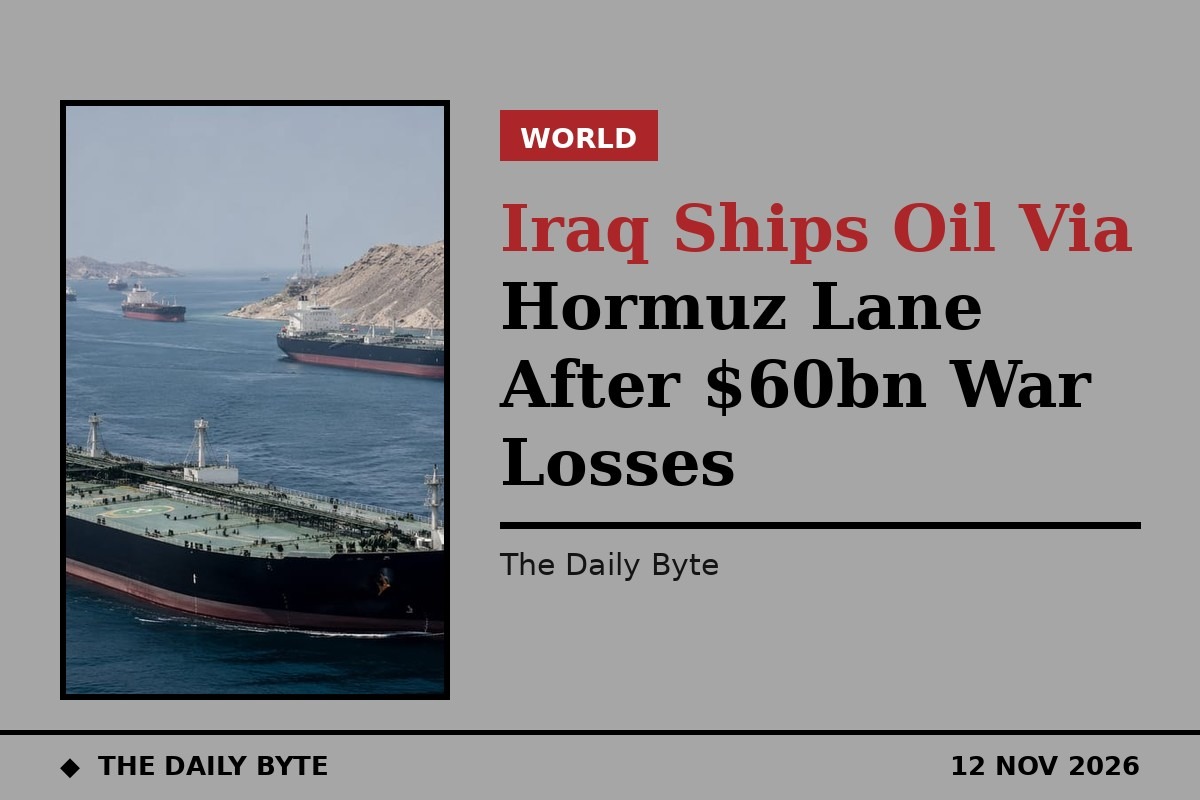
Iraq has reached an understanding with the United States to export its oil through the Strait of Hormuz on a shipping lane close to Oman, Foreign Minister Fuad Hussein said on 8 November, as Baghdad counts the cost of a war that has disrupted its lifeline to world markets.
Speaking to Al Jazeera, Hussein put Iraq's losses from the Iran war and the disruption to its oil exports at $60 billion. The figure is the minister's own estimate, not an audited total, but it underlines how heavily the eight-month conflict has weighed on a country that depends on oil for almost all of its government revenue.
Exports recovering, but terms unpublished
Iraqi energy officials say exports have begun to recover. Shipments rose to about 3.5 million barrels per day in October, up from 2.65 million barrels per day in September, according to Reuters. Most of Iraq's crude leaves from southern terminals near Basra, and the only sea route out is through the Strait of Hormuz.
No terms of the understanding have been published. Hussein did not explain in the interview how tankers would be screened, escorted or insured, and there is no published text setting out dates or guarantees. The arrangement concerns Iraqi exports specifically: it does not amount to a general reopening of the strait, which remains restricted to most commercial traffic.
The strait normally carries about one-fifth of global oil consumption. Since the US-Israeli war on Iran began on 28 February, Tehran has restricted traffic through the waterway and says vessels must use routes it authorises, while the United States has imposed a naval blockade on Iranian ports. Shipping data cited by The National put traffic through the strait at about 20 per cent of pre-war levels, and the Joint Maritime Information Center, which advises merchant ships in the region, kept its Hormuz threat level at "severe" in its update of 8 November.
The price: closing border crossings
The understanding comes with a price. Hussein said the US Treasury has asked Iraq to close all of its land border crossings with Iran except two, one of them in the Kurdistan region, as part of Washington's campaign to squeeze Tehran economically. Talks on the crossings are still under way, he said.
Iraq has been one of the biggest economic casualties of the war. Production fell from 4.1 million barrels a day in January and February to a ten-year low of 1.5 million barrels a day in April, according to OPEC figures cited in a June analysis by Vortexa. Baghdad has improvised ever since, sending some cargoes through ship-to-ship transfers near the Gulf of Oman and using the Turkish port of Ceyhan and land routes through Syria.
US envoy Tom Barrack, speaking at the Chatham House Iraq Initiative on 11 November, went further, saying Baghdad could act as a bridge around the US blockade on Iran while pursuing an oil output target of 10 million barrels per day. Marine Insight, reporting the arrangement, noted that Iraq's crude must still pass the world's most contested waterway — and that the lane near Oman is a political exception for Iraqi tankers, not the start of a general reopening.
For Iraq, the deal is a lifeline that restores its main source of income. For the region, it is a measure of how the war has redrawn the map: oil now moves on terms set in Washington, through a strait that Tehran still claims to control.