Iraq Agrees US Oil Export Route Through Hormuz
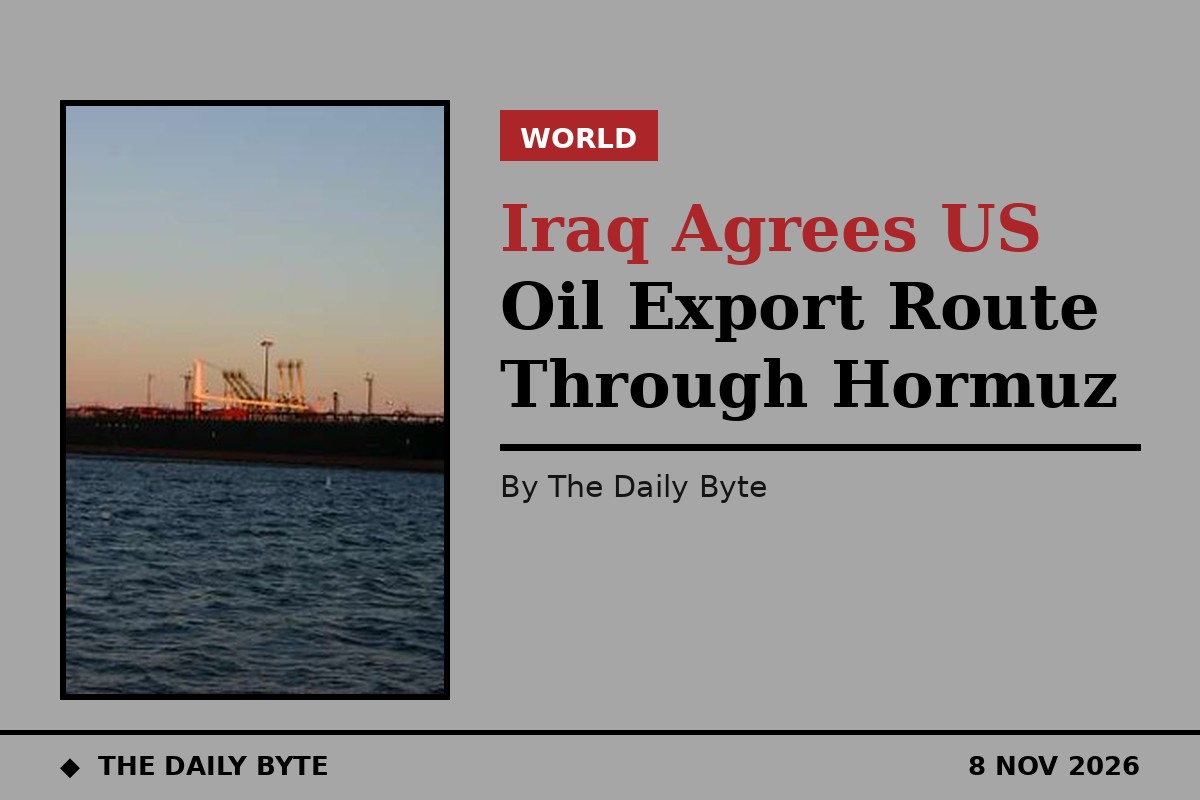
Iraq has reached understandings with the United States that will allow its oil exports to pass through the Strait of Hormuz using a shipping lane near Oman, Foreign Minister Fuad Hussein has said.
Hussein made the announcement in an interview with Al Jazeera on Sunday, as Baghdad counts the cost of months of disruption to its most important export route. He said Iraq's losses from the war involving Iran and the disruption to oil exports had reached $60 billion.
The minister did not give the terms of the understandings, and it is not yet clear when shipments through the new lane will begin or how much oil will move through it. But the announcement points to a way back for Iraqi crude after a period in which exports through the strait were severely disrupted.
Iraqi oil exports have already begun to recover. Shipments rose to about 3.5 million barrels per day in October, up from 2.65 million barrels per day in September, according to Iraqi energy officials. The increase followed a sharp fall in exports during the previous month, when the disruption to shipping through the strait was at its worst.
The Strait of Hormuz is the narrow waterway between Iran and Oman through which much of the Gulf's oil reaches world markets. Control of the strait has been contested throughout the current conflict, with shipping hit repeatedly in and around the waterway and vessels attacked for passing through routes Iran regards as unauthorised.
The same Al Jazeera interview also covered Washington's request for Baghdad to close most of its border crossings with Iran, leaving only two open. The border question and the oil route are now the two main strands of Iraq's effort to keep its economy running while the conflict continues around it.
For Iraq, the stakes are high. Oil sales fund almost all government spending, so any interruption to exports quickly feeds through into public finances. A $60 billion loss, as Hussein put it, is a measure of how costly the disruption has been since the war began.
The October figures suggest shipments are already moving again. Exports rose by roughly a third in a single month, from 2.65 million barrels per day to about 3.5 million, after the sharp fall in September. The new lane near Oman, at the strait's southern shore by the Musandam peninsula, offers a defined route for that traffic while the wider security picture remains unsettled.
What happens next will depend on whether the understandings hold in practice. The strait remains a contested waterway, and shipping through it is still subject to the military pressures that disrupted exports in the first place. For now, though, Baghdad has a route it can point to, and export figures that are moving in the right direction.


