Iraqi Kurdistan split fear as PUK quits government
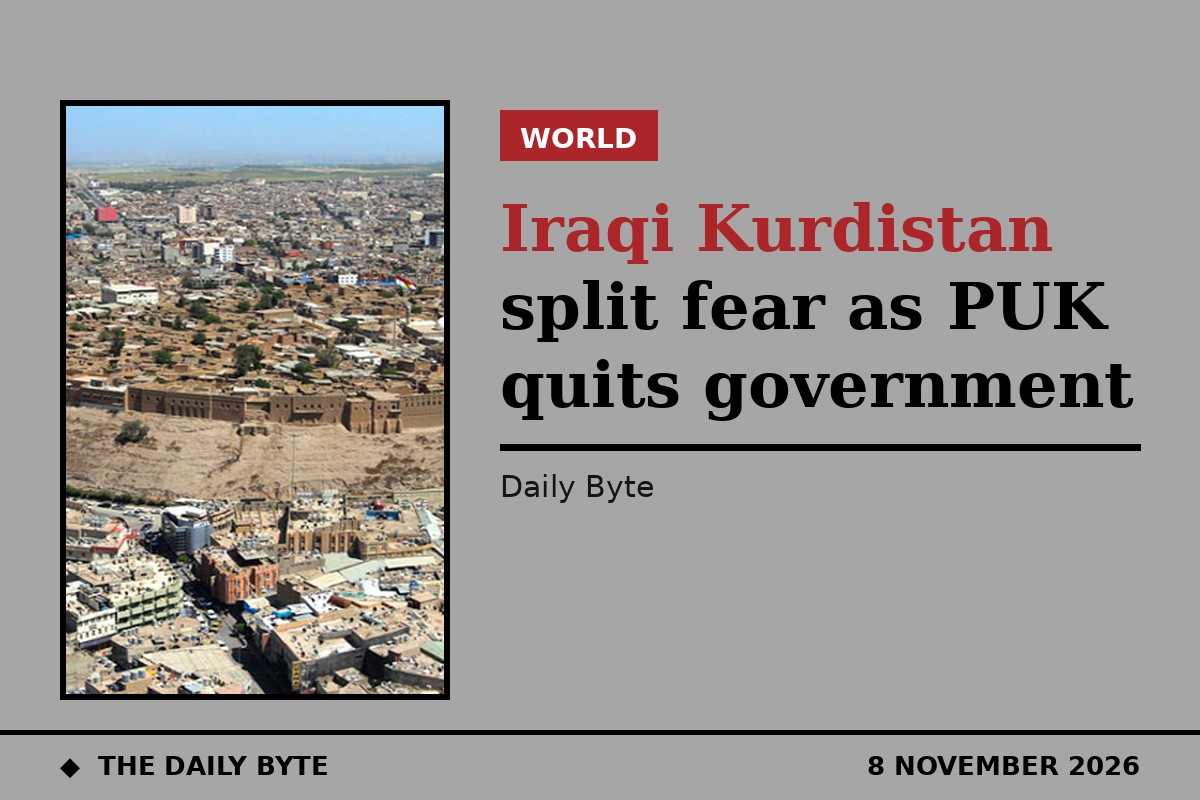
Iraqi Kurdistan faces its deepest political crisis in two decades after the Patriotic Union of Kurdistan (PUK) withdrew from the regional government, raising the prospect of the semi-autonomous region splitting back into two rival administrations.
The dispute escalated after the Kurdistan Democratic Party (KDP) reactivated the regional parliament on Wednesday without the PUK. Fifty-two of the 100 members attended the session in Erbil, just enough to meet the 51-member quorum, and elected Vala Farid as the parliament's first female speaker.
PUK leader Bafel Talabani announced the withdrawal on Thursday in a video message, calling the caretaker cabinet a failed government and saying his party would not recognise the parliamentary session or anything that resulted from it. He warned that if the KDP appoints a regional president, the PUK will appoint one of its own.
According to Channel 8, PUK officials holding posts across the regional government are expected to stop reporting for work from the start of the coming week as the party carries out the withdrawal. The PUK holds several senior posts in the administration, and the move would leave the KDP governing alone for the first time since the two parties merged their administrations in 2006.
The deadlock dates back to regional elections in October 2024, in which the KDP won 39 seats and the PUK 23, with the New Generation Movement taking 15. No party secured a majority, and two years of talks failed to produce a new cabinet, with parliament unable to reach a quorum since its opening session in December 2024.
Analysts say the threat of two administrations is now real: the KDP dominates Erbil and Dohuk in the north-west, while the PUK's stronghold is Sulaimaniyah in the south-east. The KDP maintains the session was lawful and that reactivating parliament is necessary to protect the region's institutions. Read the full analysis at the BBC.