Israel Builds 90km Military Road Network in South Lebanon
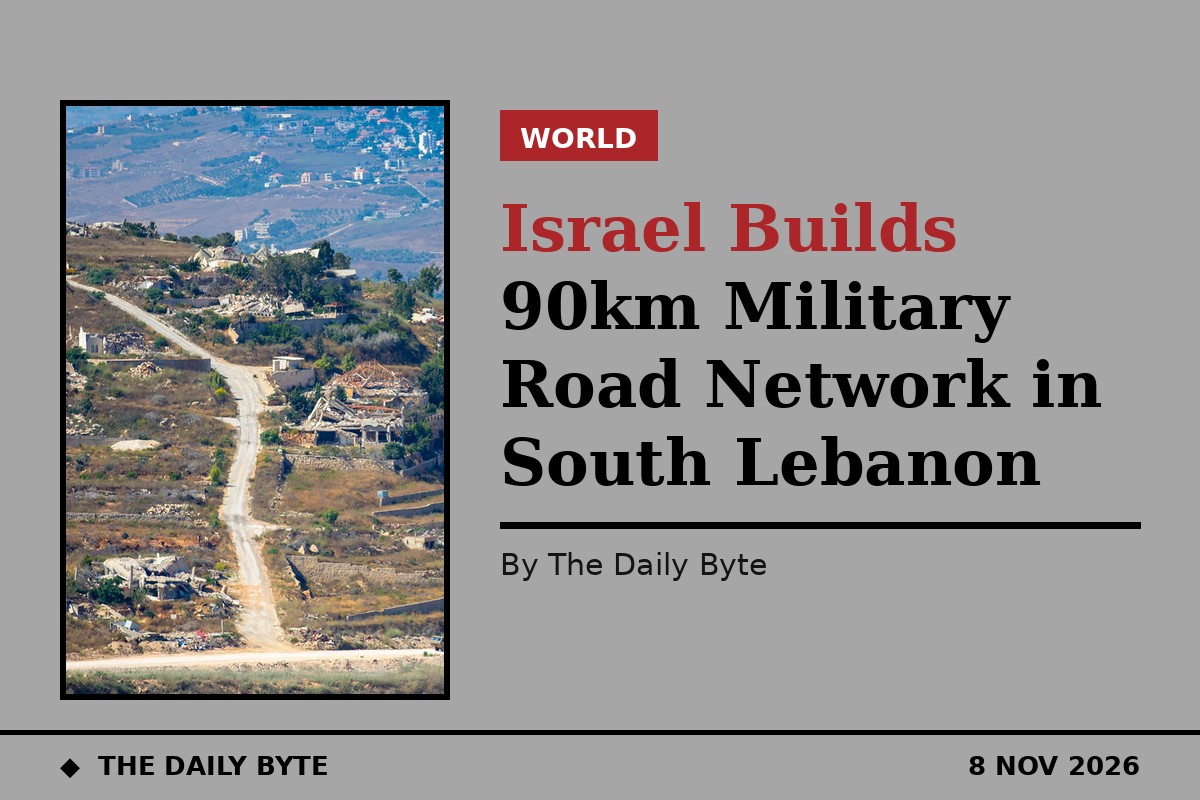
Israel is building a network of military roads and outposts across southern Lebanon, with satellite imagery showing the routes stretching for nearly 90 kilometres, according to a report broadcast on 7 November. The footage, reported by Al Jazeera correspondent Zeina Khodr from the village of Baraachit, shows new roads cut through hillsides in the south, alongside fortified positions. The scale of the work has fuelled concern that Israel is preparing for a prolonged military presence in the area.
Lebanon's state news agency separately reported on Saturday that Israeli forces were cutting new roads through mountains and valleys in southern Lebanon to link their military positions. The work covers the western and central sectors of the south, according to that report. The two accounts point to a systematic programme of construction rather than isolated road repairs.
The reports do not set out what the roads are intended for, and no detailed account has been given of how many outposts are being built or where each route runs. What the imagery does show is a connected network of routes and positions, rather than a single road, and that is what has drawn attention from observers in Beirut and beyond.
The construction is taking place against the backdrop of a war that began on 2 March, when Israel launched its offensive against Lebanon, and a framework agreement reached in late June that was meant to bring the fighting to an end. That agreement was negotiated directly between the two sides in Washington with American mediation. Israeli forces have nevertheless continued strikes, demolitions and incursions in the south since the deal, according to Lebanese media reports.
Lebanon's Health Ministry said on 5 November that Israeli attacks since 2 March had killed 4,390 people and wounded 12,429 others. The International Organization for Migration recorded 304,520 people still internally displaced in Lebanon as of 28 October. For many of those families, the question of whether Israeli forces intend to stay in the south is not abstract: it decides whether they can go home.
The road building also comes as Washington continues to mediate direct contacts between Lebanon and Israel, with a further round of negotiations expected in the American capital next week. Beirut has been pressing for a full Israeli withdrawal from the south, while Israel has insisted on freedom to act against Hezbollah. The new infrastructure will be read in both capitals as evidence of how long Israel expects its forces to remain.
Neither the Israeli military nor the Lebanese government has publicly explained the purpose of the road network in detail. Until either side does, the roads will be judged by what they look like on the ground: heavy, permanent-looking routes built to move troops and supplies through territory Israel was expected to leave.


