Israel Cabinet Orders Military to Prepare Iran Strike
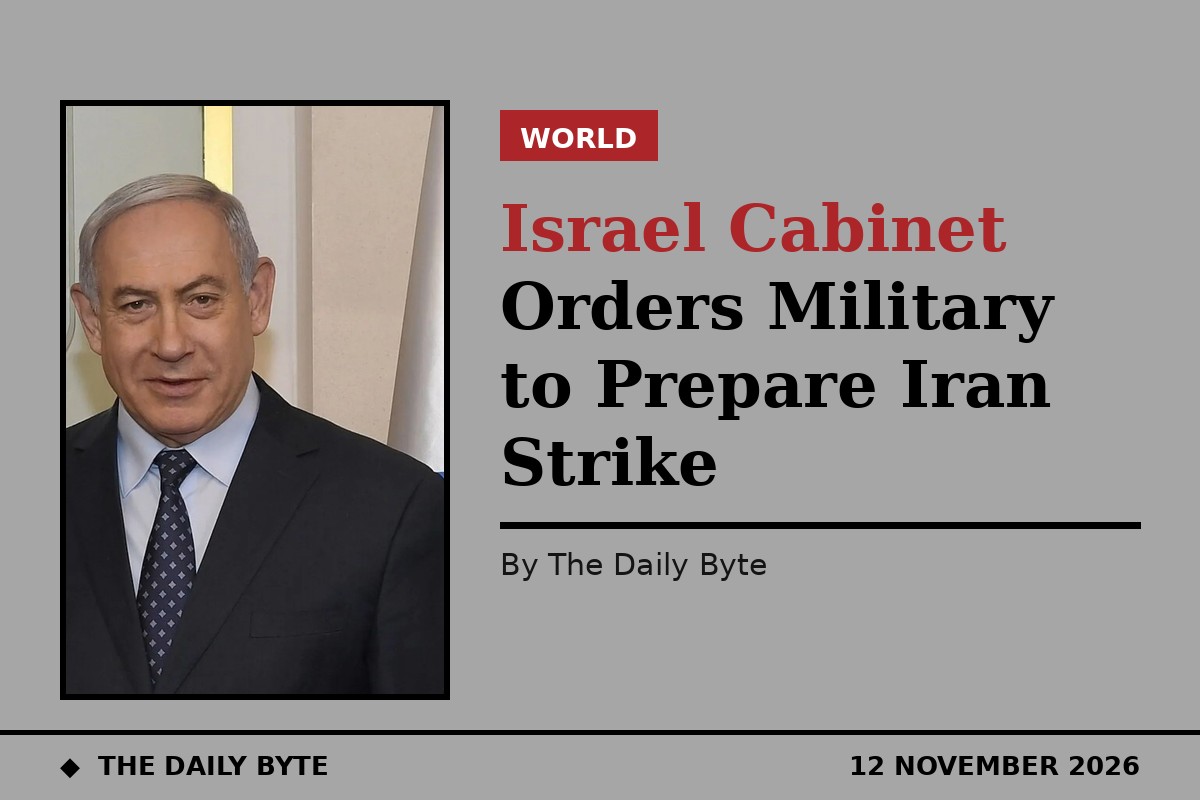
Israel's security cabinet has instructed the military to step up its readiness for a possible strike on Iran, Israeli public broadcaster KAN reported on Wednesday evening, 11 November. The report raises the prospect of a renewed round of fighting in a war that began in February, even as diplomatic efforts to end it continue.
KAN said the steps the military had been told to take could lead to activity that might, to some extent, result in war. No date, target or timeline has been made public, and there has been no official confirmation from the Israeli Prime Minister's Office or the Israel Defense Forces that a strike is imminent.
What the cabinet decided
According to KAN, the security cabinet has not met for more than a month. Its last meeting was on 5 October, three weeks before Israel's inconclusive general election. The broadcaster said the cabinet would convene on Sunday for the first time since then.
Senior security officials told KAN that the army was keeping up its preparations for a possible renewal of the campaign against Iran in line with decisions by the political leadership. They said the gains made in Iran would erode the longer the stalemate lasted without either military action or an agreement.
The directives were issued by a cabinet chaired by caretaker Prime Minister Benjamin Netanyahu, whose ruling coalition lost its parliamentary majority in the 27 October election. President Isaac Herzog has asked opposition leader Gadi Eisenkot to try to form a new government, giving him 28 days to do so. Lawmakers representing 67 seats recommended Eisenkot, while Netanyahu was backed by 46.
Eisenkot warns against action without a direct threat
The report became public after Eisenkot wrote to Netanyahu urging him not to deploy the security forces without a direct and immediate threat until a government with the confidence of parliament is sworn in. Eisenkot, who leads the Yashar Party, has been tasked with forming the next government.
Netanyahu called the letter an irresponsible move to discuss sensitive security matters in public. He said all decisions made by the government were based solely on security considerations and in full coordination with the security establishment.
Eisenkot replied by asking why Netanyahu had refused his request for operational briefings through official channels and why he was delaying the first meeting of the Knesset's foreign affairs and defence committee until next week. He said he would not allow a vacuum in oversight of a government that had lost the confidence of the Knesset.
Israel's Channel 12 reported on Tuesday, citing unnamed sources, that military chief of staff Eyal Zamir had again opposed unspecified action that Netanyahu wanted to take against Iran. Netanyahu's office called that report "biased fake news".
Tehran warns of wider retaliation
Iran has warned that it will retaliate against any new attack. Mohsen Rezaei, secretary of Iran's Supreme National Security Council, said in a social media post that if the United States launches another war against Iran, "every military base involved in the aggression, from West Asia to Europe, will be a legitimate target for Iran's lethal strikes".
Iran's Revolutionary Guards chief, Ahmad Vahidi, said separately that the country's missile development programme would continue despite threats and sanctions. In a message marking Aerospace Day, carried by the Tasnim news agency, he said the path of the programme's founder, Hassan Tehrani Moghaddam, could not be stopped by threats or sanctions.
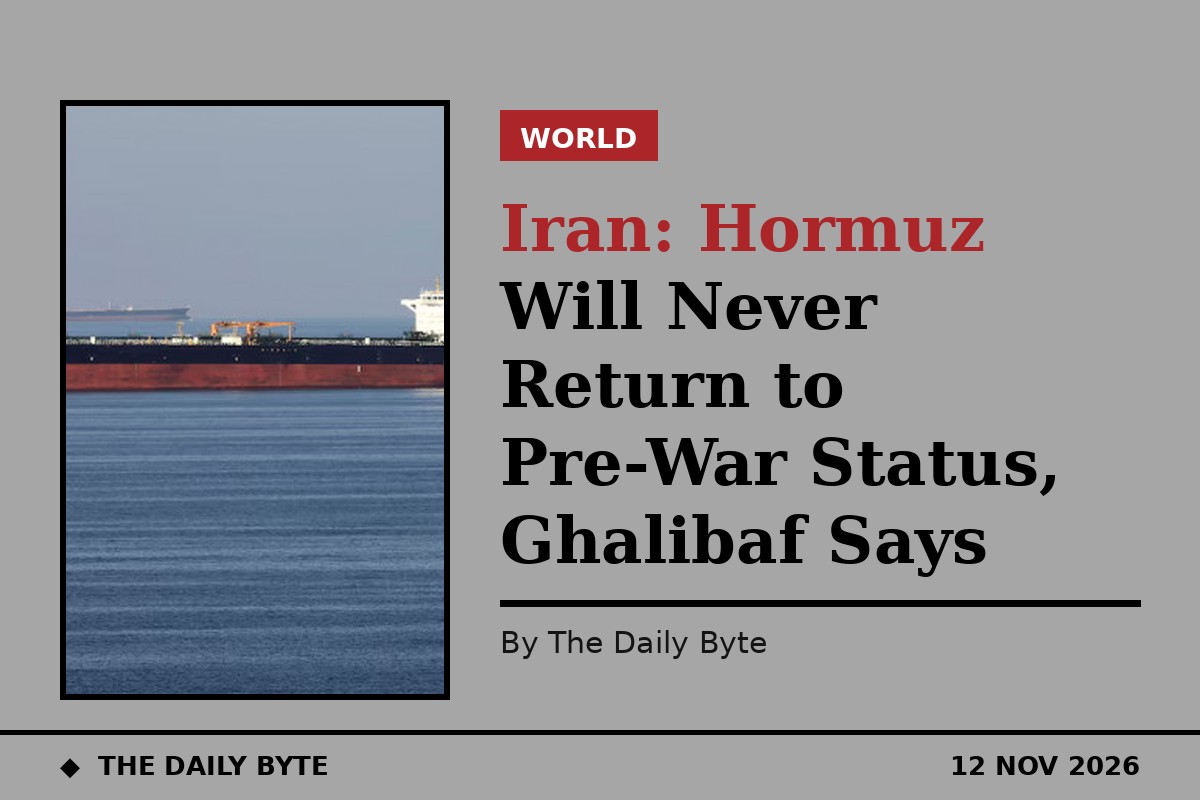
Tehran has also rejected a US proposal to transfer its stockpile of uranium enriched to 60 percent to a third country. Parliamentary speaker Mohammad Bagher Ghalibaf told Al Jazeera that the Strait of Hormuz would never return to its status before the war and that the ball was now in the American court.
Washington signals diplomacy first
US President Donald Trump said on Monday, after meeting Qatar's prime minister, that new military action against Iran did not seem necessary for now, though he said US forces remained "locked and loaded". Qatar has been mediating contacts between Washington and Tehran.
US Secretary of State Marco Rubio has said Washington's economic pressure campaign is proving effective enough to make further large-scale military operations unnecessary. Trump has maintained the naval blockade of Iranian ports while signalling that renewed strikes are not currently necessary, although he has said he could return to military action if diplomatic efforts mediated by Qatar fail to produce a deal.
Oil prices rose on Wednesday after Iran rejected the US uranium proposal, reversing some of the previous session's losses. Brent crude futures settled 1.39 percent higher at $92.76 a barrel, while US West Texas Intermediate crude gained 0.57 percent to $86.53, according to market reports.