Israel faces hung parliament in provisional count
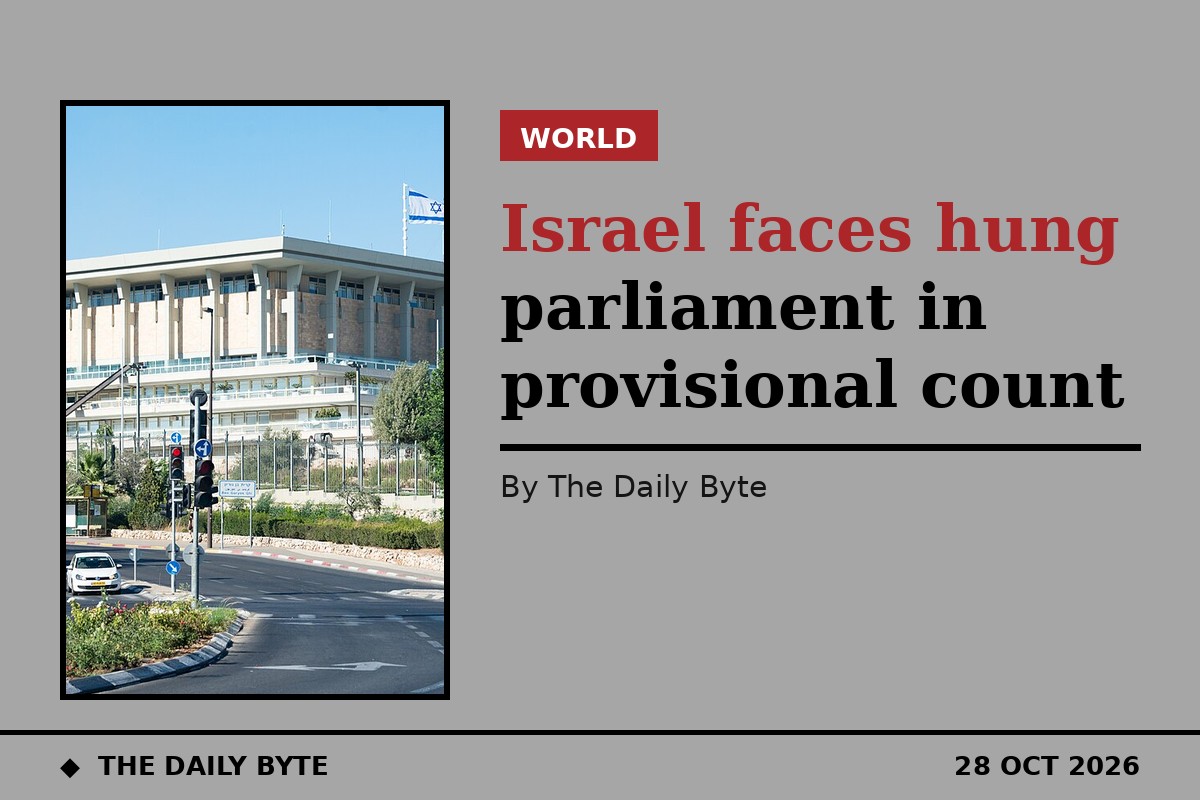
Israel faces the prospect of a parliament without a majority after its election on Tuesday 27 October, with provisional results leaving neither main bloc able to govern alone. Turnout was 77.7%, the highest in decades, and the provisional count on the morning of 28 October, with 70.7% of votes tallied, put Prime Minister Benjamin Netanyahu's bloc on 54 seats, the opposition bloc led by former military chief Gadi Eisenkot on 47, and Arab parties on 19, all short of the 61 needed in the 120-seat Knesset. Later tallies varied, putting the Netanyahu bloc at 53 to 55 seats, but none gave either side a majority.
Neither bloc reaches 61
Likud remained the largest single party, with 27 seats in the provisional counts, and Netanyahu stays on as caretaker prime minister during coalition talks. He has called for a strong, right-wing national government and raised renewed joint action against Iran with the United States, while Eisenkot has urged him to retire. The notable shift in the provisional figures is the rise of the Arab parties to around 18 to 19 seats, close to their roughly 18% share of the electorate and up from 2022, leaving neither main bloc able to form a government without their support.
The Arab parties hold the balance
None of these figures is final: double-envelope ballots from soldiers, diplomats and others are still to be counted, and official final results are not due until 4 November, followed by presidential consultations on who should try to form a government. The outcome matters beyond Israel's domestic politics, because the direction of the war with Iran, launched on 28 February, is tied in part to the election result, and a prolonged coalition negotiation would leave the country governed by a caretaker administration at a moment of acute regional tension.
Sources: Reuters Breakingviews and Le Monde.