Japan food tax cut faces upper house test as Takaichi dodges funding
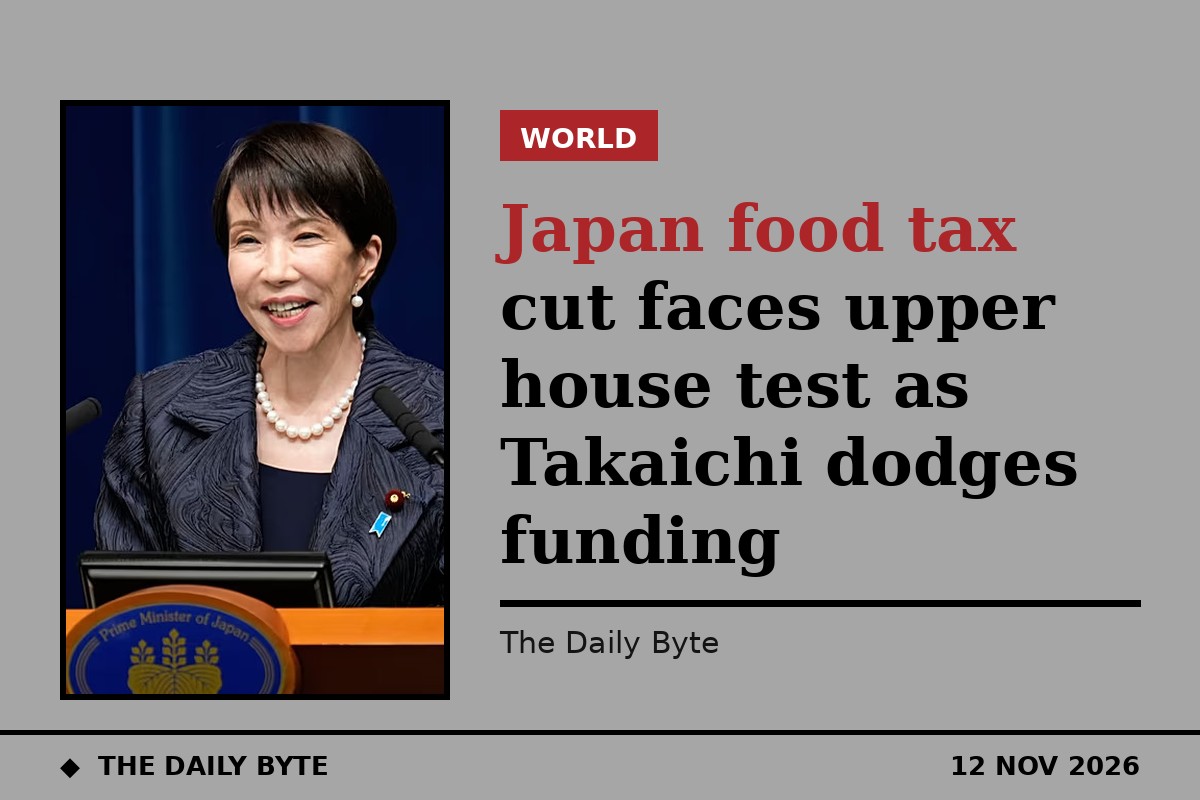
Japan's plan to cut the consumption tax on food from 8 percent to 1 percent has moved to the upper house of parliament, where Prime Minister Sanae Takaichi faces hard questions about how the country will pay for it. Debate in the House of Councillors began on 11 November, days after the bill cleared the lower house.
The bill is Takaichi's top priority in the current Diet session. It would cut the tax on food and non-alcoholic drinks for two years from April 2027 and create a new income-linked cash benefit for lower- and middle-income workers, with a longer-term system planned for fiscal 2029.
Takaichi declines to rule tax rises in or out
Asked in the upper house whether tax rises could fund the permanent benefit system, Takaichi did not give a direct answer. She said permanent funding would be secured by reviewing revenue and spending rather than by relying on deficit bonds. Opposition parties, which voted against the bill, say the funding plan remains unclear and have warned the two-year cut could cost about 10 trillion yen in lost revenue.
The bill passed the House of Representatives on 6 November with the backing of the ruling Liberal Democratic Party and the Japan Innovation Party. Four LDP members abstained, and former prime minister Shigeru Ishiba left the chamber before the vote. The ruling coalition lacks a majority in the upper house, so the bill faces a harder path there, with the session due to end on 12 December.
What the cut would mean for households
The Bank of Japan has estimated that a full cut in the food rate would lower core inflation by about 1.3 percentage points in fiscal 2027, underlining how large a step the measure is for household budgets and public finances alike.