Kamal Reviews Drug Track-and-Trace System
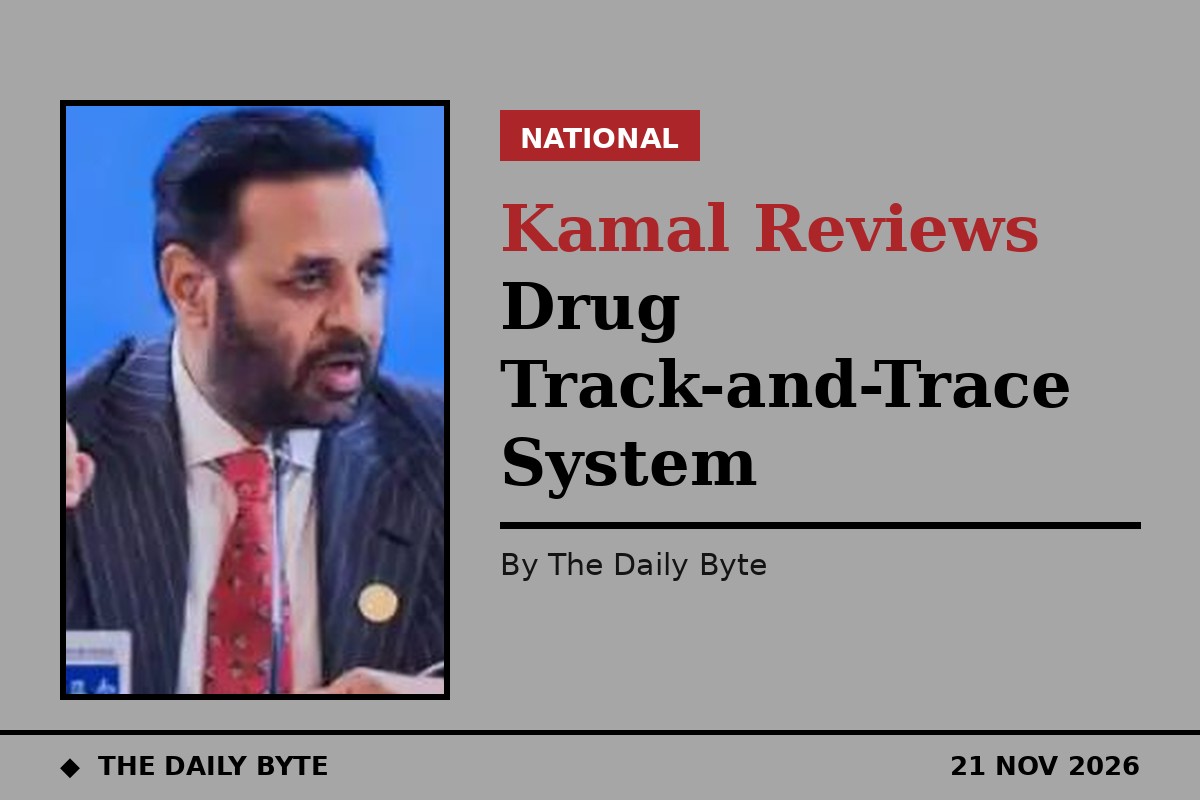
Federal Minister for National Health Services Syed Mustafa Kamal has reviewed the Pharmaceutical Track and Trace System and its 2-D barcode mechanism during a visit to the National Data Centre of the National Telecommunication Corporation (NTC) in Islamabad.
During the visit on Friday, the minister was given a detailed briefing on the track-and-trace system and 2-D barcode technology, which is aimed at ensuring effective monitoring, identification, distribution and transparency in the pharmaceutical supply chain. He also reviewed various technical aspects of the system, data management mechanisms and procedures for strengthening the monitoring of medicines.
Second review in a week
The NTC visit was the second review of the system in a week. Three days earlier, Kamal chaired a meeting to review progress on implementing the drug track-and-trace system, at which officials of the Drug Regulatory Authority of Pakistan (DRAP) briefed him on implementation, digital monitoring, transparency in the pharmaceutical supply chain and the challenges faced in its execution.
At that meeting, the health minister directed the authorities concerned to take the necessary measures to strengthen medicine surveillance, ensure transparency and make the track-and-trace system more effective and fully operational. He emphasised the importance of an effective monitoring mechanism to prevent the circulation of fake and substandard medicines and protect public health.
What the system is meant to do
The initiative aims to improve transparency, strengthen regulatory oversight and ensure better monitoring of medicines from manufacturing to distribution. Under the system, medicines carry a standardised 2-D barcode holding product and batch information alongside a unique serial number, creating a digital record as each pack moves through the supply chain and giving regulators stronger tools to trace products, support recalls and identify spurious, falsified, counterfeit and unregistered medicines.
Compliance with 2-D barcoding and serialisation became mandatory from 9 October 2026 for registered pharmaceutical products manufactured locally or imported into Pakistan on or after that date, under a DRAP notification. Batches manufactured or imported before that date are exempt and may continue to be imported, distributed and sold. The federal cabinet approved the nationwide system in June 2026.
Consumer checks still to come
The part of the system that shoppers will notice has not yet reached them. The health minister told the National Assembly that from the end of November a buyer with a mobile phone should be able to scan the barcode printed on a medicine’s label or bottle and find out whether the drug is genuine, with a red warning displayed when it is not. The verification system is expected to become operational next month, he said, and he advised people to carry their phones when buying medicines from the end of November.
That consumer-facing launch depends on the register behind it. The two reports of the minister’s remarks gave different figures for the number of medicines on record: one put the government’s database at around 75,000 medicines, while the other reported more than 86,000 medicines registered under the track-and-trace system. The exact size of the register is therefore not settled in public reporting, and when people can actually start using the scanning facility will depend on the system’s launch and availability.
Why it matters
Counterfeit and substandard medicines are a live problem in Pakistan, and the system is the government’s main answer to it. Under the government’s announced plan, a mobile application will allow people to scan a medicine’s barcode and check key information, including its authenticity, manufacturer, batch number, expiry date and official price. That could help patients and pharmacists identify products that do not match the information held in the regulatory system, including potentially counterfeit or expired medicines.
Enforcement is also tightening. Pharmaceutical companies that fail to provide the required product information for the tracking system could face legal action, including the sealing of manufacturing facilities, the minister has warned. Officials told a review meeting that around 80 per cent of pharmaceutical companies had initiated the implementation process, while formal notices would be issued to those that had not submitted the required product data. The NTC visit and the week’s review meeting show the ministry pressing the system towards full operation, but until the public scan goes live, the check that matters most to a buyer at a pharmacy counter is still to come.