Pakistan, Uzbekistan Discuss 10,000 Worker Jobs
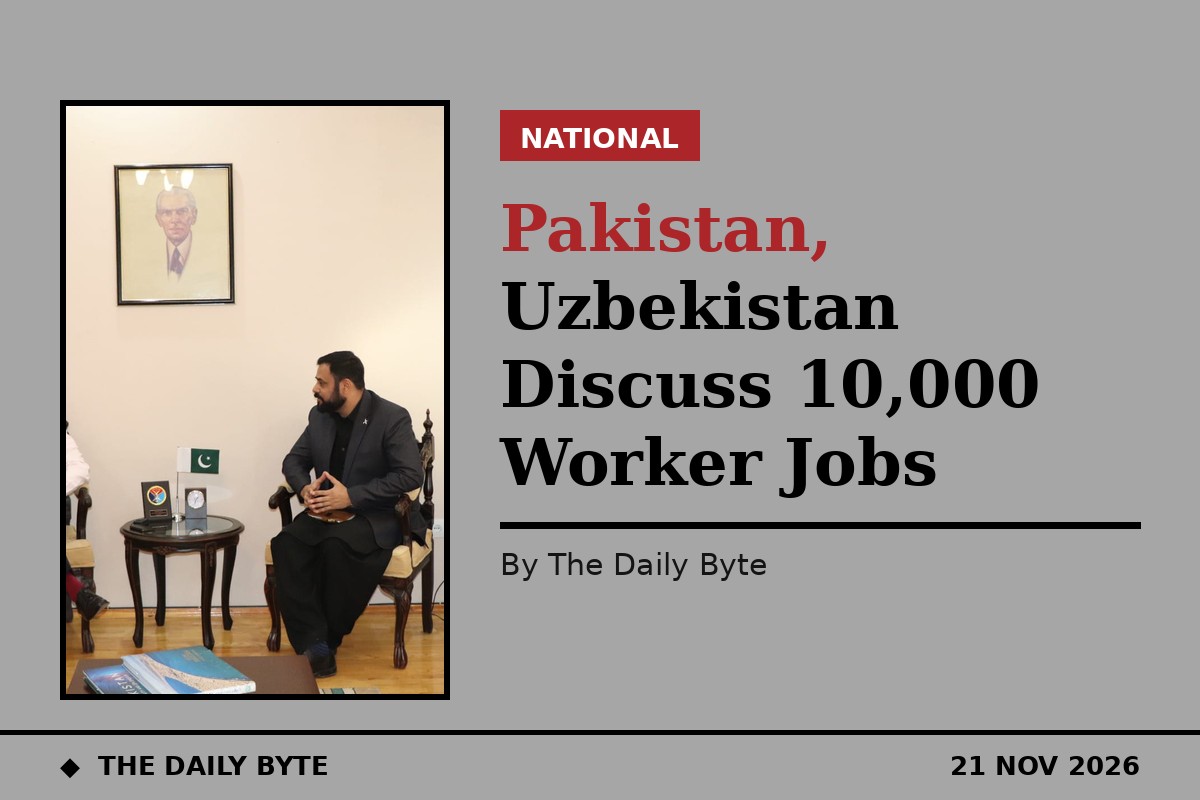
Pakistan and Uzbekistan have held discussions in Tashkent on a proposed initiative that could place up to 10,000 Pakistani workers in Uzbekistan through lawful recruitment and immigration procedures. The talks were held between Pakistan’s ambassador to Uzbekistan and the head of a recruitment company that has spent three months identifying job prospects in the Central Asian country.
Pakistan’s Ambassador to Uzbekistan, Muhammad Mudassir Tipu, met Major Barrister Sajid Majeed Chaudhary (retired), chief executive of GoForeign (Pvt) Ltd Pakistan and GoForeign LLC Uzbekistan, according to a press release. GoForeign had laid the groundwork over the previous three months to pinpoint employment prospects in Uzbekistan, especially for jobless Pakistani youth seeking secure and sustainable work abroad.
Visa route under discussion
The discussions included examining the possibility of moving from B-2 visa arrangements to appropriate E-category work visas, while complying with the immigration and labour laws of Uzbekistan and Pakistan. Both sides stressed that recruitment and placement procedures must follow the laws of both countries, with the initiative aiming to ensure transparent hiring practices, protect workers’ rights and provide employment through authorised channels.
The visa question matters because of how the route currently works. Pakistan’s ambassador has previously advised workers that most labour migrants are first issued a B-2 visa by the Uzbek Embassy in Pakistan, which the employer then converts into an E work visa after arrival, once Uzbek authorities have verified the documents. In an advisory issued in August, he urged Pakistanis seeking work in Uzbekistan to process their visas through registered Overseas Employment Promoters, obtain Protector clearance from the Bureau of Emigration and Overseas Employment, and secure a valid employment contract before travelling.
Warning against informal recruiters
The same advisory warned workers to avoid processing visas through agents, unknown individuals or informal channels, and cautioned that unauthorised visa processing and overstaying can lead to serious financial, legal and criminal consequences. Workers were also advised to keep their passports in their own possession at all times and to register with the Pakistani Embassy in Tashkent promptly on arrival.
That caution is directly relevant to the new discussions. A placement scheme of this size would only work through formal channels, and the embassy’s public guidance has consistently pointed workers towards registered promoters and official clearance rather than informal brokers.
Wider trade and community help
The meeting also covered prospects in Uzbekistan’s industrial and investment sectors, alongside potential import and export ventures. Both sides agreed on the need to turn the identified opportunities and research into practical economic cooperation. Ambassador Tipu commended Chaudhary’s work assisting the Pakistani community in Central Asia, especially distressed and vulnerable nationals in Uzbekistan, and pledged possible support within his official remit to advance the proposed initiatives.
Tipu, a career diplomat, presented his credentials to President Shavkat Mirziyoyev in July 2026, marking the start of his assignment in Tashkent. Before this posting he served as ambassador to Iran, and at the Ministry of Foreign Affairs he held the posts of additional secretary and director general for the Americas and China.
What is not agreed yet
No agreement has been signed and no list of trades, employers or departure dates has been published. The 10,000 figure is the scale under discussion, not a quota that has been fixed, and the talks are a proposal built on three months of groundwork rather than a completed deal. The idea also sits within a longer official effort: in July 2025, Federal Minister for Overseas Pakistanis Chaudhry Salik Hussain and Uzbekistan’s ambassador to Pakistan, Ali Sher Takhtaev, agreed to establish a joint working group to facilitate employment opportunities, and Pakistan said it was interested in a pilot project with Uzbekistan similar to its labour-supply pilots with South Korea and Japan.
More than 12 million Pakistanis are employed abroad, and overseas Pakistanis sent a record 38.8 billion dollars in remittances in fiscal year 2025. Any Uzbekistan placement scheme would be a small part of that picture, but for the workers involved the difference between a lawful, contracted route and an informal one is the whole story.