Kapito Warns Malawi Is Not a Police State
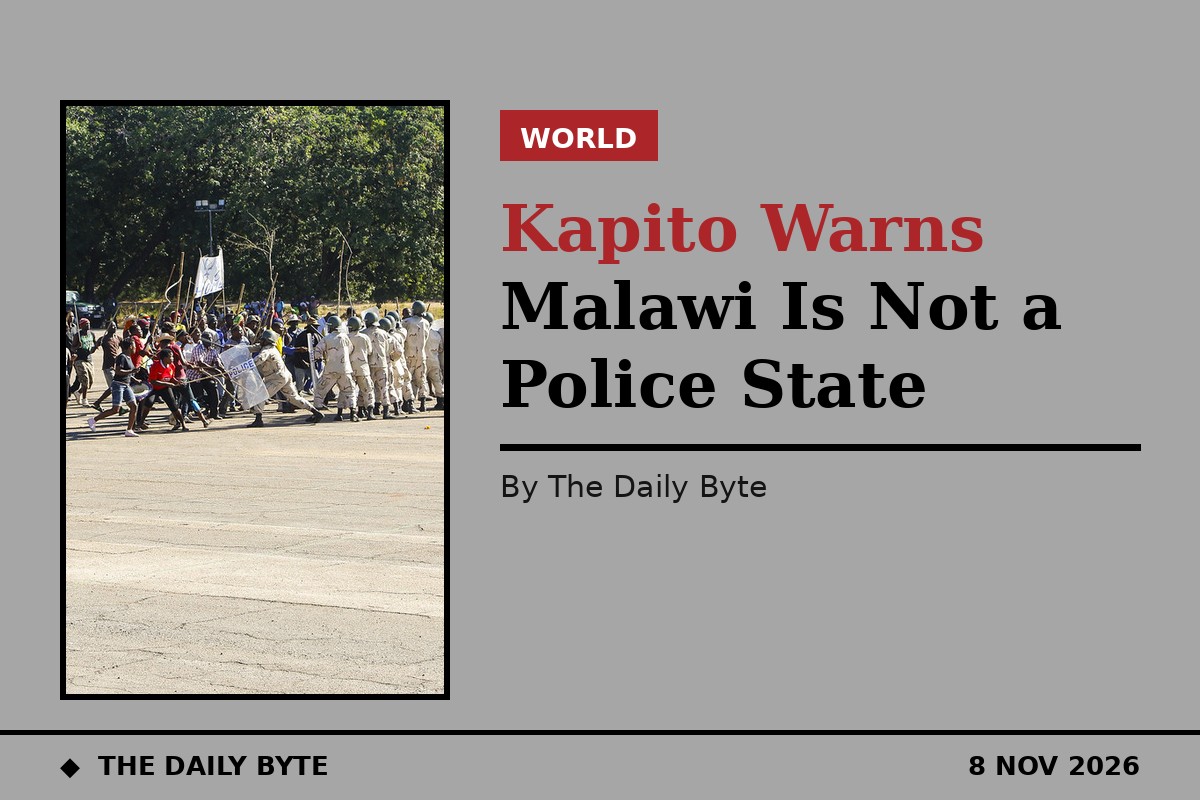
John Kapito, the executive director of the Consumers Association of Malawi (CAMA), has warned the Malawian government against blocking peaceful demonstrations, saying the country is not a police state and that citizens have a constitutional right to protest.
Kapito issued the warning in a statement released on Sunday, in which he criticised what he described as an increasing trend by the authorities of obstructing, prohibiting or frustrating peaceful public demonstrations. He said suppressing public dissent could have dangerous consequences for the country.
“Malawi is not a police state,” Kapito said, arguing that the right to demonstrate is a fundamental part of democratic life and that the government should respect it rather than treat requests for peaceful protests as political confrontations.
He said demonstrations are a legitimate democratic tool through which citizens can express dissatisfaction, communicate their concerns to leaders and demand solutions to the challenges affecting their daily lives. Citizens should be given the opportunity to express their frustrations peacefully, he said, rather than having their concerns dismissed or interpreted as political hostility.
Kapito also pointed to the economic pressures facing households in Malawi, including the rising cost of living, foreign exchange shortages and persistent fuel supply challenges. He said demonstrations should be recognised as an important channel of communication between the public and the government, particularly when people feel their concerns are not receiving adequate attention.
His warning comes amid growing debate in Malawi over the regulation of civil society organisations, following the recent deregistration of the Human Rights Defenders Coalition (HRDC) by the Non-Governmental Organisations Regulatory Authority (NGORA). The decision has attracted public attention, in part because the coalition had been associated with plans for nationwide demonstrations.
Some observers have questioned whether the deregistration could affect the coalition's ability to organise the planned protests. NGORA maintains that its decision was based on the coalition's failure to meet statutory obligations, rather than its intended demonstrations.
Malawi's Constitution protects freedom of expression and peaceful assembly, giving citizens the right to express their views and to demonstrate peacefully within the framework of the law. Kapito's intervention highlights the tension between that constitutional guarantee and the way the authorities have handled recent requests to protest.
The warning presents a challenge for the government and law enforcement authorities: protecting public order should not come at the expense of fundamental democratic freedoms. Attention is now likely to remain on how the authorities balance regulatory responsibilities and public security with the constitutional rights of citizens to express their grievances peacefully.


