Kenya hospital bill bans detention over unpaid bills
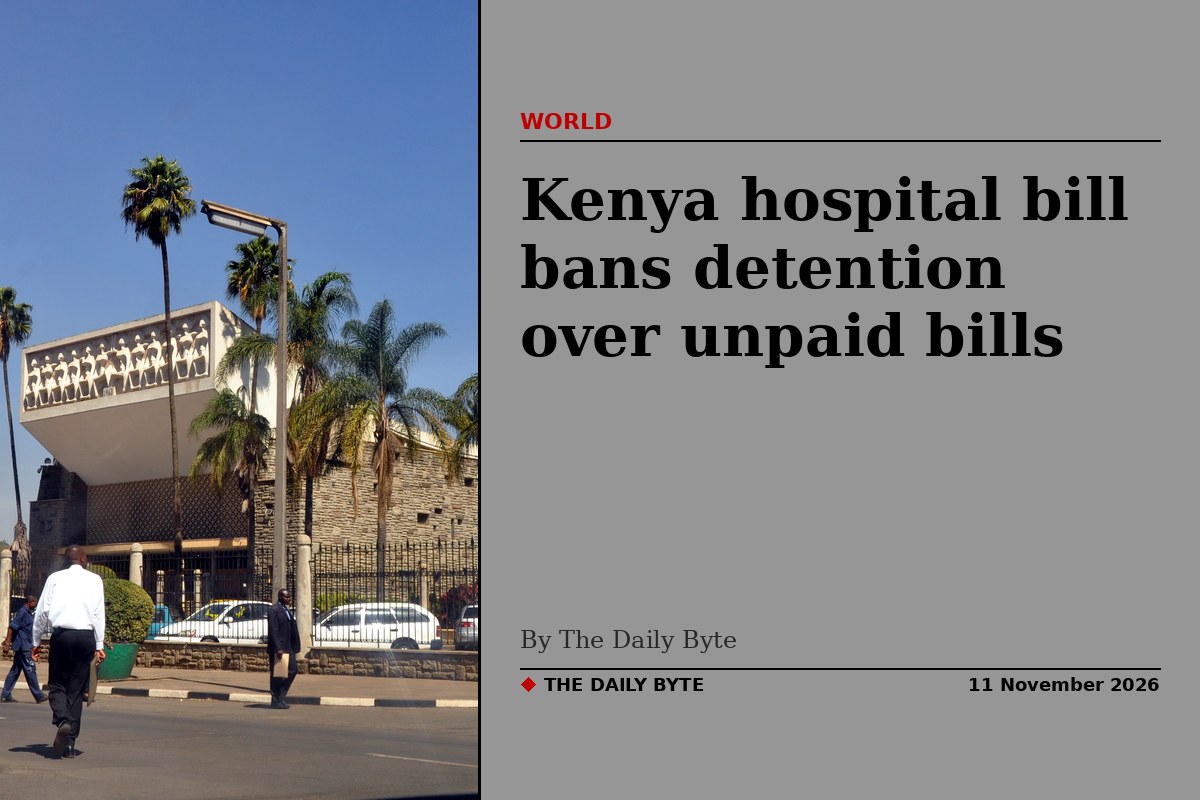
Kenya's National Assembly has passed a bill that would stop hospitals from demanding payment before emergency treatment and from detaining patients, or the bodies of dead patients, over unpaid medical bills.
The Health (Amendment) Bill, 2024, sponsored by Kirinyaga Woman Representative Jane Njeri Maina, was approved at its third reading on Wednesday, 11 November 2026. The bill now goes to the Senate, and then to President William Ruto for assent, before it can become law.
The proposed law would amend the Health Act, 2017, making it an offence for a health facility to refuse emergency treatment because a patient cannot immediately pay. It would also prohibit hospitals and mortuaries from withholding patients who have been discharged, or the bodies of people who have died, as a way of forcing families to settle outstanding bills.
Under the changes, public health facilities that demand advance payment before emergency treatment could face fines of up to Sh3 million. Public officers who authorise or facilitate the detention of a body over an unpaid bill could face fines of up to Sh2 million. The bill also provides for legally binding instalment payment arrangements, so hospitals can still recover debts through lawful means without holding patients or bodies.
Maina, a former advocate, told Parliament the bill was shaped by cases she had seen in practice, where families could not bury their relatives because they could not clear hospital bills. She cited the case of Kelvin, a former medical student who had turned to boda boda work after struggling to find employment. He died in a road accident, and his body was reportedly held at a funeral home for nearly a year over an outstanding bill of Sh1.42 million.
She also cited the case of Caroline Nthangu Tito, whose body was reportedly detained at Mater Misericordiae Hospital for more than two months after her death in August 2025, over a medical bill of Sh3.3 million. Maina said she represented Kelvin's family without charging legal fees and saw the distress of a mother unable to give her son a dignified burial.
Kenyan courts have already ruled against the practice in several cases. In November 2026, the Daily Nation reported that the High Court ordered Cana Hospital and Umash Funeral Home to release the body of Erick Migwa, who died in March 2026, despite an outstanding bill of Sh4.4 million. Justice Patricia Nyaundi awarded his widow Sh1 million in damages, ruling that a human body could not be treated as security for a debt.
In another case, the High Court awarded Herman Kinoru Sh800,000 after finding that Labib Hospital had unlawfully detained him for more than two months after his recovery, in an attempt to make him clear a Sh3 million bill.
The bill drew support across the House during debate. Dagoretti South MP John Kiarie said hospitals should check a patient's condition first, not their ability to pay. "The emergency unit of any hospital should live up to its name. Today, instead of checking a patient's vitals, we check their ability to pay," he said. Nominated MP Sabina Chege criticised the commercialisation of healthcare, while Health Committee chairperson James Nyikal said the changes were intended to guarantee emergency treatment regardless of a patient's financial circumstances.
The bill rests on Article 43(2) of the Constitution, which provides that no person shall be denied emergency medical treatment, and Article 28, which guarantees the right to dignity. The Health Act already provides for emergency treatment, including stabilisation and referral, but supporters say the amendments are needed to strengthen enforcement.
If the Senate passes the bill and the President signs it, patients needing urgent care and families seeking to bury their loved ones would have clearer legal protection against being held to ransom over medical debts.
Sources: Capital FM and The Eastleigh Voice.


