Kenya Files 71 Money Laundering Cases in FATF Grey-List Push
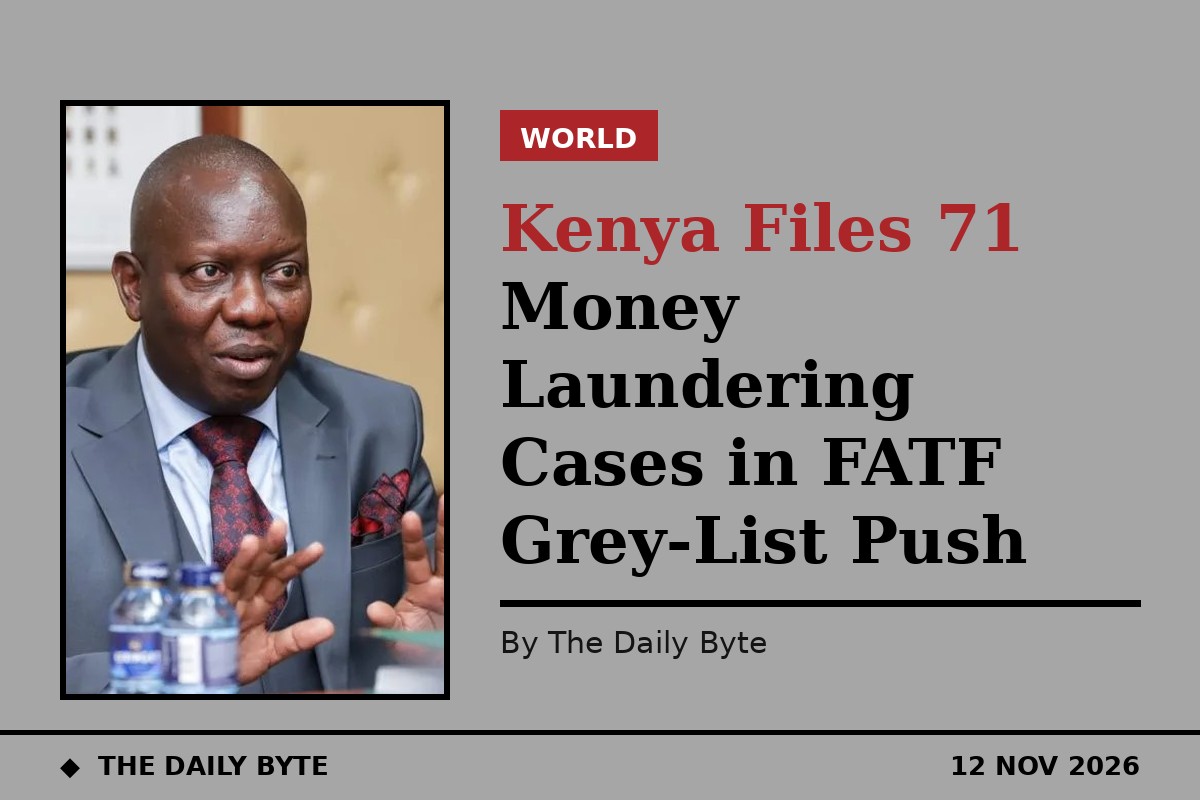
Kenya's Office of the Director of Public Prosecutions (ODPP) registered 71 money laundering cases between July and October 2026, as the country steps up efforts to get off the Financial Action Task Force (FATF) grey list.
Director of Public Prosecutions Renson Ingonga disclosed the figures at a breakfast meeting in Nairobi on Wednesday, 11 November, where the heads of Kenya's main law enforcement and financial crime agencies reviewed progress on the country's FATF action plan.
The meeting brought together the Financial Reporting Centre, the Directorate of Criminal Investigations, the Ethics and Anti-Corruption Commission, the Asset Recovery Agency and the Kenya Revenue Authority. The agencies reviewed preliminary feedback from the Africa Joint Group, the regional technical body that assesses countries' progress under FATF processes, and discussed how to close the remaining gaps in investigations, prosecutions, asset recovery, financial intelligence and information sharing.
Grey list since February 2024
Kenya was placed on the FATF's list of jurisdictions under increased monitoring, commonly known as the grey list, in February 2024, after the watchdog identified weaknesses in its defences against money laundering, terrorist financing and the financing of proliferation. The FATF's public statement of 30 October 2026 kept Kenya on the list, alongside countries including Angola, Cameroon, the Democratic Republic of Congo and South Sudan.
Officials say Kenya has now addressed 19 of the 21 deficiencies identified under its action plan. The Financial Reporting Centre's director-general, Naphtaly Rono, told a parliamentary committee in October that the country was targeting removal from the grey list by April 2027.
The remaining work is concentrated on showing that the reforms work in practice rather than simply exist on paper. That means demonstrating that financial intelligence is used in real cases, that complex money laundering investigations lead to prosecutions, that convictions follow where the evidence supports them, and that the proceeds of crime are identified, frozen and recovered.
Cases registered, not convictions
The 71 cases are registrations, not convictions. They cover the four months from July to October 2026 and reflect an increase in the number of financial crime matters being taken forward for prosecution, rather than a count of people found guilty.
Ingonga described the meeting as a platform for agency heads to consider the Africa Joint Group's preliminary comments on Kenya's progress report and to agree a faster, more coordinated approach to the outstanding action points. The agencies are under pressure to show the FATF that Kenya can detect, investigate, prosecute and disrupt illicit financial flows, including through stronger supervision, better suspicious-transaction reporting and reliable beneficial-ownership information.
Removal from the grey list matters beyond reputation. Grey-listed countries face closer scrutiny of cross-border payments and correspondent banking, which can raise the cost and slow the speed of trade and remittances. Kenya's push to exit by April 2027 will depend on whether the next FATF review finds the improvements in prosecutions and asset recovery convincing.


