Kenya Online Safety Bill: under-18s need parental consent
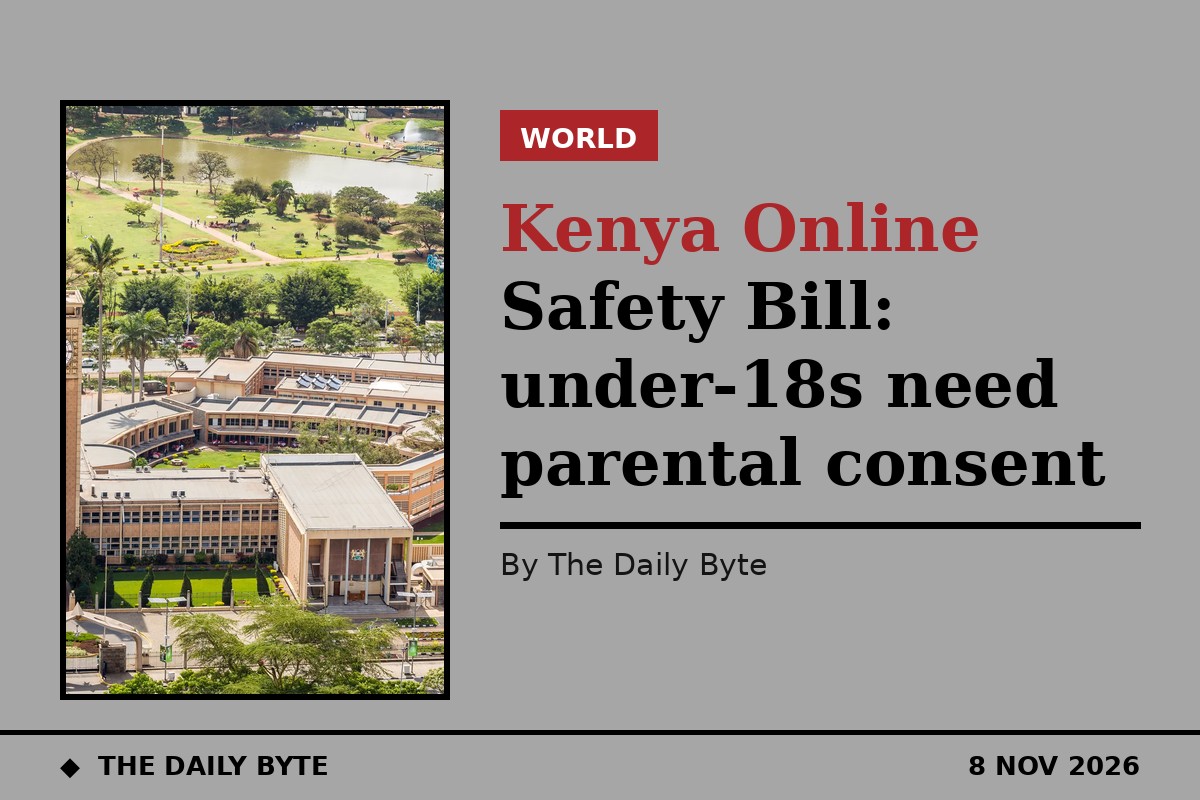
Social media companies operating in Kenya face fines of up to Sh500 million if they allow children onto their platforms without verified parental consent, under a new Bill tabled in the National Assembly. The Online Safety Bill, 2026, sponsored by Embakasi West MP Mark Mwenje, would make age verification mandatory and require parents or guardians to approve access for anyone under 18, The Eastleigh Voice reported on 8 November.
Under the proposal, providers of user-to-user services and search platforms must use age verification or age estimation systems to establish whether a user is a child. A provider would not be allowed to grant a minor access without the consent of a parent or a person with parental responsibility, and parents would be able to withdraw that consent at any time, after which platforms must restrict the child's access within a period set by regulations.
The Bill covers platforms including Facebook, Instagram, TikTok, YouTube, X and WhatsApp. Companies that fail their duty of care face a fine of up to Sh500 million or 10 per cent of their annual global turnover, whichever is higher, while senior executives could face up to five years in prison. Platforms would also have to carry out illegal content risk assessments at least once every 12 months.
The Communications Authority of Kenya would be the main regulator, with the ICT Cabinet Secretary determining which services are regulated. The Bill acknowledges that its provisions could limit freedom of expression, access to information and privacy protected by the Constitution, but argues the restrictions are justified. It remains a proposal: parliamentary debate, public participation and likely amendments lie ahead before anything becomes law.