King Charles to Pay Mansion Tax on Royal Palaces
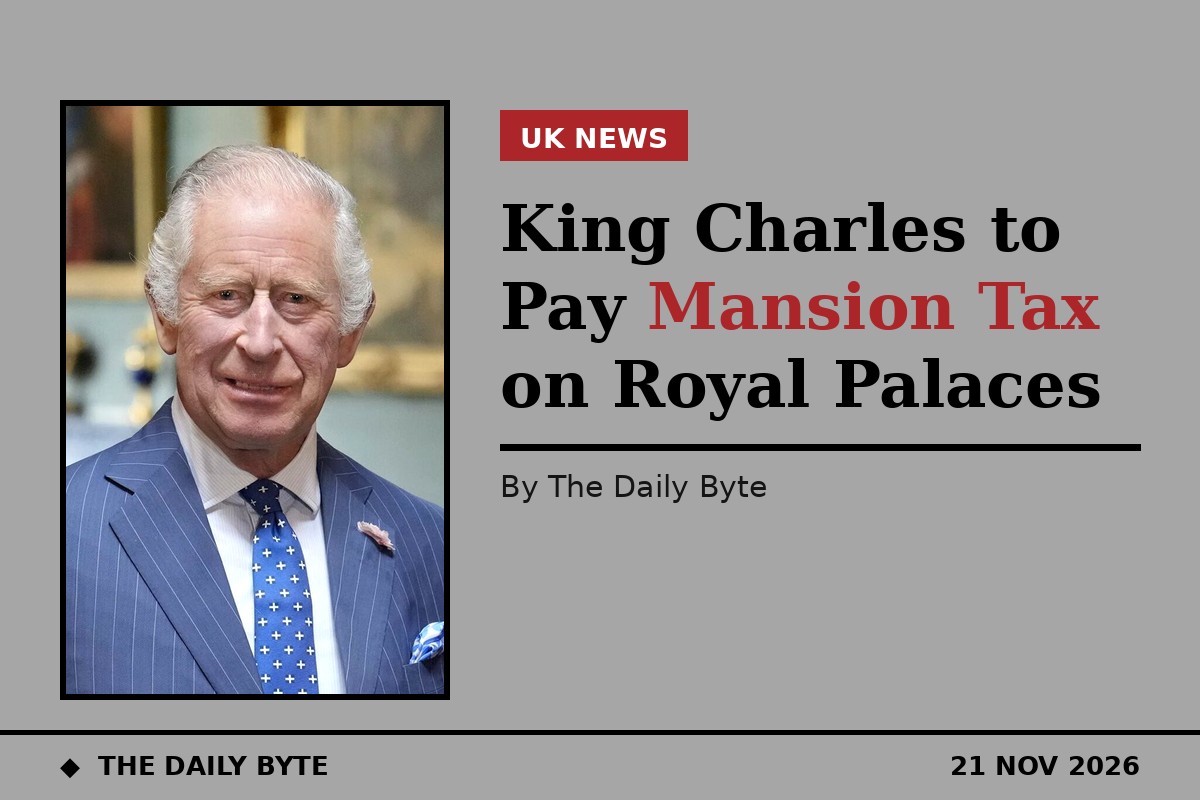
King Charles will voluntarily pay the new mansion tax on qualifying royal residences when it comes into force in April 2028, even though the Crown is legally exempt from the charge.
Buckingham Palace has shared the King’s position with the Treasury, according to The Times, which first reported the decision. The Palace told the Treasury on Friday 20 November that Charles will pay the high-value council tax surcharge on royal homes that qualify, rather than rely on Crown immunity.
The surcharge, announced by Rachel Reeves in the 2025 Budget, applies to homes in England valued at more than £2 million. Owners face extra annual charges of between £2,500 and £7,500, with the highest bills falling on properties valued at more than £5 million. More than 150,000 homes are expected to be affected in the first year.
The King’s decision follows a precedent set by his mother. Queen Elizabeth II voluntarily began paying income tax and capital gains tax in the 1990s, a move Charles later followed. In June this year Buckingham Palace disclosed the King’s personal tax bill for the first time, showing he had paid £12.9 million in tax in 2024-25.
Which royal homes could be caught
Which properties will actually attract the charge has not yet been decided, and discussions are continuing. Royal residences are held under different ownership arrangements, which makes the position complicated.
Buckingham Palace, Windsor Castle, the Palace of Holyroodhouse and Clarence House, where Charles and Camilla live in London, are held by the Crown Estate. Sandringham in Norfolk and Balmoral in Scotland belong privately to the King, having been inherited from his mother. Highgrove House, the King’s country estate in Gloucestershire, belongs to the Duchy of Cornwall, which is now held by Prince William.
The Crown’s exemption from the surcharge is set to remain in place, with a Treasury source saying it is consistent with the wider tax system. Government guidance states that the Crown is not within the scope of the taxing acts and can claim total relief unless an Act specifically makes it liable. The King’s payment is therefore voluntary, not a change in the law.
Other royals could face bills too
Other members of the royal family could also face mansion tax bills, depending on whether they own their homes or hold them on a long lease. Prince William could pick up the bill for Highgrove, the home his father has used since 1980, because the property belongs to the Duchy of Cornwall that William now holds as Duke.
Princess Anne owns Gatcombe Park in Gloucestershire, given to her by the late Queen as a wedding present in 1976. Prince Edward leases his Bagshot Park home from the Crown Estate, and because that agreement lasts 150 years the responsibility for the surcharge could fall to him.
William and Kate’s position is different. Their lease on Forest Lodge, their eight-bedroom home in Windsor Great Park, lasts 20 years, just one year below the threshold for a long lease, so any mansion tax liability on that home would sit with the Crown Estate. The couple paid £42,000 in stamp duty on the agreement.
Kensington Palace revealed earlier this year that William paid £7.76 million in income tax in 2024-25.
A deliberate signal on royal finances
The decision has been welcomed by tax experts. Mike Warburton, The Telegraph’s tax expert, said he was very pleased that the King had graciously offered to dispense with Crown immunity and voluntarily be subject to the mansion tax, calling it a nice gesture.
The move comes after years of growing scrutiny of royal finances. The voluntary payment follows the same approach the Palace has taken on tax transparency, with the King’s personal tax bill now disclosed each year.
Ministers living in official residences such as 10 Downing Street will not have to pay the charge themselves. After the 2025 Budget, the Government confirmed that responsibility for the surcharge would sit with owners rather than occupiers.
With the levy not taking effect until April 2028, there is time for Parliament to settle which royal properties qualify. What is already clear is that the King does not intend to use the Crown’s exemption to avoid the bill.