Kosovo reforms could unlock $1.5bn and 87,000 jobs
Targeted reforms in Kosovo could attract up to $1.5 billion in private investment and create between 61,000 and 87,000 direct and indirect jobs over five to ten years, according to a new World Bank Group report published on 29 October 2026.
Clean energy leads the opportunity
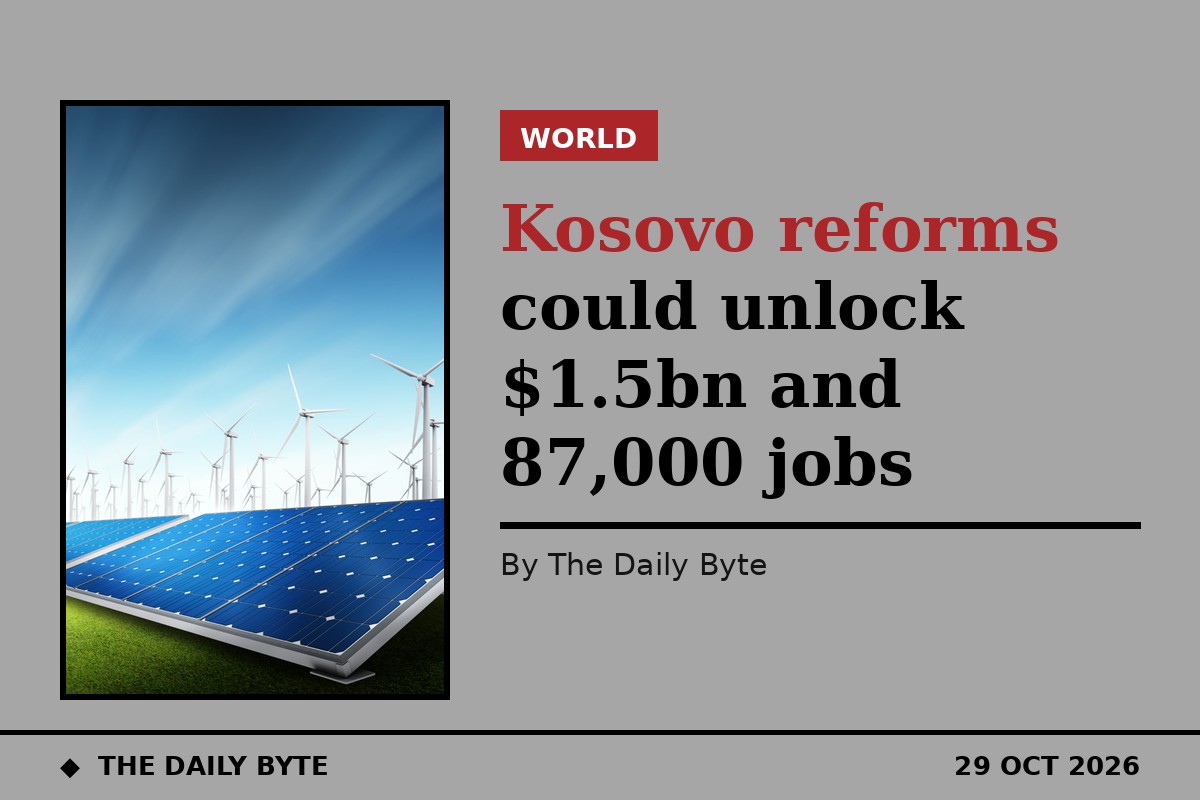
The Country Private Sector Diagnostic identifies three sectors where policy changes would have the greatest effect: utility-scale solar and wind power, business services, and building components manufacturing. Together, reforms in those areas could mobilise an estimated $1.2 to $1.5 billion in private money, the report says.
Jobs beyond energy
Energy offers the single largest prize. Kosovo aims to raise renewable sources to 63 percent of installed electricity generation capacity by 2031, up from just 23 percent in 2024. To get there, the report calls for a multi-year auction schedule and for liquidity guarantees for transmission operator KOSTT to work in practice under the country's 2025 renewable energy support rules.
If those steps are taken, energy reforms alone could attract $1 billion in investment, create 8,300 jobs and cut emissions equivalent to about 24 percent of Kosovo's annual carbon dioxide output by 2035, the Bank estimates.
Reforms in business services and building components manufacturing could jointly attract up to $473 million and generate up to 79,000 jobs, according to coverage of the diagnostic. World Bank country manager Carole Megevand said Kosovo needs to seize untapped private investment opportunities and remove the barriers that stand in the way, in order to create jobs, generate domestic revenue and support inclusive growth.
The findings land against a weak labour market. The Bank notes Kosovo's employment rate stands at just 38.6 percent, women's inactivity is above 70 percent, and more than 31 percent of young people are not in education, employment or training.
Sources: World Bank Group, Traders Union.