Kulsoom Karachi Case Explained: What Happened?
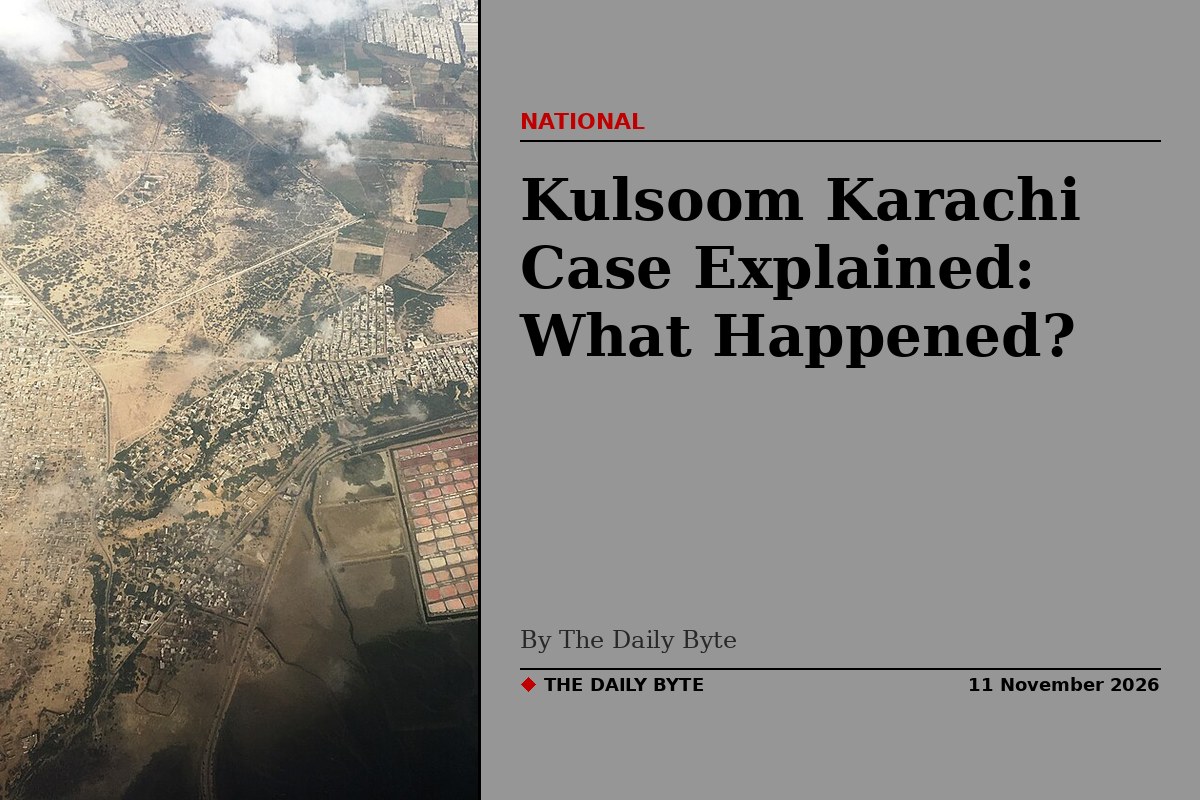
Three-year-old Kulsoom Mohammed Qasim was found dead in a flour sack outside her home in Quaidabad, Karachi, on Tuesday 23 June 2026, after going outside to play and not coming back. Police say a post-mortem examination confirmed sexual assault, and forensic samples were collected to help identify those responsible. More than four months later, no suspect has been publicly named or charged, and the investigation remains open.
This explainer sets out what happened, what the police and the post-mortem found, what the Sindh government ordered, and where the case stands now.
Who was Kulsoom?
Kulsoom was three years old and lived with her family in Quaidabad, a neighbourhood in Landhi Town in Karachi’s Malir district. Her father, Muhammad Qasim, told police he had left for work that morning while Kulsoom stayed at home with other family members.
Her case was later taken up by the National Commission on the Status of Women, which called for a swift and transparent investigation.
What happened on the day she died?
According to the first information report registered on her father’s complaint, Kulsoom went outside to play around noon on Tuesday 23 June 2026 and did not return. The family, other relatives and neighbours searched the area without finding her.
When Muhammad Qasim returned home in the evening, he found a crowd outside the house. The family was told Kulsoom’s body had been found inside a flour sack left outside the residence. Neighbours told police that unidentified individuals had allegedly abducted and killed the child before leaving her body at the family’s doorstep.
Police took the body to a hospital for a post-mortem examination. A case was registered on Muhammad Qasim’s complaint under sections of the law relating to kidnapping, torture and murder.
What did the post-mortem examination find?
Officials said the preliminary findings of the post-mortem examination suggested sexual assault. Police sources later said the post-mortem examination had confirmed sexual assault, while further forensic and chemical reports were still awaited.
Investigators recovered human hair samples and DNA evidence from the victim’s clothing and body during the post-mortem, and preserved them for forensic analysis. Officials said marks of resistance were found on different parts of the child’s body.
Investigators were examining whether more than one person was involved, and whether someone known to the child may have been involved. Police said final conclusions would depend on the forensic and chemical analysis, which was still awaited.
What have the police done so far?
Police said several suspects were detained and blood and other samples were collected from them for comparison with the forensic evidence. Detention for sampling is not the same as an arrest on a charge, and none of those detained has been publicly named or charged.
Sindh police chief Javed Alam Odho formed a high-level investigation committee headed by the East Zone police chief to conduct a comprehensive and transparent inquiry. The committee comprises senior officers from the Investigation Unit, the Malir police, the Special Branch and other relevant departments. It was tasked with examining all aspects of the case, submitting its findings at the earliest, and providing daily progress reports to the police chief.
In September 2026 the National Commission on the Status of Women took notice of Kulsoom’s case at a meeting with senior police officials from across Pakistan. Its chairperson, Noureen Bano Lehri, directed police to ensure swift, transparent and merit-based investigations in every such case, and said negligence, delay or failure in investigation would not be tolerated. The commission also directed that investigation data in such cases be shared and reviewed every month.
What did the Sindh government order?
Sindh Home Minister Ziaul Hassan Lanjar directed the District Malir police chief to submit a detailed report and ensure the swift arrest of those involved, saying those responsible would not be allowed to escape the law.
Lanjar ordered the use of modern forensic techniques in the investigation and directed police to form special teams to identify, track and arrest the suspects. He also instructed officials to monitor the investigation daily and to ensure complete legal assistance to the family, and called for the strictest punishment under the law for those found guilty.
Why has no one been charged yet?
The short answer is that the police have not said they have enough evidence to charge anyone. The people detained so far were held so that their blood and other samples could be compared with the DNA and hair evidence recovered from the victim, and the forensic and chemical reports that would confirm or rule out a match were still awaited when progress was last reported.
That is common in cases that depend on forensic evidence: the laboratory results decide whether a suspect can be linked to the crime. It does not mean the investigation has closed.
As of 11 November 2026, no arrest in the case has been publicly announced and no suspect has been publicly named or charged. The family, and the wider community in Quaidabad, are still waiting for the arrests ordered in June.
What happens next?
The next steps depend on the forensic and chemical reports. If the DNA and hair evidence matches a detained suspect’s samples, the police would be expected to arrest and charge that person. If not, investigators would need to widen the search.
The high-level committee headed by the East Zone police chief is required to report its findings, and the National Commission on the Status of Women has directed that investigation data in such cases be reviewed every month. Until an arrest is announced, the case remains an open investigation, and the police have asked that anyone with information come forward.
For the family, the wait continues. The case is now cited by campaigners and officials who argue that investigations into violence against children in Pakistan need to be faster and more transparent.
Frequently asked questions
Who was Kulsoom? A three-year-old girl from Quaidabad in Landhi Town, Karachi. Her father is Muhammad Qasim, on whose complaint the case was registered.
When and where did she die? On Tuesday 23 June 2026. Her body was found in a flour sack outside her home in Quaidabad after she went outside to play around noon and did not return.
What did the post-mortem examination find? Police sources said the post-mortem examination confirmed sexual assault. Further forensic and chemical reports were awaited, and hair and DNA samples were preserved for analysis.
Has anyone been arrested for Kulsoom’s murder? No. Several suspects were detained so blood and other samples could be compared with the forensic evidence, but no suspect has been publicly named or charged as of 11 November 2026.
Who is investigating the case? A high-level committee headed by the East Zone police chief, including officers from the Investigation Unit, the Malir police and the Special Branch. The Sindh home minister ordered daily monitoring of the investigation.
What should I do if I have information about the case? Contact the Karachi police or the Malir district police with anything that could help identify those responsible.
Sources: The News and The Public Purview. The National Commission on the Status of Women meeting was reported by Dawn and summarised in the CGR Digest for September 2026.