LA parks lose 151,000 visitors amid ICE raids, study finds
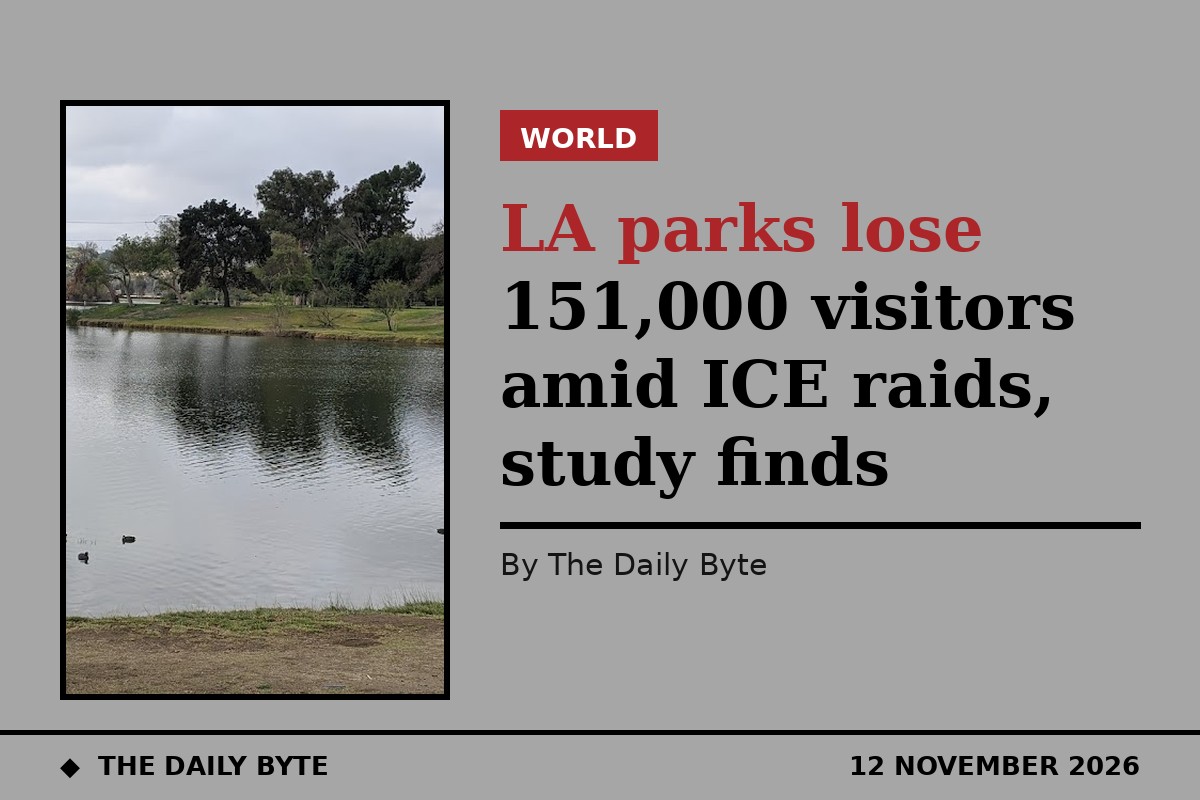
Visits to Los Angeles County parks fell sharply after federal immigration raids began in the area, with summer weekend attendance down by 151,000 across 2025 and 2026, according to new research from UCLA and UC Berkeley. The study found the steepest declines in parks serving predominantly Latino neighbourhoods, and attendance has still not recovered more than a year after the enforcement surge began.
The research, published on 11 November by the UCLA Latino Policy and Politics Institute and the UC Berkeley Latinx Research Center, examined daily vehicle entry data from the Los Angeles County Department of Parks and Recreation across the same 12 summer weekends in 2024, 2025 and 2026. It found about 21,000 fewer vehicle entries in 2025 and 17,000 fewer in 2026 than in 2024. Counting four visitors per vehicle, that amounts to 83,000 fewer visitors in 2025 and 68,000 fewer in summer 2026.
The sharpest falls were in Latino neighbourhoods
The six parks covered by the study are Frank G. Bonelli Regional Park, Castaic Lake State Recreation Area, Kenneth Hahn State Recreation Area, Santa Fe Dam Recreational Area, Peter F. Schabarum Regional County Park and Whittier Narrows Recreation Area. Parks near large Latino communities were hit hardest. Santa Fe Dam and Whittier Narrows, both in areas where more than 70 per cent of residents identify as Latino, saw more than 8,500 and 7,000 fewer vehicle entries respectively in 2025.
Compared with 2024, vehicle entries across the six parks were down 17 per cent in 2025 and 14 per cent lower in 2026. Using the average entry fee of 10 dollars per vehicle, the researchers also calculated about 380,000 dollars in potential lost revenue across the two summers.
What the researchers measured
The enforcement surge began with federal immigration raids in June 2025. The researchers compared the same summer weekends before and after the raids, using the county parks department's own vehicle entry records, so the comparison tracks the same parks over the same part of the year.
G. Cristina Mora, co-director of the UC Berkeley Institute of Governmental Studies and a co-author of the report, said parks were vital to community health and one of the few outings many families could still afford. "Our research shows that federal immigration crackdowns emptied these spaces," she said. "Many parents were likely too afraid to take their children to playgrounds, fields, and lakes that belong to all county residents. And more than a year after the initial raid surge, families have not come back."
Nicholas Vargas, an associate professor of Chicanx and Latinx Studies at UC Berkeley and also a co-author, said the findings showed how the effects of enforcement extended beyond shops and restaurants to something as simple as a family spending a day in nature. USA Today, which also reported the findings, said it had approached US Immigration and Customs Enforcement for comment.
A wider pattern of fear
The parks brief builds on the institute's Cost of Fear report, published in July 2026, which examined the impact of heightened immigration enforcement on small businesses and Latino entrepreneurs in Los Angeles County. Together, the researchers said, the two studies show how enforcement has coincided with changes in everyday community life, from shopping and eating out to visiting public parks.
The authors do not claim that fear of enforcement is the only possible explanation for the fall in visits, but the pattern they found was concentrated in the parks closest to Latino communities, and it persisted into a second summer. For families who once used the parks for birthday parties, swimming and picnics, the researchers said, the loss of a safe, affordable public space added to the pressures many were already facing.
Sources: UCLA Latino Policy and Politics Institute, 11 November 2026; USA Today, 12 November 2026.