Lahore High Court: underage marriage cohabitation is crime
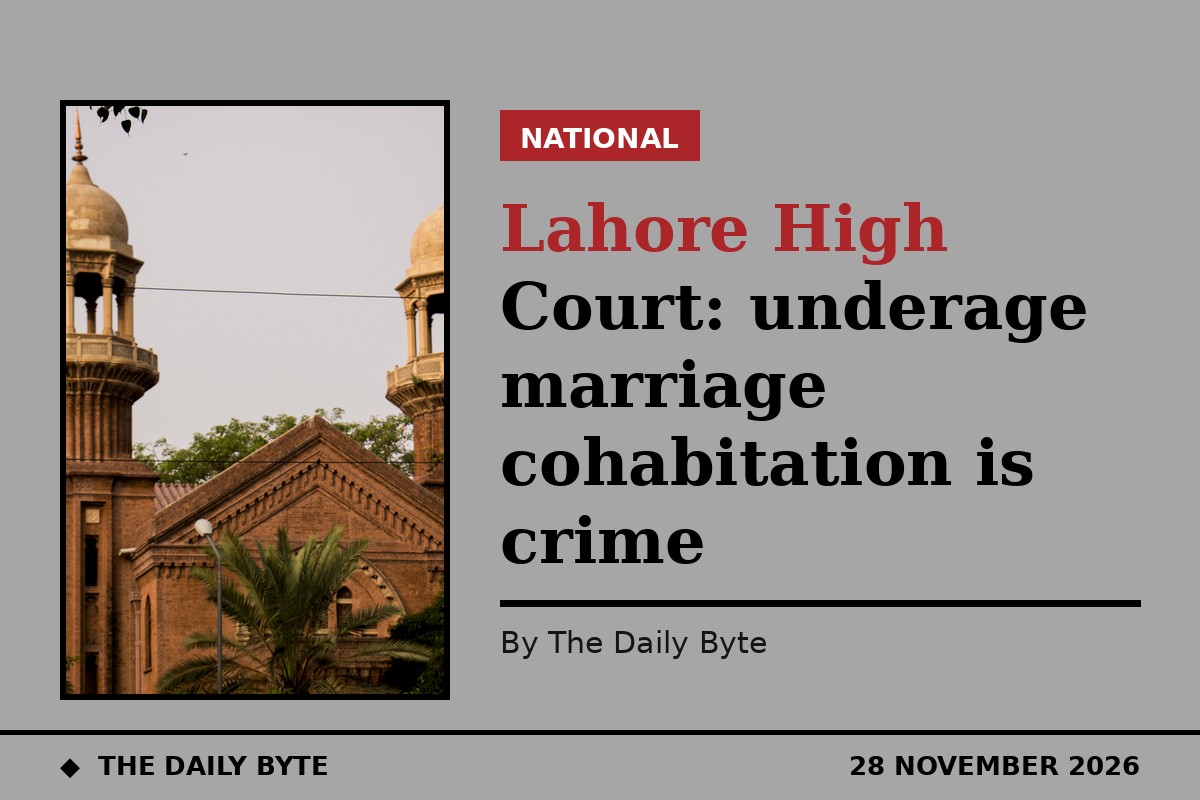
The Lahore High Court has ruled that a girl under 18 cannot legally live with the man she married, even if she says she agreed to the marriage. In a 24-page judgment released on 27 November, the court's Multan Bench held that any cohabitation before the age of 18 that follows a child marriage counts as child abuse under Punjab's Child Marriage Restraint Act 2026, whether or not the child consents.
Justice Tariq Saleem Sheikh decided three linked writ petitions, led by Writ Petition No. 11427 of 2026. The cases concerned two girls from Multan and Muzaffargarh districts who had been sent to Dar-ul-Aman, a state shelter home, after telling a magistrate they had married of their own free will. Their parents had lodged police complaints and produced NADRA Form-B records showing both girls were under 18.
Magistrates cannot order shelter-home placement
The court set aside the magistrates' orders sending the girls to Dar-ul-Aman. It held that recording a statement under section 164 of the Code of Criminal Procedure gives a magistrate no power to decide where a child should live. Compulsory placement in a shelter home needs a specific legal power, the court said, and neither section 164 nor the state's role as protector of children supplies it.
The girls will stay in Dar-ul-Aman only for a short interim period while the Sessions Judge in Multan looks into their safety. The judge must hear each girl separately, along with her family and the men claiming custody, and report on the age evidence, the risks of each custody claim and other safe places for the girls to live. The petitions return to the High Court ten days after the order.
Consent does not decide custody
The court also ruled that a child's wishes, while important, cannot decide custody on their own. Section 13 of the 2026 Act says that where a child was taken from her lawful guardians for marriage, her statement or consent cannot settle custody or residence by itself; the court must make its own reasoned assessment of her safety, welfare and best interests.
The judgment stressed that the Act, in force since 11 May 2026, defines a child as anyone under 18. Section 5 covers living together, not only sexual relations, but it does not declare the marriage itself void or voidable; that question belongs to the proper court. Only the Court of Sessions can try offences under the Act, and final custody and guardianship remain with the Family Court.