Lahore World's Most Polluted City Again as AQI Hits 465
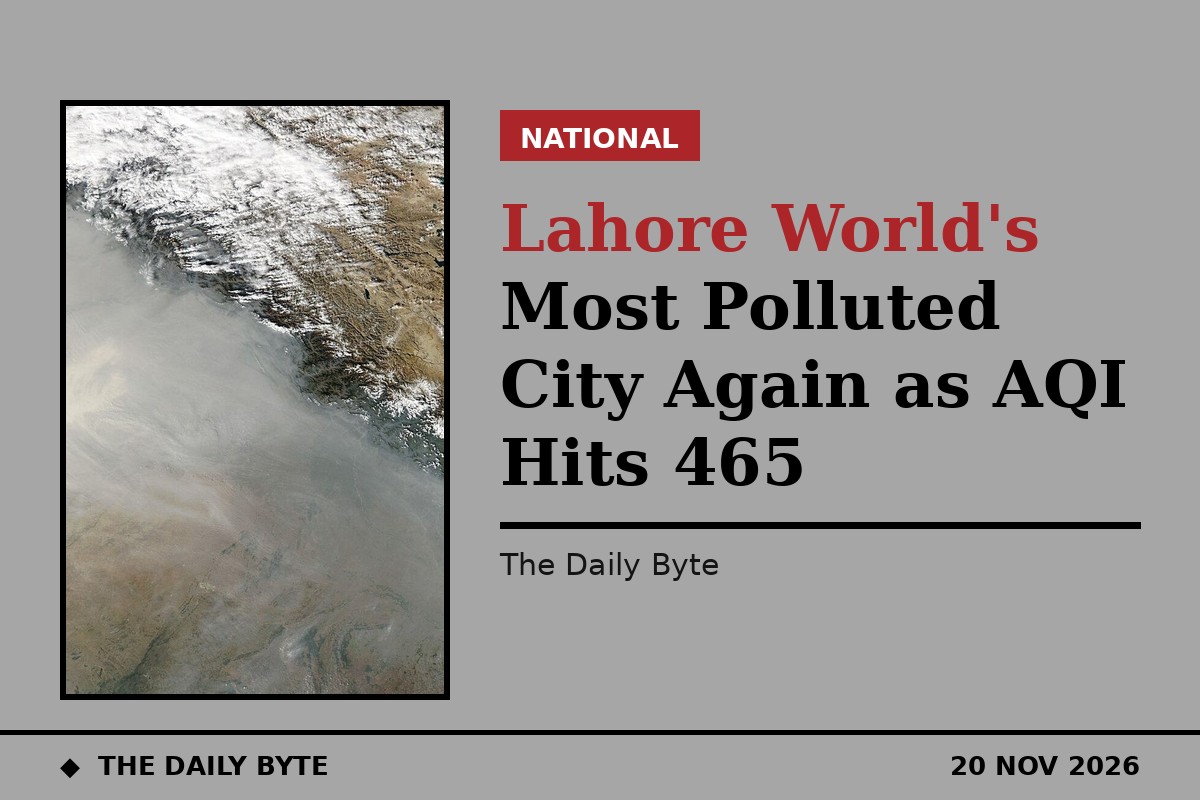
Lahore was once again ranked the world's most polluted major city on Friday morning, recording an Air Quality Index (AQI) of 465 between 7am and 8am, a level classified as hazardous.
The reading placed the Punjab capital at the top of the global pollution rankings, as a fresh wave of winter smog settled over the province and pushed several other cities into hazardous territory as well.
Smog spreads across Punjab
Sargodha recorded an AQI of 289, followed by Sialkot at 232, Rahim Yar Khan at 228 and Bahawalpur at 198, Such levels pose serious risks, particularly to children, older people and those with respiratory and heart conditions.
Residents have been advised to limit outdoor activity, keep windows closed, wear masks outside and use air purifiers indoors.
Crackdown on polluters continues
The deterioration comes despite an enforcement drive by the Punjab Environment Protection and Climate Change Department. Between 1 January and 18 November, teams inspected 84,370 brick kilns across the province, demolishing 1,429 units, sealing 968 and registering 1,248 first information reports against violators. Fines totalling Rs178 million were imposed.
Health and economic cost
A report released last month by the Pakistan Air Quality Initiative estimated that polluted air cuts life expectancy in Pakistan by 3.9 years and contributes to around 128,000 premature deaths each year, at an economic cost of 6.5 per cent of gross domestic product. In Lahore, prolonged exposure could cut life expectancy by up to seven years.
Lahore's annual average PM2.5 concentration exceeds 110 micrograms per cubic metre, more than 22 times the World Health Organisation's guideline of five. Transport is the largest source of the city's fine particulate pollution, followed by industry at 28 per cent and brick kilns at 17 per cent.